
Capturing the beauty of the night sky needs careful planning and preparation. As you start your astrophotography journey, knowing the best times to shoot the Milky Way is key. Data shows 2025 is a great year for Milky Way photos, with the best shooting times.
To get the most out of your galaxy photography sessions, think about moon phases and weather. This way, you can create a personalized astrophotography calendar to keep you on track. In this guide, we’ll cover the important parts of galaxy photography. We’ll give you the info you need to plan a successful galaxy season.
Introduction to Galaxy Season Planning
When you start capturing the Milky Way, knowing when to shoot is key. Galaxy photography is more than just aiming your camera at the sky. It’s about timing your shots perfectly to capture the stars’ dance.
Consider moon phases, weather, and other events that impact star visibility. For example, a new moon is best for star photography. This is because there’s no moonlight, making the stars shine brighter.
Importance of Timing
Timing is crucial in galaxy photography. The Milky Way’s position changes with the seasons. Knowing when it’s best to shoot is essential. The Milky Way is most visible from March to October in the Northern Hemisphere.
| Month | Milky Way Visibility | Ideal Conditions |
|---|---|---|
| March | Low | Clear skies, new moon |
| June | High | Dark skies, low humidity |
| October | Medium | Cool temperatures, clear skies |
Benefits of Pre-Planning
Planning ahead can greatly improve your galaxy photos. Researching the best times and places helps you prepare. This way, you’re ready for your shoot.
Some benefits of planning include:
- Finding locations with little light pollution
- Learning the best camera settings for shooting planetary alignments
- Preparing for different weather
With the right timing and planning, you can enhance your star photography guide. This will help you capture amazing galaxy images.
Understanding Galaxy Seasons
A galaxy season is when the night sky is perfect for astrophotography. During these times, the stars and planets are easier to see and capture. Knowing these seasons helps you plan a great Night Sky Shooting Schedule.
Defining a Galaxy Season
A galaxy season happens when Earth is in the right spot to see the Milky Way. In the Northern Hemisphere, the best times are spring and fall. To get the most out of these seasons, check the Celestial Event Calendar. It lists things like lunar eclipses and planetary alignments.
Astro-Events to Consider
When you’re planning your galaxy photos, think about special astro-events. These can make your photos even better. Here are some key events to watch for:
- Lunar eclipses, which can add a dramatic touch to your photos
- Planetary alignments, offering unique composition opportunities
- Meteor showers, providing a spectacular display of celestial activity
Knowing about these events and planning around them can really boost your astrophotography. It’s all about the Lunar Phases for Photography.
Best Time to Shoot the Stars
To capture the night sky, knowing the best times for stargazing is key. The success of your star photography depends on when you shoot.
Optimal Months for Astronomy
In the Northern Hemisphere, the best months for the Milky Way are April to September. These months offer clear views of the Milky Way. Summer skies are perfect for astronomy, making it easier to get great photos.
In the Southern Hemisphere, the best viewing times are March to August. This period gives clearer views of the galactic center.
Nighttime Conditions
Nighttime conditions are also important for star photography. Aim for nights with little moonlight. A full moon can make it hard to see distant stars. New moon phases are best for seeing the Milky Way.
Also, clear skies are a must. Check the weather forecast to avoid cloudy nights. This ensures you’re ready for the best shooting conditions.
Equipment Essentials for Shooting
To get great shots of galaxies, you need the right gear. For a successful galaxy season, pick the best astrophotography equipment.
Cameras and Lenses
Choose between DSLR or mirrorless cameras. Mirrorless cameras are better for astrophotography because they’re lighter and have better autofocus. A wide-aperture lens, like f/2.8, is best for capturing more light and getting sharper images.
Tripods and Stabilizers
A good tripod is key for a steady shot. Make sure it can hold your camera and lens. A star tracker or equatorial mount helps track objects longer without shaking.
Accessories You Can’t Forget
There are more things to get for better photos. A remote shutter release or intervalometer stops camera shake. A camera battery grip and lens heating element are also useful. Don’t forget extra batteries, memory cards, and a strong camera bag.
With the right gear and knowledge, you’re ready for amazing galaxy photos. Enjoy your astrophotography calendar and shooting planetary alignments.
Techniques for Capturing Galaxy Images
With the right techniques, you can capture stunning images of the galaxy. These images will leave viewers in awe. To capture the Milky Way and other celestial bodies, you need to understand your camera well. You also need to know the best conditions for shooting.
Long Exposure Methods
Long exposure is key in galaxy photography. It lets you capture more light from distant stars. Adjust your camera settings for the best results. A long exposure can be 20 to 30 seconds, depending on the object’s brightness.
Here are some tips for using long exposure methods effectively:
- Use a tripod to keep your camera steady during exposure.
- Set your camera to manual focus and adjust the focus to infinity using live view.
- Choose a low ISO (like 800 or 1600) to reduce noise in your images.
Focus Techniques for Celestial Bodies
Focusing on celestial bodies is hard because they are far away. To get a sharp focus, use the live view zoom feature. This lets you magnify the image and adjust the focus manually.
| Focus Technique | Description | Best For |
|---|---|---|
| Manual Focus | Adjusting the focus manually using live view | Bright Celestial Bodies |
| Autofocus | Using the camera’s autofocus feature | Planets and Bright Stars |
| Focus Stacking | Taking multiple shots at different focus points and merging them | Detailed Images of the Moon |
Capturing the galaxy takes patience, practice, and knowing your equipment well. By mastering long exposure and focus techniques, you’ll create stunning galaxy images.
Websites and Apps for Planning
Planning for galaxy season needs the right tools. Websites and apps help you keep up with space events. They make your photography better.
Top Astronomy Websites
Many websites offer great info for your galaxy photos. Here are some top ones:
- Stellarium: Offers interactive sky maps and astronomical data.
- Astronomy.com: Provides news, images, and info on space events.
- NASA’s Night Sky Network: Gives data on planets and space events.
These sites are key for knowing the sky and planning your photos.
Useful Mobile Apps
Mobile apps also help with planning your galaxy season. Here are some top picks:
- SkySafari: An interactive sky map that helps you find space objects.
- Star Walk 2: Gives real-time info on space bodies and events.
- PhotoPills: Helps plan your photos based on space data.
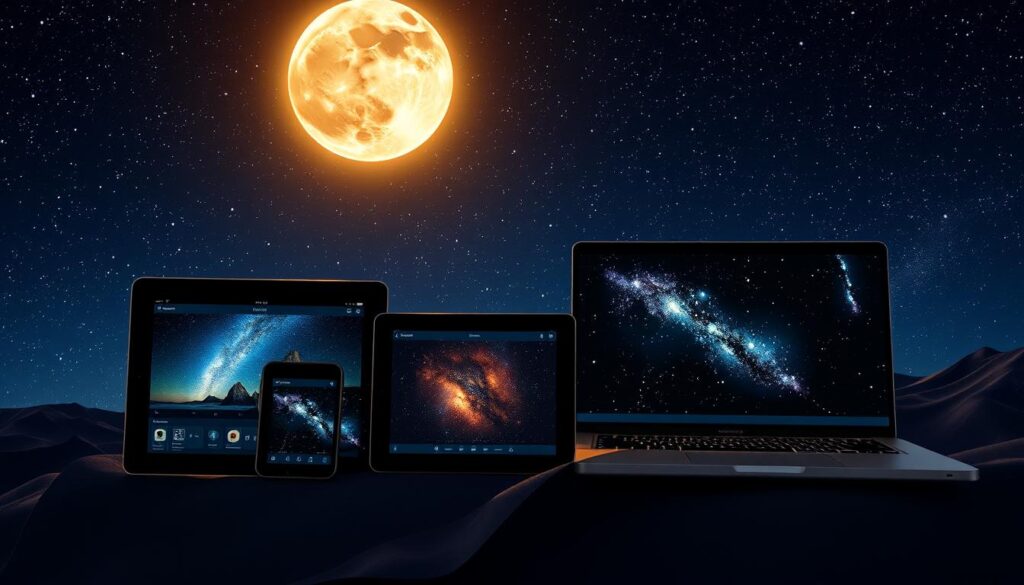
Using these tools, you can improve your galaxy photos and get amazing shots.
Choosing the Right Location
Getting great galaxy photos starts with picking a spot with little light pollution. Light pollution can ruin your photos, making it tough to see the galaxy’s details. Look for places far from cities and towns.
Light Pollution Considerations
Light pollution is a big problem for astrophotographers. It hides the stars and makes the galaxy hard to see against the sky. To avoid this, consider these tips:
- Find dark spots, like national parks or remote areas.
- Use tools like the Dark Sky Finder or Light Pollution Map to find dark places.
- Shoot during the new moon to get the darkest sky.
Popular Shooting Spots in the U.S.
The U.S. has many great places for galaxy photos. Here are some top spots:
- Death Valley National Park, California: It has dark skies and cool landscapes.
- Big Bend National Park, Texas: It has some of the darkest skies in the U.S.
- Great Basin National Park, Nevada: It has ancient trees and very dark skies.
Before you go, check the weather and moon phase. This will help you get the best shots of the capturing the Milky Way and other stars.
Safety and Preparation
When you’re getting ready for your galaxy photography session, safety is key. It’s not just about the right gear. You need to know the environment and conditions you’ll face.
Preparing for Night Shoots
For a night shoot, dress for the weather. Look at the forecast and wear layers to stay warm. You’ll be still for a long time. Also, have a reliable light source like a headlamp or flashlight.
Know the terrain and potential dangers, like uneven ground or wildlife. Bring a first aid kit and have a plan for emergencies. For more safety tips, check out safety guidelines from trusted sources.
Weather Considerations
Knowing the weather is crucial for a great night sky photo shoot. Use the Celestial Event Calendar and weather forecasts to plan. Look for clear skies, avoiding nights with clouds or rain.
Also, consider the Lunar Phases for Photography. A new moon is best for galaxy shots, as a full moon can wash out starlight. Plan your Night Sky Shooting Schedule around these phases for the best results.
Being ready for the conditions and having a flexible plan helps you capture amazing galaxy photos. Safety and preparation are as important as the technical skills of photography.
Final Tips for a Successful Shoot
Before your next galaxy photography session, take time to review your past work. Look at your photos and see what you can do better. This will help you get even better at taking pictures.
Improving Your Craft
Joining local astronomy groups is a smart move. You’ll learn from pros and get tips on planning your shoots. They can help you find the best times for night sky photography.
Enhancing Your Experience
Connecting with other astronomy fans will boost your skills and knowledge. You’ll understand the night sky better. This will help you take amazing pictures of galaxies.