
Are you ready to see the night sky in all its glory? Many dark sky national parks offer amazing stargazing spots because of little light pollution. With astrophotography getting more popular, these parks are now top spots for fans.
When planning your trip, you’ll find some of the best stargazing national parks have guided programs and events. These make your visit even better. Whether you’re an experienced photographer or just starting, these parks are a great chance to capture the night sky’s beauty.
Find out the top national parks for stargazing and astrophotography. Also, get tips on how to enjoy your visit the most.
Why National Parks Are Ideal for Stargazing
National parks in the United States are perfect for stargazing. They have dark skies and are far from people. This makes them ideal for both stargazers and astrophotographers.
Importance of Dark Skies
Dark skies are key for stargazing. They let you see the night sky clearly. National parks, being away from cities, have little light pollution.
This darkness is vital for seeing faint stars. It also helps protect natural habitats and ecosystems.
Remote Locations and Light Pollution
National parks are far from cities. This means they have less light pollution. Light pollution hides the light of distant stars.
Being in remote areas, national parks offer a break from city lights. This gives a clearer view of the stars.
Clear Weather Patterns
Many national parks have clear weather patterns. Clear skies are needed to see celestial bodies. Areas with low humidity and few clouds are best.
Parks in areas with stable weather are great for stargazing. They are top destinations for astronomy enthusiasts.
Top National Parks for Stargazing
If you love stargazing, you’ll find these national parks amazing. The United States has many parks with dark skies and stunning views. They’re perfect for gazing at the stars and taking photos of the night sky.
Grand Canyon National Park
The Grand Canyon is a famous natural wonder. Its vastness makes it great for stargazing. The park’s remote spots have incredibly dark skies, showing thousands of stars on a clear night.
The best times for stargazing are during the new moon. This is when the sky is darkest.
Joshua Tree National Park
Joshua Tree is famous for its unique rocks and dark skies. It’s a Dark Sky Park, perfect for stargazing and astrophotography. Visitors can see the night sky in many parts of the park, away from city lights.
Acadia National Park
Acadia National Park is on Maine’s coast. It offers a special stargazing experience with its rugged landscape and dark skies. The park’s latitude and low light pollution are ideal for seeing the Milky Way on clear summer nights.
Badlands National Park
Badlands National Park in South Dakota is known for its dramatic landscape and dark skies. Its remote location and lack of light pollution make it great for stargazers. Visitors can join ranger-led stargazing programs during certain times.
| National Park | Location | Best Time for Stargazing |
|---|---|---|
| Grand Canyon | Arizona | New Moon Phase |
| Joshua Tree | California | Year-Round |
| Acadia | Maine | Summer Nights |
| Badlands | South Dakota | Ranger-Led Programs |
Planning Your Stargazing Trip
Getting ready for your stargazing trip is key to a great experience. National parks are among the best places for stargazing in the US because of their dark skies. Whether you’re an expert or new to astronomy, a good plan can make your trip unforgettable.
Best Time of Year for Stargazing
The best time for stargazing changes based on where you are and what you want to see. Summer months are usually warm and clear, perfect for many national parks. But, some parks are better in spring or fall when it’s cooler.
- Check the weather forecast before your trip to ensure clear skies.
- Consider the lunar cycle; a new moon phase is best for stargazing.
- Look out for annual meteor showers and plan your trip to see them.
Essential Gear and Equipment
You don’t need a lot to start stargazing, but the right gear can make it better. You’ll need:
- A red light flashlight to keep your night vision.
- Binoculars or a telescope for a closer look.
- A star chart or a stargazing app to navigate the sky.
For astrophotography, you’ll need a camera, a tripod, and a remote shutter release or timer.
Photography Tips for Beginners
Getting good photos of the night sky can be tough, but with some tips, you can do better. Use a wide-angle lens and manual focus. Choose a low ISO and slow shutter speed to capture more light. Try different settings to find what works for you.
By planning well, bringing the right gear, and practicing your photography, you’ll have a great stargazing experience in the top US parks for stargazing and astrophotography.
Understanding Light Pollution
When planning your stargazing trip to dark sky national parks, knowing about light pollution is key. It can greatly affect your view of the night sky. So, it’s important to consider it for the best experience.
What is Light Pollution?
Light pollution is when there’s too much light at night. It’s caused by human activities, like cities. This light scatters and makes it hard to see stars and other objects in the sky.
Streetlights, buildings, and ads are big culprits. They brighten the sky and make it hard to see faint stars.
Effects on Stargazing
Light pollution has many effects on stargazing. It makes fewer stars visible and hampers telescope use. In bright areas, the sky looks like a big, bright canvas, hiding stars and planets.
This can be really disappointing, even in famous astronomy destinations in the US. People expect to see a clear, dark sky.
Ways to Minimize Impact
To lessen light pollution’s effects, choose stargazing spots in national parks with dark skies. Using light pollution filters can also help. Plan your stargazing for the new moon to get the darkest sky.
Supporting efforts to preserve dark skies is also important. This way, you can enjoy better stargazing in dark sky national parks and other astronomy destinations in the US.
Techniques for Astrophotography
Capturing the night sky’s beauty needs both technical skills and creativity. Whether at a night sky photography park or a stargazing vacation destination, knowing astrophotography techniques can make your photos stand out.
Camera Settings for Night Photography
To get stunning night sky photos, you must know your camera settings. Start by switching to manual mode. Use a low f-stop value (around f/2.8) to let in more light. The shutter speed depends on the object’s brightness and your lens’s focal length.
For star trails, use a longer exposure. For single stars, a shorter exposure works better.
- Use a low ISO (800-1600) to reduce noise.
- Focus manually on a bright star for sharpness.
- Shoot in RAW format to capture more data.
Best Lenses for Astrophotography
The right lens is key for great astrophotography. Wide-angle lenses are perfect for big views of the sky. Telephoto lenses are better for focusing on specific objects like the moon or galaxies.
- Choose lenses with a wide aperture (f/2.8 or wider) for better low-light shots.
- Lenses with image stabilization help reduce camera shake.
- Prime lenses usually offer sharper images than zoom lenses.
Post-Processing Tips
Post-processing is vital in astrophotography. It lets you improve details and colors in your photos. Start by adjusting the white balance to enhance natural colors.
- Use noise reduction tools to lessen grain.
- Adjust contrast and brightness to make your image stand out.
- Consider using star stacking software to improve detail.
Mastering these astrophotography techniques will help you capture the night sky’s beauty. Whether at a stargazing vacation destination or in your backyard, your photos will impress.
Safety Considerations in National Parks
When you go stargazing in national parks, safety is key. The beauty of the stars can make you forget about dangers.
National parks are great for stargazing spots in national parks. But, they also have their own challenges. Knowing your surroundings is important for a safe and fun time.
Wildlife and Natural Hazards
Stargazing can make you forget about wildlife. National parks have many animals, some active at night. Be mindful of your environment and watch for wildlife.
- Keep a safe distance from any wildlife you encounter.
- Make noise while walking to avoid startling animals.
- Be aware of any park-specific rules regarding wildlife.
Natural hazards like uneven terrain and fast water can be dangerous. Always stay on trails and follow park rules.
Staying on Trails at Night
Staying on trails at night is hard but necessary for safety. Here are some tips:
- Use a red light flashlight to preserve your night vision.
- Carry a map and compass or GPS device.
- Let someone know your itinerary and expected return time.
Guided night tours in national parks can be safe and fun. Check with park rangers for available programs.
Emergency Preparedness
Being ready for emergencies is key when stargazing in remote areas. Make sure you have:
| Essential Item | Description |
|---|---|
| First Aid Kit | A basic first aid kit should include bandages, antiseptic wipes, pain relievers, and any personal medications. |
| Flashlight or Headlamp | A reliable light source is crucial. Bring extra batteries. |
| Water and Snacks | Stay hydrated and energized with water and snacks. |
| Emergency Shelter | A lightweight emergency blanket or tent can be a lifesaver. |
Knowing what to do in an emergency can save lives. Learn the park’s emergency procedures and how to contact rangers or emergency services.
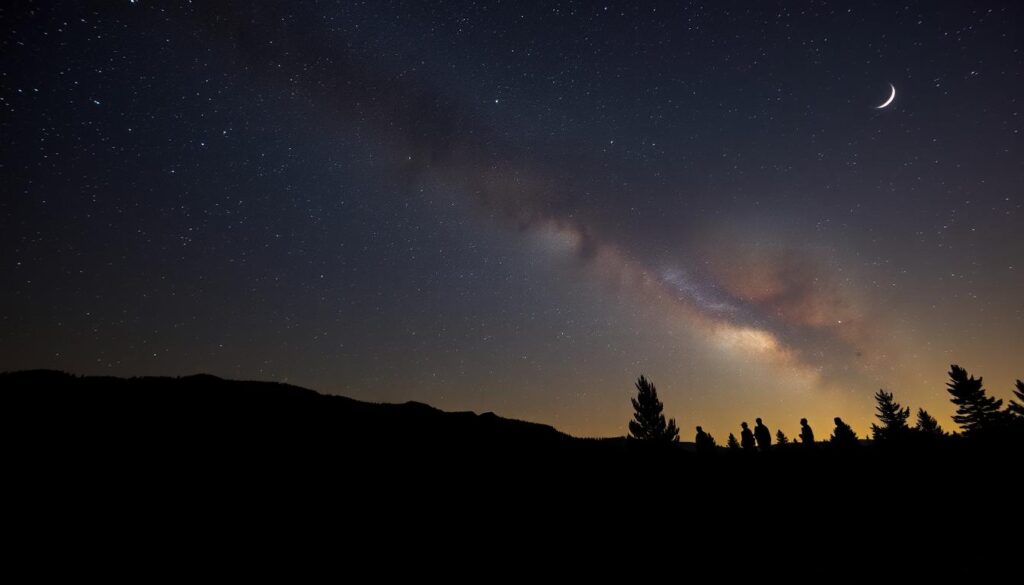
By knowing the hazards and taking precautions, you can have a safe and memorable stargazing experience in the top US parks for stargazing and astrophotography. Always check with park rangers for the latest safety information and any specific rules.
Popular Stargazing Events
The United States is full of amazing stargazing spots. Events are for both experts and beginners. National parks across the country host many events that make stargazing unforgettable.
Annual Meteor Showers
Seeing a meteor shower is thrilling. The United States has great spots for these events. Big Bend National Park in Texas is perfect for the Perseid meteor shower in August.
Other great meteor showers include the Geminid in December and the Quadrantid in January. Death Valley National Park in California and Great Basin National Park in Nevada offer great views because of their dark skies.
| Meteor Shower | Peak Viewing Time | Best National Parks |
|---|---|---|
| Perseid | August 12-13 | Big Bend, Great Basin |
| Geminid | December 13-14 | Death Valley, Joshua Tree |
| Quadrantid | January 3-4 | Acadia, Badlands |
Solar and Lunar Eclipses
Solar and lunar eclipses are rare and amazing. They draw stargazers from everywhere. Glacier National Park in Montana is great for solar eclipses because of its clear skies.
Lunar eclipses can be seen in many national parks. Yellowstone National Park in Wyoming and Grand Teton National Park are good spots. Make sure to check the timing and visibility before you go.
Star Parties and Astronomy Festivals
Star parties and astronomy festivals are great for meeting others who love stargazing. Events like the Telescope Party at Death Valley National Park and the Grand Canyon Star Party offer a chance to learn and see the night sky through telescopes.
These events have guest speakers, workshops, and viewing sessions. They are perfect for both beginners and experienced astronomers. They help you learn more and appreciate the night sky.
Joining Astronomy Clubs
Astronomy clubs are great for meeting others who love the stars. They offer a chance to learn more about the night sky. You’ll find people who share your interest in astronomy.
Benefits of Membership
Being in an astronomy club has many perks. You’ll get better at stargazing with help from others. You’ll also learn about new discoveries in the universe.
Key benefits include:
- Opportunities to participate in stargazing events and viewing parties
- Access to expert knowledge and guidance
- Chance to meet other enthusiasts and make new friends
- Updates on celestial events and astronomical news
Finding Local Astronomy Clubs
It’s easy to find local astronomy clubs online. Look for clubs in your area or check astronomy websites. Clubs often have social media, making it simple to connect.
Tips for finding a club:
- Search online using keywords like “astronomy clubs near me” or “local stargazing groups”
- Check social media platforms for groups related to astronomy
- Visit websites of local science centers or planetariums for club information
Participating in Stargazing Events
Joining a club means you can go to stargazing events. These might be viewing parties or trips to dark places. You’ll see the sky with others, learn new things, and have fun.
| Event Type | Description | Frequency |
|---|---|---|
| Viewing Parties | Group stargazing sessions, often during significant celestial events | Monthly |
| Dark Sky Trips | Trips to locations known for minimal light pollution | Quarterly |
| Astronomy Workshops | Educational sessions on various aspects of astronomy | Bi-annually |
Joining an astronomy club is rewarding. You’ll improve your stargazing and help protect dark skies. Whether you’re new or experienced, there’s a place for you.
Impact of Climate Change on Stargazing
The night skies in stargazing spots in national parks are facing a new challenge: climate change. When you visit these dark sky national parks, you’re not just avoiding city lights. You’re also seeing areas affected by global climate changes.
Shifts in Weather Patterns
Climate change is changing weather patterns in the United States. This affects the conditions that make astronomy destinations in the US great for stargazing. Warmer temperatures and changing rain patterns can cause more clouds, making it harder to see stars.
For example, places known for clear skies may now have more dust storms or humidity. This makes stargazing harder. Knowing these changes helps plan your trips to stargazing spots in national parks.
Consequences for Dark Sky Areas
The dark sky areas in national parks are very sensitive to climate change. Rising temperatures can mess with the night sky’s clarity. This can make the sky glow more and make stars harder to see.
Also, changes in weather can harm the local wildlife. This shows why we must protect these areas.
Advocating for Dark Sky Preservation
As a stargazer, you care about keeping dark sky national parks and their surroundings safe. Supporting efforts to reduce light pollution and promote green practices is key. This helps keep the night sky dark and beautiful.
- Join local astronomy clubs and groups to spread the word about dark skies.
- Support laws that protect dark sky areas from light pollution.
- Teach others about how climate change affects stargazing and the night sky.
By doing these things, you help keep astronomy destinations in the US for future generations. They’ll get to see the night sky in all its glory.
Becoming an Advocate for Dark Skies
You can help protect the night sky by joining dark sky advocacy. If you love stargazing vacation destinations, you know how vital it is to keep the sky dark. Advocacy means working to cut down light pollution and save our natural night skies.
Ways to Get Involved
There are many ways to help with dark sky advocacy. You can join local astronomy clubs or groups focused on dark skies. These clubs often host star parties to spread the word about dark skies.
You can also join citizen science projects. These projects track light pollution and changes in the night sky.
- Join local astronomy clubs or organizations
- Participate in citizen science projects
- Attend star parties and other events
- Volunteer for dark sky conservation efforts
Educating the Community
Teaching your community about dark skies is key. You can give talks at schools, community centers, or public places. Share your knowledge about top astrophotography locations and how light pollution affects them.
You can also use social media to spread the word. Share resources and updates with more people.
Some good ways to teach the community include:
- Organizing public talks and presentations
- Creating and sharing educational materials
- Using social media to raise awareness
Supporting Legislation for Dark Skies
Backing laws that protect dark skies is important. Contact your local representatives to show support for dark sky efforts. You can also speak up at public hearings and comment periods to support policies against light pollution.
Together, we can keep night sky photography parks safe for future generations. Let’s make sure they can enjoy the night sky’s beauty.
Resources for Stargazers and Photographers
To enjoy the night sky in top stargazing spots in national parks, you need the right tools. Whether you’re an expert or new to stargazing, the right equipment makes a big difference.
Recommended Books and Guides
For deepening your astronomy knowledge, check out recommended books and guides. They cover everything from basics to advanced astrophotography. “The Backyard Astronomer’s Guide” and “Astrophotography: A Step-by-Step Guide” are great choices.
For more on stargazing in national parks, visit https://www.nps.gov/subjects/nightskies/stargaze.htm. The National Park Service offers valuable information.
Online Forums and Communities
Online forums and communities are great for connecting with fellow stargazers and photographers. Sites like Reddit’s r/Astronomy and r/Astrophotography, and Cloudy Nights, are perfect for sharing and learning. They discuss the best spots, techniques, and gear for astronomy destinations in the US.
These groups offer insights for planning your next trip to stargazing spots in national parks.
Useful Apps for Stargazing
Today, many apps can improve your stargazing. SkySafari, Star Walk, and Stellarium Mobile offer interactive sky maps. They help identify celestial objects in real-time, perfect for best stargazing national parks.
Using these resources can greatly enhance your stargazing and astrophotography. They help you make the most of your visits to the nation’s top astronomy destinations in the US.
Final Thoughts: Experience the Night Sky
When planning your next stargazing trip, think about visiting the best US parks for gazing at the stars. These astronomy destinations in the US show off the night sky’s beauty, away from city lights.
Practical Tips for Stargazers
Before you go, check the weather and moon phases. Don’t forget your binoculars or telescope to see more. There are stargazing vacation destinations for everyone, from beginners to experts.
Sharing the Experience
Enjoy the night sky’s beauty and share your moments with others. This can inspire them to see the stars too. It helps spread the love for top US parks for stargazing and astrophotography.
Whether you’re new to stargazing or have been for years, the night sky is full of wonders. Keep exploring and enjoying the stars.