
Are you tired of city lights blocking your view of the stars? Living in a busy urban area can be frustrating. But, there are places where you can see the night sky in all its glory.
Finding the perfect spot for stargazing can be tough. But, with the right help, you can enjoy breathtaking views of the night sky. We’ll show you the top spots for clearer night skies, perfect for anyone who loves the stars.
By leaving the city lights behind, you’ll find peace in the night sky. This guide is for anyone who loves the stars, whether you’re an expert or just enjoy looking up at the sky.
Understanding Light Pollution and Its Effects
The night sky, once full of stars, is now often hidden by artificial light. This problem, called light pollution, affects our view of the night sky. It also harms the environment and our health.
What is Light Pollution?
Light pollution makes the night sky too bright, hiding stars and natural beauty. The International Dark-Sky Association says there are different types. Skyglow brightens the sky over cities, while glare is the harsh light from sources.
How It Affects Stargazing
Light pollution makes it hard to see stars and galaxies. The light scatters, lighting up the sky. This means many can’t see the night sky’s beauty. To avoid this, astronomers and stargazers go to dark sky parks and astronomical observatories.
Recognizing Clear Sky Areas
Finding places with clear skies is key for stargazing. These spots are far from cities and have little artificial light. Dark sky reserves and national parks are good examples. Saving these areas lets future generations see the night sky’s beauty.
Benefits of Stargazing in Mountain Locations
Mountain spots are perfect for star gazing. They offer stunning views and the best conditions for seeing the stars. This makes them a favorite among astronomy fans.
Higher Elevations and Clearer Atmosphere
Mountain areas have higher elevations with clearer skies. This is key for stargazing because it cuts down on sky distortion. It lets you see the stars more clearly.
The air at these heights is cleaner and less thick. This means you can see more of the stars. It’s great for both hobbyists and pros.
Reduced Light Interference
Stargazing in mountains has another big plus: less light pollution. Mountains are often far from cities. This means the sky is darker and more stars are visible.
With less light pollution, the night sky is more alive and detailed. It’s a chance to really connect with the universe.
Scenic Views and Natural Beauty
Mountain spots are not just good for stargazing. They also have scenic views and natural beauty. The landscapes and calm settings are ideal for an astronomy trip.
Picture looking at the stars with mountains around you. Or waking up to a sunrise after a night of gazing. These moments make mountain locations unforgettable.
Top Mountain Ranges for Stargazing in the U.S.
If you’re searching for the best spots to see the stars, the U.S. has many great mountain ranges. These places are known for their dark skies and stunning views.
The Rocky Mountains
The Rocky Mountains are a dream for stargazers. Their high peaks and clear skies make them perfect for star watching. Dark sky parks in the Rockies, like those in Colorado, have little light pollution. This makes stargazing even better.
The Sierra Nevada
The Sierra Nevada in California is also great for stargazing. It has some of the darkest skies in the country. Yosemite National Park in the Sierra Nevada is famous for its dark skies.
The Appalachian Mountains
The Appalachian Mountains offer a special stargazing experience. Their rolling hills and little artificial light make it unique. Great Smoky Mountains National Park is a top spot for night sky views.
The Cascades
The Cascade Range, from British Columbia to Oregon, is known for its beauty and dark skies. Crater Lake National Park in Oregon is a great place for stargazing. Its deep waters reflect the stars beautifully.
Here’s a comparison of these mountain ranges based on elevation, light pollution, and scenic beauty:
| Mountain Range | Average Elevation (ft) | Light Pollution Level | Scenic Beauty |
|---|---|---|---|
| The Rocky Mountains | 11,000 | Low | High |
| The Sierra Nevada | 9,000 | Very Low | Very High |
| The Appalachian Mountains | 6,000 | Moderate | High |
| The Cascades | 8,000 | Low | Very High |
These mountain ranges are not just for stargazing. They also offer many outdoor activities and beautiful landscapes. Whether you love astronomy or just enjoy the night sky, the U.S. has a lot to offer.
Best National Parks for Stargazing
The U.S. national parks are perfect for those who love the night sky. They have dark skies and amazing views of the stars. These parks are far from city lights, making them great for stargazing.
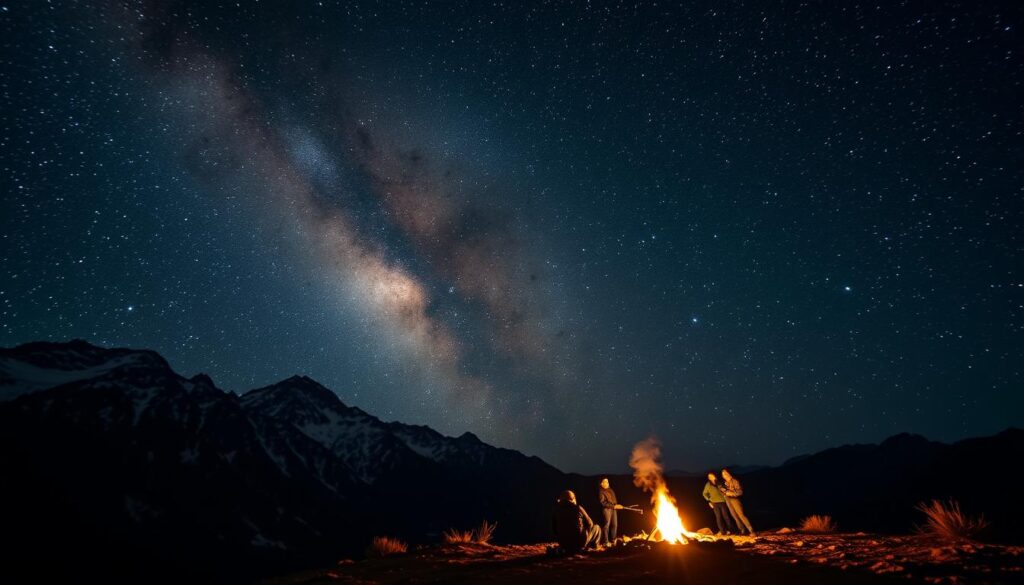
Yellowstone National Park
Yellowstone is famous for its geysers and hot springs. But it’s also great for stargazing. It’s huge and has little artificial light, perfect for astronomical observatories.
Rangers host stargazing events. They share knowledge about the night sky with visitors.
Joshua Tree National Park
Joshua Tree is known for its rocks and desert. At night, it’s a stargazer’s paradise. The skies are clear, and there’s little light pollution.
It’s perfect for astrophotography and seeing the stars.
Grand Canyon National Park
The Grand Canyon is a natural wonder at night. It’s dark and vast, offering a view of the Milky Way and stars. South Rim is best for stargazing because it’s easy to get to and dark.
These parks are just a few places in the U.S. for stargazing. They let you connect with nature and see the night sky in its beauty.
Essential Gear for Stargazing
Going on a stargazing adventure needs the right tools for the best view. Whether you’re an expert or new, the right gear makes a big difference. For beginners, check out stargazing for beginners to start.
Telescopes and Binoculars
The key tool for stargazing is something to make stars bigger. Telescopes are popular for a closer look at the sky. Choose a telescope based on its size and mount type. A bigger size means clearer images.
Binoculars are a good choice for something portable. Look for high magnification and a strong build for outdoor use.
Apps for Identifying Stars
In today’s world, stargazing apps are super helpful. They use your device’s GPS and compass to show the night sky. Apps like Sky Map and Star Walk highlight stars, planets, and more.
This adds depth to your stargazing, making it more fun and educational.
Proper Clothing and Preparation
Stargazing often means being outside for hours, sometimes in cold. Dress warmly and bring blankets, snacks, and a red light flashlight. This keeps your night vision good.
Being comfortable is key. Bring a chair or blanket to enjoy the wait for celestial events.
With the right gear and knowledge, stargazing is more rewarding. Whether at a secluded stargazing destination or your backyard, being ready lets you enjoy the best astrophotography spots.
Tips for Planning Your Stargazing Trip
Planning a stargazing trip needs careful thought to make it unforgettable. Whether you’re going to a dark sky park or a secluded night sky viewing location, getting ready is key.
Choosing the Right Time
The time you choose for stargazing greatly affects your experience. It’s important to look at the lunar calendar to avoid nights when the moon is full. The moon’s bright light can make it hard to see stars. For the best views, plan your trip during the new moon phase.
You can also aim for nights with meteor showers or planetary alignments. For more tips on the best times to stargaze, check out National Geographic’s guide to stargazing.
Weather Considerations
Weather is crucial for stargazing. You need clear skies for the best views. Always check the weather forecast before you go.
Stay away from nights with lots of clouds or rain. These can block your view of the stars. Use weather apps or websites for accurate forecasts. Some apps even show cloud cover forecasts, which can be very helpful.
Staying Safe in Remote Areas
Many top night sky viewing locations are far from cities, which can be risky. Always tell someone where you’re going and when you’ll be back. Bring important safety items like a first-aid kit, flashlights, and extra batteries.
Be ready for changing weather with the right clothes and supplies. It’s also wise to have a basic emergency shelter and ways to communicate, like a cell phone or two-way radio.
| Preparation Item | Description | Importance Level |
|---|---|---|
| Check Lunar Calendar | Avoid full moon nights for better stargazing | High |
| Weather Forecast | Ensure clear skies for optimal viewing | High |
| Safety Gear | Include first-aid kit, flashlights, and extra batteries | High |
| Appropriate Clothing | Prepare for changing weather conditions | Medium |
| Emergency Shelter | Basic shelter for unexpected weather changes | Medium |
By planning well, considering timing, weather, and safety, you can have a great stargazing trip. Enjoy your time at the dark sky parks and night sky viewing locations. And don’t forget to take pictures of your adventure!
Popular Stargazing Events and Festivals
Throughout the year, stargazers can enjoy a range of events and festivals that showcase the night sky’s splendor. These events offer unique opportunities for astronomical observation and community engagement. Whether you’re a seasoned astronomer or just starting to explore the night sky, there’s something for everyone.
Perseid Meteor Shower
The Perseid meteor shower is one of the most anticipated stargazing events of the year. It happens every August. This spectacular display is caused by the Earth passing through the debris trail left behind by the Swift-Tuttle comet. To make the most of this event, find a dark sky location with minimal light pollution.
- Peak viewing times usually occur between August 10th and 14th
- Best viewed in the Northern Hemisphere
- Look for bright streaks across the sky
Total Lunar Eclipses
Total lunar eclipses are another thrilling event for stargazers. During a total lunar eclipse, the Earth passes between the sun and the moon, casting a reddish glow on the lunar surface. These events are visible from anywhere on the Earth where the moon is above the horizon.
- Check lunar eclipse calendars to plan your stargazing trip
- Total lunar eclipses are relatively rare, making them special events
- Observe the moon’s transformation from a bright disk to a reddish hue
Astronomy Conventions
Astronomy conventions bring together enthusiasts and professionals alike, offering a chance to learn about the latest discoveries and advancements in the field. These events often feature guest speakers, workshops, and viewing sessions.
- Meet fellow stargazers and astronomy enthusiasts
- Attend lectures and workshops on various astronomical topics
- Participate in stargazing sessions using advanced telescopes and equipment
By attending these events and festivals, you can enhance your stargazing experience and connect with like-minded individuals. Whether you’re at a major astronomy convention or simply enjoying a meteor shower, the night sky has something to offer everyone.
Local Astronomy Clubs and Resources
Local astronomy clubs and resources are great for both beginners and experienced stargazers. They offer many ways to learn more and enjoy the night sky.
Finding Clubs Near You
To find local astronomy clubs, start by searching online. You can also check local science centers and observatories. Many clubs are part of national organizations, making them easy to find online. Ask other stargazers for tips too.
- Search online for “astronomy clubs near me”
- Check local community centers and science museums
- Look for clubs affiliated with national astronomy organizations
Online Resources for Stargazers
The internet has lots of great resources for stargazers. You can find interactive star charts and forums to talk about your views. Some top online resources include:
- Astronomy apps like Sky Map and Star Walk
- Websites about dark sky parks and night sky spots
- Online forums and social media groups for stargazers
Dark sky parks are special. They have some of the best night sky viewing locations with little light pollution.
Community Events and Workshops
Local astronomy clubs host many events and workshops. These range from stargazing nights to lectures on space topics. They’re a great way to meet others and learn more about astronomy.
Some popular events include:
- Stargazing nights at local observatories
- Astronomy lectures and workshops
- Star parties and viewing events
By joining local astronomy clubs and using online resources, you can improve your stargazing. You’ll also join a community of astronomy fans.
How to Photograph Night Skies
Capturing the night sky’s beauty needs the right gear and techniques. Whether you’re experienced or new, learning astrophotography basics can help you take amazing star pictures.
Camera Gear Recommendations
To get great night sky shots, use a camera that lets you adjust settings manually. DSLR or mirrorless cameras work best because they give you control over exposure and focus. For wide views, choose a wide-angle lens with a low f-stop value, like f/2.8.
Key Camera Gear:
- A DSLR or mirrorless camera
- A wide-angle lens (between 10-24mm)
- A sturdy tripod
- A remote shutter release or timer
Basic Night Photography Techniques
With the right gear, focus on technique. Set your camera to manual mode and use a low ISO, like ISO 800, to reduce noise. Choose a wide aperture, like f/2.8, to capture more light. Adjust your exposure time based on the scene’s brightness and your desired effect.
| Setting | Recommended Value | Notes |
|---|---|---|
| ISO | 800 | Minimize noise |
| Aperture | f/2.8 | Let in more light |
| Exposure Time | 20-30 seconds | Depends on scene brightness |
Post-Processing Tips
After taking your photos, enhancing them is key. Use software like Adobe Lightroom or Photoshop to tweak exposure, contrast, and colors. Tools for noise reduction can also improve your image’s quality.
Tips for Post-Processing:
- Adjust exposure and contrast to enhance shadows and highlights.
- Use color grading to make the night sky’s colors pop.
- Apply noise reduction to clear up your image.
Preserving Dark Sky Locations
Exploring the best mountain spots for stargazing is exciting. But, it’s also important to think about keeping these dark skies for the future. Dark skies are not just beautiful; they’re also key for science and learning.
The Value of Dark Skies
Dark sky parks and observatories need little light pollution to see the stars. They offer scientists a chance to study the universe. They also let people enjoy the night sky’s beauty.
Supporting Dark Sky Initiatives
You can help save dark sky spots by backing efforts for dark sky laws. This means pushing for rules that cut down light pollution. It helps keep the night sky dark.
Taking Action
Small actions can help a lot. Using outdoor lights that point down and using less light are good steps. These actions help keep dark skies beautiful. They also support the work of observatories.