
Have you ever noticed how the night sky looks different in cities versus the countryside? This is because of light pollution. It’s a growing problem that affects our environment, health, and wildlife.
Recent studies show that too much artificial light can harm us and the planet. It affects our health, wildlife, safety, and energy use. If you care about the environment, you can help lessen this issue.
Knowing about light pollution helps you make choices to reduce it. Simple actions can lead to darker skies and save energy. Start by making a few changes in your daily life.
What is Light Pollution?
Have you noticed the night sky isn’t as dark as it used to be? This is mainly because of light pollution. It’s not just a bother; it affects the environment, our health, and animal behavior.
Definition of Light Pollution
Light pollution is when we use too much outdoor artificial light. This includes streetlights, ads, sports lighting, and other bright lights that aren’t shielded right.
Types of Light Pollution
There are different kinds of light pollution, each with its own effects. These include:
- Sky glow: The night sky gets brighter over cities, making stars harder to see.
- Glare: Bright light that’s uncomfortable to look at.
- Light trespass: Light that goes where it’s not wanted.
- Clutter: Too many bright lights that confuse us.
For more info on light pollution, check out National Geographic’s resource on light pollution.
Sources of Light Pollution
Many things cause light pollution. Some big ones are:
| Source | Description | Impact |
|---|---|---|
| Streetlights | Poorly shielded or too bright streetlights | Causes sky glow and glare |
| Electronic Advertisements | Bright, often unshielded billboards and ads | Causes light trespass and clutter |
| Sports Lighting | Bright lights for sports stadiums and fields | Causes glare and light trespass |
Knowing about light pollution’s definition, types, and sources is key. By understanding these, we can start fixing the problem.
The Effects of Light Pollution on You
When you look up at the night sky, you might not see the full impact of light pollution. It’s not just about missing stars. It affects our daily lives and the environment too.
Impact on Health and Wellbeing
Light pollution can mess with your natural sleep cycle. This can lead to sleep problems, feeling tired, headaches, stress, and anxiety. Prolonged exposure to artificial light at night can have serious health consequences. It’s important to be mindful of the lighting around you.
Some health issues caused by light pollution include:
- Sleep disorders due to disrupted circadian rhythms
- Increased risk of chronic diseases like diabetes and cardiovascular disease
- Mood disorders such as depression and anxiety
Effects on Wildlife
Light pollution affects more than just humans. It impacts wildlife too. Many animals rely on the natural light-dark cycle for survival. Artificial light can mess with their behaviors, like migration, breeding, and feeding times.
| Species | Impact of Light Pollution |
|---|---|
| Sea Turtles | Disrupted nesting behaviors, leading to increased mortality rates among hatchlings |
| Migratory Birds | Disorientation during migration, leading to collisions with structures and increased predation |
| Nocturnal Mammals | Altered activity patterns, affecting their ability to hunt and reproduce |
Consequences for Astronomy
The night sky is not just beautiful; it’s also a key area for scientific study. Light pollution severely hampers our ability to observe the universe. It makes it harder for astronomers to study the stars and other celestial objects.
The effects include:
- Reduced visibility of stars and other celestial objects
- Increased difficulty in conducting astronomical research
- Loss of cultural heritage as the night sky becomes less accessible
How Light Pollution Affects Your Community
Light pollution is more than a simple annoyance. It’s a big problem that hurts your community’s environment and wallet. The constant light at night messes with local wildlife and raises energy bills.
Implications for Local Ecosystems
The natural world relies on day and night cycles. Light pollution messes with these cycles, harming plants and animals. For example, sea turtles nesting on beaches get lost because of artificial light.
- Disruption of nocturnal animal behaviors
- Impact on plant photosynthesis and growth
- Effects on migratory patterns of birds and insects
Economic Costs of Light Pollution
Light pollution also has a big economic hit. It wastes a lot of energy on unnecessary lights. Studies reveal that much outdoor lighting is not aimed right, wasting energy and money.
- Increased energy consumption
- Higher maintenance costs for lighting infrastructure
- Potential loss of tourism revenue due to diminished night sky visibility
The Role of Urban Planning
Urban planning is key in fighting light pollution. By using dark-sky friendly lighting and design, cities can lessen their light pollution. This means using lights that point downwards, cutting down on glare and light spill.
- Adopting smart lighting technologies that adjust based on the time of day
- Implementing lighting ordinances that limit the intensity and direction of outdoor lighting
- Promoting awareness among residents and businesses about the importance of reducing light pollution
Recognizing Light Pollution in Your Area
It’s important to know how much light pollution is in your area. Light pollution is a big problem, affecting over 80% of the world’s population. It makes the night sky less beautiful and harms nature. Spotting it is the first step to fixing it.
Identifying Bright Sky Areas
Spotting bright sky areas is a good way to see light pollution. These spots have a much brighter night sky than usual. Start by looking at the night sky where you live and compare it to darker places. Look for areas with too much light, like streetlights, billboards, and building lights, which make the sky glow.
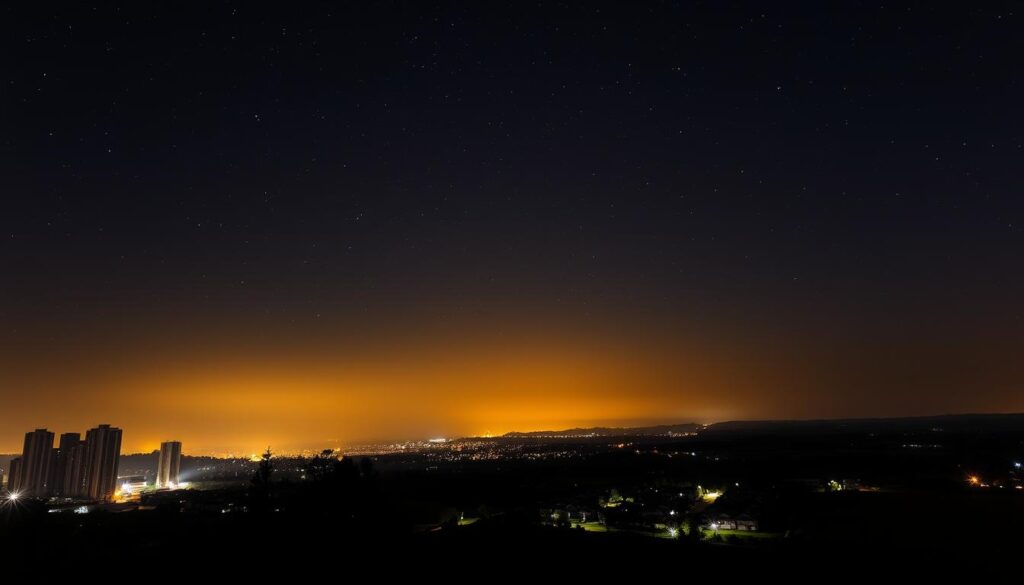
Tools to Measure Light Pollution
There are tools to help measure light pollution. You can use:
- Light pollution maps, which show how bright different areas are.
- Smartphone apps, like ones that measure sky brightness or tell you about local light pollution.
- Special equipment like sky quality meters, which give exact readings of how bright the sky is.
These tools help you understand how much light pollution there is and spread the word about it.
Resources for Community Awareness
It’s key to get the community involved in fighting light pollution. You can use:
- Learning materials from groups that work to keep the sky dark.
- Workshops and events about light pollution and its effects.
- Online places and forums to share info and work with others.
Using these resources can help spread light pollution awareness and get people to work together to lessen it.
Strategies to Reduce Light Pollution
You can help reduce light pollution by making simple changes. One key step is to adjust your outdoor lighting.
Adjusting Outdoor Lighting
Outdoor lights can add a lot to light pollution. To lessen this, use motion sensors and timers on your lights. This way, lights only turn on when they’re needed, cutting down on unnecessary light.
- Install motion-sensitive lights to cut down on constant light.
- Use timers to control when lights are on and off.
- Choose lighting that directs light downwards to reduce skyglow.
Stay away from bright white, blue, green, or red LED lights. They make light pollution worse. Instead, pick warm-toned lighting that’s better for your eyes and wildlife.
Advocating for Dark Sky Policies
Supporting dark sky policies in your area is key to fighting light pollution. This means backing rules that encourage smart outdoor lighting.
- Work with local government to set up lighting laws that cut down light pollution.
- Back efforts for dark sky-friendly actions.
- Teach your neighbors and community about the need to lower light pollution.
Utilizing Natural Light
Use natural light during the day by opening curtains and blinds. This cuts down on the need for artificial light and helps your body’s clock.
- Make the most of natural light in your home during the day.
- Think about getting skylights or bigger windows for more light.
- Use light-colored, reflective surfaces to spread natural light deeper in your home.
By using these methods, you can help lessen light pollution and support a greener world. Every little bit helps, and together, we can make a big difference.
The Benefits of Reducing Light Pollution
Reducing light pollution lets you see the stars more clearly. It also helps the environment. You’ll enjoy a better night sky and a healthier planet.
Improved Night Sky Visibility
Less light pollution means you can see the stars better. The sky looks more amazing. It’s not just pretty; it’s also important for science and culture.
Environmental Benefits
Light pollution reduction is good for the planet. It saves energy, cuts down on pollution, and protects animals. Using smart lighting helps our environment.
| Environmental Benefits | Description | Impact |
|---|---|---|
| Reduced Energy Consumption | Using energy-efficient lighting | Less energy wasted |
| Preservation of Natural Habitats | Minimizing light pollution | Less disruption to wildlife |
| Decreased Greenhouse Gas Emissions | Lower energy consumption | Reduced carbon footprint |
Enhanced Quality of Life
Less light pollution means better sleep and less glare. It makes your home more peaceful. It also makes your community safer.
In conclusion, cutting down on light pollution has many benefits. It improves the night sky, helps the environment, and makes life better. By tackling light pollution, we make our world a better place for all.
Engaging with Local Darkness Initiatives
Getting involved in local efforts to reduce light pollution is key. By joining your community, you help create a greener future. This reduces the harm caused by too much light at night.
Finding Local Groups and Organizations
First, look for groups in your area that want to fight light pollution. You can search online for environmental or astronomy groups. They might be working on making the night sky darker.
- Check local environmental groups’ websites or social media for initiatives related to light pollution.
- Look for astronomy clubs or stargazing groups that may be involved in promoting dark skies.
- Contact your local government or park department to inquire about any light pollution reduction efforts.
Participating in Night Sky Events
Joining night sky events is a great way to connect with others. These events include stargazing nights and educational workshops. They help you learn about light pollution and its effects.
Benefits of Night Sky Events:
| Event Type | Benefits |
|---|---|
| Stargazing Nights | Opportunity to observe the night sky, learn about constellations, and understand the impact of light pollution on astronomy. |
| Educational Workshops | Learn about the science behind light pollution, its effects on the environment, and strategies for reduction. |
| Community Outreach | Meet like-minded individuals, collaborate with local groups, and raise awareness about the importance of dark skies. |
Spreading Awareness in Your Community
It’s important to share what you know about light pollution. Use social media, host local events, or just talk to your neighbors. This helps raise awareness and inspire change.
By joining local efforts, you help make the world a better place. Whether it’s finding groups, attending events, or spreading the word, every effort matters.
Choosing Dark-Sky Friendly Products
You can help reduce light pollution by choosing the right lighting. This means picking products that are good for the night sky. It’s about making smart choices for your home’s lighting.
Lighting Options for Your Home
There are many ways to light your home without polluting the sky. LED lights are a great choice because they save energy and can be made dark-sky friendly. Look for lights with a shield or cover to keep the light from going up into the sky.
Best Outdoor Lighting Practices
Outdoor lights can pollute the sky a lot. To fight this, use lights only when you need them. Also, adjust your lights so they don’t shine up. And use motion sensors to turn off lights when no one is around.
| Lighting Practice | Benefit |
|---|---|
| Using LED lights | Energy efficiency and reduced light pollution |
| Installing motion sensors | Reduces unnecessary lighting |
| Adjusting light angles | Minimizes upward light |
Importance of Shielding
Shielding your outdoor lights is key to stopping light from going up. Shielded fixtures help by directing light down. This small change can greatly help keep the night sky dark.
By picking the right products and using smart lighting, you help prevent light pollution. This way, you help keep the night sky beautiful for everyone in the future.
Educating Others About Light Pollution
You can make a big difference by teaching others about light pollution. Share what you know to spread the word about its causes and effects.
Informing Through Materials
Creating materials like brochures and posters is a good start. They can explain what light pollution is and how it affects us. Use simple language and eye-catching images to grab attention.
Organizing Events and Workshops
Hosting events and workshops is another great way to teach people. You can have lectures or star-gazing nights to talk about light pollution. Make it fun with interactive activities.
Partnering with Educational Institutions
Working with schools and libraries can reach more people. You can help create lessons about light pollution. Also, libraries can host events to teach about it. This helps build a community that cares about the environment.
Future Trends in Light Pollution Management
You’re part of a growing movement to cut down light pollution. It’s key to stay up-to-date with the latest trends. Technology, policy changes, and community efforts are all pushing for progress.
Smart Lighting and Policy Developments
Smart lighting technology is making big strides, helping to lessen light pollution. When used right, it can make a big difference. There are also new policies coming in to regulate light better. You can help by supporting efforts for smarter lighting and stricter rules against light pollution.
Community Action for Change
Community action is crucial for change. Joining local groups and pushing for dark sky policies can make a big impact. Together, we can reduce light pollution, helping the environment and our community.