
You can help save the night sky by choosing sustainable outdoor lighting. The International Dark-Sky Association says light pollution is a big problem worldwide. It harms both our planet and our health.
By cutting down on outdoor lighting and picking energy-saving lights, you can save energy. This also lessens the bad effects of light pollution on our planet.
Being a good citizen or community means supporting dark sky preservation. Use sustainable lighting to help our environment. This way, we all contribute to a healthier world and lower environmental impact.
Understanding Light Pollution
Light pollution is a big issue today, with artificial lights everywhere. It’s not just about seeing the stars. It also affects your health and the planet.
Definition and Types of Light Pollution
Light pollution is any bad effect of artificial light at night. This includes sky glow, glare, light trespass, and light clutter. Sky glow makes the night sky bright over cities. Glare is too much brightness that hurts your eyes. Light trespass is when light goes where it shouldn’t, like into your house.
Light clutter is when there are too many lights. It’s hard to tell them apart.
Sources of Light Pollution
Many things cause light pollution. Cities have lots of lights, like streetlights and billboards. For more info, check National Park Service’s page on Light. Home and business lights also add to the problem, if they’re not aimed right.
Effects on Human Health
Light pollution can harm your health. It messes with your body’s natural clock, leading to sleep problems. It can also cause obesity, diabetes, and depression.
Knowing about light pollution helps you fight it. Simple actions, like using sustainable lighting, can help a lot.
Why Light Pollution Matters
As cities grow, the need to tackle light pollution grows too. Artificial light at night harms the environment, our health, and wildlife.
The night sky, once a wonder, is fading due to light pollution. It’s not just about seeing stars. It’s also about the health of our planet.
Impact on Night Sky Observation
Light pollution makes it hard to see stars and other celestial bodies. This is bad news for astronomy and our cosmic understanding.
Influence on Wildlife Behavior
Light pollution messes with the natural lives of many creatures. Sea turtles, for example, get lost because of artificial lights instead of the moon.
Consequences for Ecosystem Health
Light pollution can harm ecosystem health in big ways. It can upset the balance of nature, affecting biodiversity and the strength of habitats.
| Aspect | Impact of Light Pollution | Conservation Measure |
|---|---|---|
| Night Sky Observation | Reduced visibility of stars and celestial objects | Use of shielded lighting fixtures |
| Wildlife Behavior | Disruption of migration, feeding, and breeding patterns | Implementation of motion sensors and timers |
| Ecosystem Health | Cascading effects leading to ecosystem imbalance | Promotion of dark sky preserves and sustainable lighting practices |
Understanding light pollution and its effects is key. We can fight it by using sustainable lighting and supporting dark sky conservation.
Assessing Light Pollution in Your Area
Checking light pollution in your area is key to protecting the environment and health. First, you must know the current light pollution levels in your community.
Using Light Pollution Maps
Light pollution maps are a great tool for assessing light pollution. These maps show light pollution levels in different areas. You can find these maps online, like on the International Dark-Sky Association website. This helps you understand light pollution in your area.
Observing the Night Sky
Looking at the night sky is a simple way to check light pollution. On a clear night, go outside and watch the stars. If you see only a few bright stars, it might mean high light pollution. You can also compare your view with areas known for low light pollution.
A study on PubMed Central shows that watching the night sky helps people understand light pollution better.
Community Resources and Reporting
Getting involved in your community is important for tackling light pollution. You can:
- Join local astronomy clubs or events to learn about light pollution.
- Tell your local authorities about too much outdoor lighting.
- Encourage your community to use sustainable outdoor lighting practices.
Together, we can lessen light pollution and keep the night sky beautiful.
Minimizing Light Pollution at Home
You can make a big difference by changing your outdoor lighting. It’s easier than you think. Start with your outdoor lighting choices.
Choosing the Right Outdoor Lighting
Choosing the right outdoor lighting is key to reducing light pollution. Look for lights that don’t cause glare or light trespass. LED lights are a good choice because they save energy and can be aimed where you need them.
- Choose fixtures that are fully shielded to prevent light from being emitted upwards.
- Consider the color temperature of the light; warmer tones are less disruptive.
- Ensure the lighting is not overly bright for the area it is illuminating.
Using Shielded Fixtures
Shielded fixtures are a great way to cut down on light pollution. They direct light downwards, keeping it from going up into the sky.
Benefits of shielded fixtures include using less energy and less light pollution. You get the same light without wasting power.
Implementing Motion Sensors and Timers
Using motion sensors and timers can really help. They make sure your lights are only on when you need them.
- Install motion sensors to turn lights on only when someone is present.
- Use timers to turn off lights during certain hours of the night.
- Consider smart lighting systems that can be controlled remotely for optimal efficiency.
By doing these things, you help reduce light pollution and support sustainable outdoor lighting. It’s good for the environment and can save you money and energy.
Planning Your Outdoor Activities
To enjoy stargazing, it’s key to understand light pollution. Planning well lets you see the night sky fully.
Best Times for Stargazing
The best times for stargazing vary. They depend on the lunar cycle and weather. Avoid nights when the moon is full because its light makes it hard to see stars. Choose nights when the moon is new or crescent.
Also, check the weather forecast for clear skies. Clouds can block your view of the stars, so plan for clear weather.
| Month | Best Stargazing Nights | Lunar Phase |
|---|---|---|
| January | 10th-15th | New Moon |
| February | 8th-12th | Crescent Moon |
| March | 10th-14th | New Moon |
Choosing Locations with Low Light Pollution
It’s important to find places with little light pollution for stargazing. National parks and dark sky reserves are great because they keep the sky dark.
Use online tools and apps to find dark spots near you. Apps like Dark Sky Finder and Star Walk help find places with less light pollution.
Local Astronomy Clubs and Events
Joining local astronomy clubs and going to stargazing events can improve your experience. These groups often have stargazing parties and viewing nights with telescopes and expert advice.
Going to local astronomy events also lets you learn more about the sky. You’ll meet others who love stargazing too.
- Check local event calendars for astronomy meetups.
- Join online forums and social media groups dedicated to astronomy.
- Participate in citizen science projects related to astronomy.
Collaborating with Your Community
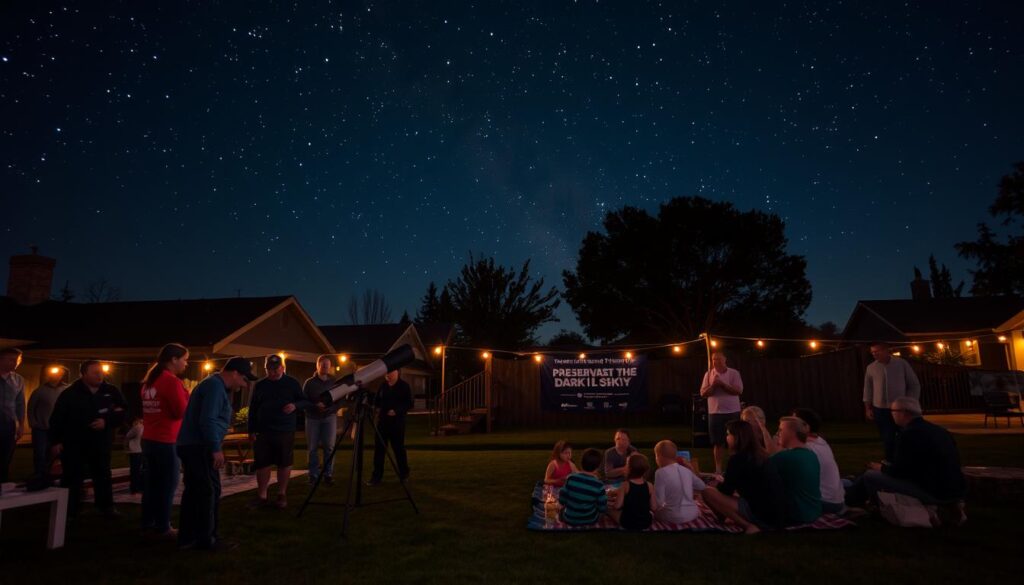
Working with your community is key to protecting dark skies and the environment. It takes everyone’s help to fight light pollution. This effort is essential for making real changes.
Engaging Local Governments
Start by talking to your local government. They have rules that affect how much light pollution we see. You can push for laws that help reduce light pollution by using better lighting.
The International Dark-Sky Association says community help is vital. It helps spread the word about why dark skies are important. Working with local governments can also lead to smart, green lighting solutions.
Organizing Neighborhood Clean-Up Events
Hosting clean-up events is a great way to tackle light pollution. These events help remove unnecessary lights. They also teach people why dark skies matter.
Getting locals involved in clean-ups builds a sense of community. It shows everyone is working together for a better environment. This teamwork can greatly reduce light pollution and encourage green living.
Hosting Educational Workshops
Running workshops is a smart way to teach about light pollution. These sessions share the benefits of dark skies and how light pollution affects us. They also offer tips on how to use less light at home.
Workshops give people the knowledge to make better choices about outdoor lighting. This helps in the fight for a greener, more sustainable world.
In summary, working together with your community is a strong way to fight light pollution. By talking to local governments, organizing clean-ups, and hosting workshops, you can help protect dark skies and the environment.
Implementing Smart Lighting Solutions
Looking to cut down on light pollution in your area? Smart lighting is a key strategy. It not only cuts down on light pollution but also saves energy and supports sustainable growth.
Advantages of LED Technology
LEDs lead the way in smart lighting. They use less energy and let you control light direction and intensity better. This means less light goes up into the sky, reducing glow.
LEDs offer:
- Energy efficiency
- Longer life than old lights
- Flexibility in design for better control
Smart Controls and Apps
Smart controls and apps are key for managing outdoor lights. They let you adjust light levels in real-time. This ensures your lights are just right for safety and less pollution.
Smart controls bring:
- More energy savings with smart schedules
- Better safety with lights that adjust to conditions
- Flexibility for different needs or events
Case Studies of Successful Implementations
Many places have cut light pollution with smart lighting. For example, a city might use smart streetlights that change brightness with the day and traffic. This saves energy and keeps the night sky dark.
| Location | Smart Lighting Solution | Outcome |
|---|---|---|
| City A | Smart streetlights with adaptive brightness | 30% reduction in energy consumption |
| Town B | LED lighting with smart controls | 25% decrease in light pollution |
Smart lighting helps make cities greener and more sustainable. As tech improves, so will smart lighting’s role in reducing pollution.
Supporting Dark Sky Initiatives
You can help keep the night sky dark by supporting dark sky efforts. Preserving the night sky is key for our environment. It needs everyone’s help, from individuals to governments.
National and Local Organizations
National and local groups are crucial for saving the night sky. The International Dark-Sky Association (IDA) is a big name in this field. They work hard to protect our night sky.
Advocating for Dark Sky Preserves
It’s important to support dark sky preserves. These areas are great for stargazing and protecting wildlife. By backing these preserves, you help keep the night sky dark.
Benefits of Certification Programs
Certification programs, like those from the IDA, honor places that protect the night sky. They encourage using outdoor lights wisely. These programs also spread the word about the value of dark skies.
Education and Awareness Campaigns
Teaching people about light pollution is key to fixing its problems. It helps protect our environment and health. By spreading the word, we can keep our skies dark and reduce light pollution’s harm.
Informational Materials for Communities
Creating materials like brochures and posters is a great way to teach communities. They share the value of dark skies and the need for green lighting. These tools help spread the word about light pollution’s effects and how to fight it.
These materials can be found at community centers, libraries, and online. This way, more people can learn about the issue.
School Programs and Workshops
Getting schools involved is crucial for a future that values dark skies. Educational programs teach kids about astronomy and light pollution. They also show them how to help.
- Interactive presentations and stargazing events make learning fun.
- Working with local astronomy clubs adds more resources and knowledge.
Social Media Outreach
Social media is a strong tool for reaching many people. Campaigns on Facebook, Twitter, and Instagram share important info. They highlight success stories and ways to cut down light pollution.
Using social media helps build a strong, informed group for dark sky protection.
Global Perspectives on Light Pollution
As the world gets more connected, fighting light pollution needs a global view. Light pollution doesn’t stop at borders. So, working together across countries is key to solving it.
Light pollution is a big problem everywhere, affecting many countries. To tackle this, global efforts aim to improve outdoor lighting and cut down on light pollution.
Case Studies from Other Countries
Many countries are tackling light pollution head-on. For example, Chile has strict rules to keep its skies dark. Japan is pushing for lights that use less energy.
| Country | Initiative | Outcome |
|---|---|---|
| Chile | Dark Sky Regulations | Preservation of dark skies |
| Japan | Energy-Efficient Lighting | Reduced energy consumption |
| Spain | Smart Lighting Systems | Improved lighting efficiency |
International Regulations and Agreements
Working together is vital to fight light pollution. Global rules and agreements help. For example, the International Dark-Sky Association’s program for dark sky preserves.
These efforts help spread the word about keeping dark skies. They push for better outdoor lighting.
Lessons Learned from Global Initiatives
Global projects have shown us how to fight light pollution. Using shielded lighting fixtures and smart lighting controls helps a lot. They cut down light pollution and save energy.
By using these methods, places all over can fight light pollution. This way, we can keep the night sky beautiful for everyone.
Future of Urban Lighting
Urban lighting is set for a big change. The push for sustainable lighting solutions is growing. This is because of worries about light pollution and its effects on the environment and health.
Emerging Trends in Sustainable Lighting
The move towards sustainable lighting is picking up speed. Cities worldwide are embracing new lighting options. These options cut down on energy use and light pollution.
LED technology is becoming popular. It’s more energy-efficient and lasts longer than old lighting. Also, smart lighting controls are being added. They let cities adjust lights based on who’s around and how bright it is outside.
Innovations in Lighting Technology
New lighting tech is key to urban lighting’s future. Smart lighting solutions help cities manage their lights better. This cuts down on energy waste and makes places safer.
Using motion sensors and timers can cut light pollution. Smart lighting apps let people control lights from afar. This makes lights more efficient and useful.
A Vision for Future Cities
The dream for future cities includes sustainable lighting practices in urban planning. It’s not just about using energy-saving lights. It’s about designing lighting that works for everyone and the planet.
By going for sustainable urban lighting, cities can lessen their environmental impact. They can also make life better for people. This means keeping the night sky dark for stars and wildlife.
Resources for Further Learning
To learn more about light pollution, it’s key to explore educational resources. It’s important to promote sustainable lighting to protect our environment. You can find materials and courses that help reduce light pollution.
Educational Materials
Books and documentaries give deep insights into light pollution. For example, the International Dark-Sky Association publishes books. They share knowledge on sustainable lighting and its environmental benefits.
Online Courses and Webinars
Online, you can find webinars and courses on sustainable lighting. These teach you about new lighting technologies. They help you understand how to lessen light pollution.
Community Networks
Joining local astronomy clubs or environmental groups is a great idea. These groups often hold events and workshops. They focus on keeping our skies dark.
Using these resources helps you understand light pollution better. You can also help make your community’s lighting more sustainable.