
Capturing the beauty of planetary nebulae needs both technical skill and creative vision. As a photographer, you’re probably drawn to their intricate details and vibrant colors.
We’ll look at the key equipment and camera settings for nebula photography. Learning these basics will help you capture the stunning details of these celestial wonders.
Whether you’re an experienced astrophotographer or just beginning, our tips will help you improve your nebula photography.
Understanding Planetary Nebulae
Planetary nebulae are the leftovers of stars. They are a great subject for astrophotography, full of detail and science. To capture their beauty, knowing what they are and their role in the universe is key.
What Are Planetary Nebulae?
Planetary nebulae form when a star runs out of fuel and blows its outer layers into space. This creates a colorful, glowing shell around the star’s hot core. The material expelled can be seen from far away, making them important to study. They are not just beautiful but also tell us about a star’s final stages.
The Life Cycle of Stars
Stars, like our Sun, go through many stages. As they age and use up hydrogen, they expand into red giants. Then, they shed their outer layers, making a planetary nebula. This stage is short, lasting only tens of thousands of years. Knowing this helps photographers catch the best moments for their shots.
| Stage | Description | Duration |
|---|---|---|
| Main Sequence | Star fuses hydrogen into helium | Millions to billions of years |
| Red Giant | Star expands after hydrogen depletion | Hundreds of millions to a few billion years |
| Planetary Nebula | Star sheds outer layers | Tens of thousands of years |
Importance in Astronomy
Planetary nebulae are key to understanding how galaxies change chemically. They add heavy elements to the space between stars. This helps create new stars and planets. For scientists and photographers, studying them gives us a peek into the universe’s history and how it works.
Using the Best Cameras for Astrophotography, you can see the details of these wonders. To capture them well, you need to know their nature and use the right camera settings. This brings out the nebula’s structure and colors.
Equipment You’ll Need
To capture the breathtaking beauty of planetary nebulae, you’ll need the right equipment. The quality of your gear can significantly impact the outcome of your astrophotography endeavors.
Cameras for Astrophotography
When it comes to cameras for astrophotography, you have two main options: DSLR (Digital Single-Lens Reflex) cameras and mirrorless cameras. DSLR cameras are popular among astrophotographers due to their ability to capture high-quality images with minimal noise. Mirrorless cameras, on the other hand, offer advanced features like improved autofocus and enhanced video capabilities.
- DSLR cameras: Known for their high image quality and manual controls.
- Mirrorless cameras: Offers advanced features and potentially better performance in low light.
Telescopes and Lenses
The choice of telescope or lens is critical for capturing detailed images of planetary nebulae. Telescopes with a longer focal length can provide more detailed views, while wide-angle lenses can capture broader nebulae.
- Refractor telescopes: Ideal for capturing sharp images with minimal chromatic aberration.
- Reflector telescopes: Offers larger apertures for gathering more light.
Essential Accessories
In addition to a camera and telescope or lens, several accessories are essential for successful astrophotography. These include:
- Tripods: For stabilizing your camera and telescope.
- Remote shutters or intervalometers: To minimize camera shake.
- Filters: To enhance image quality by reducing light pollution or enhancing specific wavelengths.
Choosing the Right Location
To get amazing photos of planetary nebulae, you need the right spot. The quality of your photos depends a lot on where you are.
Light Pollution Considerations
Light pollution is a big deal for astrophotography. City lights scatter into the sky, making it tough to see nebulae. So, it’s key to find a spot far from cities.
Use light pollution maps or apps to find dark places. Dark-sky preserves and national parks are great choices because they keep light pollution low.
Ideal Observing Sites
The best spots for viewing have dark skies and clear air. High places are better because they’re above most of the atmosphere.
Remote deserts, mountains, and coasts are top picks. National parks and dark-sky areas offer dark skies and visitor facilities.
Safety Tips for Night Photography
At night, safety comes first. Always tell someone where you are and when you’ll be back, even in remote spots.
- Carry enough light, like headlamps or flashlights, to see.
- Wear warm, comfy clothes for the weather.
- Watch out for dangers like wildlife or rough terrain.
With these tips, you can have a safe and great astrophotography night.
Preparing for Your Shoot
Capturing stunning images of planetary nebulae requires careful planning. You need to research your target nebula, check the weather, and set up your gear right.
Researching Your Target Nebula
Before you go, research the planetary nebula you want to photograph. Learn about its position, brightness, and the best time to capture it. Use astronomy software or apps to help you plan your shot. Knowing the nebula’s characteristics will help you prepare the right equipment and settings.
Weather and Conditions
Checking the weather forecast is key for the best viewing conditions. Clear skies are crucial for astrophotography, so watch the weather closely. Also, consider the moon phase and atmospheric conditions that might affect your shoot. A clear, dark sky will significantly enhance your image quality.
Setting Up Your Gear
Setting up your equipment correctly is essential for high-quality images. Make sure your camera, telescope, and accessories are working well. Double-check that all your gear is properly connected and configured before you start shooting. Get familiar with your equipment’s manual settings to make the most of your astrophotography session.
By carefully preparing for your shoot, you’ll be on your way to capturing breathtaking images of planetary nebulae. Remember, the key to successful astrophotography lies in the details.
Camera Settings for Nebulae
Getting the right camera settings is key for capturing stunning nebula images. You need to adjust your settings based on the conditions of your shoot. This ensures the best results for your astrophotography.
Exposure Settings
Exposure is crucial for planetary nebulae photos. Longer exposures can reveal more detail but might overexpose the image. Start with a moderate exposure, like 1-2 minutes, and adjust as needed.
The brightness of the nebula also matters. Brighter ones might need shorter exposures to avoid overexposure. Fainter ones might require longer exposures to capture enough detail.
ISO Recommendations
The ISO setting is also vital for quality nebula images. Lower ISOs, like 800 or 1600, are preferred to reduce noise. But, the best ISO can vary by camera and shoot conditions.
Try different ISOs to find the best for your gear and the nebula. Adjusting ISO and exposure together can help achieve the perfect image.
Focusing Techniques
Sharp focus is essential for detailed nebula images. Use live view or focus assist to get precise focus.
Focus on a bright star to ensure sharpness. Some cameras have advanced features like focus peaking or magnification. These can be very helpful.
Techniques for Capturing Detail
Photographing planetary nebulae requires special techniques to capture their details. These techniques make your photos look better and help scientists too.
Long Exposures vs. Short Exposures
Choosing between long and short exposures is key. Long exposures let in more light, showing faint details. But, they can add noise and need careful tracking to avoid star trails.
Short exposures cut down on atmospheric disturbance and prevent overexposure. They’re great for the nebula’s core details. Yet, they might miss the faint outer parts.
- Long exposures are ideal for revealing faint details.
- Short exposures are better for capturing sharp details in the nebula’s core.
Stacking Images for Clarity
Image stacking is a powerful method to improve your photos. It combines multiple shots to boost the image quality. This makes your photos clearer and more detailed.
To stack images well, you need special software. It aligns the images based on stars or other points. This technique enhances your photos and reveals hidden details.
Using Filters for Enhancement
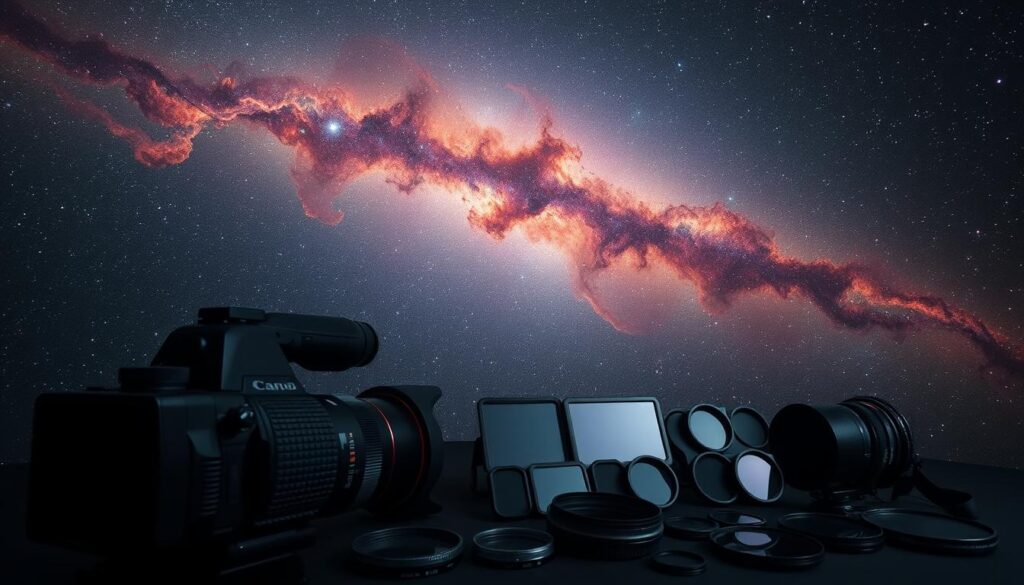
Filters are crucial in astrophotography, like for planetary nebulae. Narrowband filters focus on specific light wavelengths, like ionized oxygen or hydrogen.
These filters cut down light pollution and boost contrast. They also uncover details hidden by other light wavelengths.
| Filter Type | Purpose |
|---|---|
| Narrowband Filters | Isolate specific wavelengths of light |
| Light Pollution Filters | Reduce the impact of light pollution |
Post-Processing Your Images
Post-processing is where the magic happens. It turns your raw astrophotography images into stunning visuals. This stage is key in enhancing the details and colors of your planetary nebulae photographs.
Software Options
Choosing the right software is the first step in post-processing. Adobe Photoshop is popular for its powerful editing tools. StarStax is great for image stacking. Free alternatives like GIMP also offer many features.
Key features to look for in post-processing software include:
- Support for RAW files
- Image stacking capabilities
- Advanced noise reduction tools
- Color adjustment options
Basic Editing Techniques
Basic editing involves adjusting brightness, contrast, and color balance. Start by cropping your image to focus on the nebula. Then, adjust the levels to enhance the details. It’s also essential to reduce noise using tools like the noise reduction filter.
Advanced Processing Tips
For more advanced processing, consider using layer masking to combine multiple exposures or images. This technique allows you to achieve a more detailed representation of the nebula. Using histogram adjustments can also help in balancing the colors and ensuring the image is not overexposed or underexposed.
Experimenting with different filters and effects can also enhance your images. But, it’s crucial to maintain a balance to avoid over-processing, which can lead to unnatural results.
Understanding Color in Nebulae
Color plays a big role in capturing planetary nebulae. The bright colors we see tell us about the star’s life and what it’s made of. They’re not just pretty; they’re full of information.
When taking pictures of nebulae, it’s key to know the difference between natural and synthetic colors. Natural colors are what the object really looks like. Synthetic colors are made to show wavelengths we can’t see.
Natural vs. Synthetic Colors
Natural colors come from elements like hydrogen and helium. For example, hydrogen-alpha light gives many nebulae their red hue. This light has a wavelength of 656.3 nanometers.
Synthetic colors, though, show data from wavelengths we can’t see. This is useful for spotting hidden details in the nebula.
Color Filters and Their Effects
Color filters are essential for capturing nebulae’s true beauty. They let you focus on specific wavelengths, making certain elements stand out.
An OIII (oxygen III) filter highlights doubly ionized oxygen in nebulae. An H-alpha filter captures hydrogen’s red light, showing the nebula’s structure.
Histogram and Color Balance
Getting the color balance right is crucial in astrophotography. The histogram helps you adjust exposure and color. It ensures your image looks right.
To get the colors right, you can tweak them in post-processing. Adjusting white balance and saturation makes your image look better and more accurate.
Understanding color in nebulae can greatly improve your nebula photography. You’ll capture stunning images that are full of detail and scientific value.
Common Challenges You May Face
Photographing planetary nebulae comes with unique challenges. You’ll need to think carefully about how to capture these celestial wonders. You might face several obstacles that could affect your image quality.
Dealing with Light Pollution
Light pollution is a big challenge. It can make faint nebulae hard to see. To fight this, find locations with little light pollution, like remote spots or dark-sky preserves. Using narrowband filters helps too. They focus on specific wavelengths from the nebula, improving contrast and reducing light pollution’s effect.
Tracking and Stability Issues
Getting clear images of planetary nebulae needs good tracking and stability. Make sure your telescope is aligned and tracking the nebula’s movement. A sturdy tripod and a remote shutter release or timer help avoid camera shake and vibrations. This leads to sharper photos.
Equipment Malfunctions
Equipment failures can be a big problem. Regularly check and maintain your gear to avoid issues. Clean optics, check for loose connections, and make sure mechanical parts work well. Having backup equipment ready can save your shoot if something goes wrong.
Knowing and tackling these common challenges can greatly improve your planetary nebula photography. Using the right methods and being ready for problems will help you reach your astrophotography goals.
Optimal Seasons for Photographing
The best time to take pictures of planetary nebulae depends on several things. These include the season and where you are. Knowing these helps you get amazing shots of these space wonders.
Best Times of Year
In the Northern Hemisphere, summer and early fall are the best times. The sky is clearer then. In the Southern Hemisphere, winter and spring are the best seasons.
- Summer months offer many targets, like the Ring Nebula (M57) and the Dumbbell Nebula (M27).
- Fall brings targets like the Helix Nebula (NGC 7293) into view.
Seasonal Considerations for Nebulae
When planning to photograph planetary nebulae, think about the season. Light pollution and weather conditions greatly affect your photos.
For more tips on choosing targets by season, check out AstroBackyard’s guide on astrophotography targets.
Monthly Targets
Here’s a list of some notable planetary nebulae for different months:
| Month | Target Nebula | Constellation |
|---|---|---|
| June | Ring Nebula (M57) | Lyra |
| July | Dumbbell Nebula (M27) | Vulpecula |
| September | Helix Nebula (NGC 7293) | Aquarius |
Educational Resources
Exploring nebula photography? Having the right resources is key. Whether you’re new or experienced, there’s always more to learn. This can help you improve your skills.
Books and Guides
Many books and guides can boost your nebula photography skills. They cover everything from the basics to advanced techniques. This helps you capture stunning images.
- Comprehensive Guides: Find books that dive deep into equipment for nebula photography. This includes telescopes and cameras.
- Tutorial Books: Some books offer step-by-step tutorials. They help you improve your skills.
- Case Studies: Reading about other photographers’ experiences can be very inspiring.
Online Tutorials and Courses
Online tutorials and courses are great for learning about nebula photography. They let you learn at your own pace. Plus, they often have interactive elements.
- Webinars: Attend webinars on specific nebula photography topics. This includes image processing and choosing equipment.
- Online Courses: Take online courses that cover various levels, from beginner to advanced.
- YouTube Tutorials: Many pros share their knowledge on YouTube. They cover different nebula photography techniques.
Community Groups and Forums
Joining community groups and forums is a great way to meet others who love nebula photography. You can learn from their experiences and share your own.
- Forums: Online forums are great for asking questions and sharing your work. You can get feedback from others.
- Social Media Groups: Join social media groups for nebula photography. They keep you updated on the latest trends and techniques.
- Local Astronomy Clubs: Think about joining local astronomy clubs. They’re a great place to network and learn from others.
Showcasing Your Work
Now that you’ve captured stunning images of planetary nebulae, it’s time to share them. Use the Best Cameras for Astrophotography and follow Tips for Nebula Photography.
Sharing your work on social media is a great way to get feedback. It also helps you connect with other astrophotography enthusiasts. Use relevant hashtags to increase visibility. Consider joining online communities centered around astronomy and photography.
Sharing on Social Media
When sharing on social media, include a brief description of your image. Mention the object captured, the equipment used, and any notable techniques employed. This helps others appreciate your work and understand the context.
Creating a Portfolio
Building a portfolio of your best work is key. It showcases your skills and style. Consider creating a website or online gallery to display your images. Make sure to update it regularly with new captures.