
Capturing the beauty of the lunar cycle requires a deep understanding of the different moon phases and the best times to photograph them.
As you start your lunar photography journey, you’ll find each phase offers unique chances and challenges. This guide will cover the basics of shooting the moon phases and share tips for stunning images.
By learning about the lunar cycle and timing your shots right, you’ll improve your lunar photography skills. You’ll capture breathtaking images of the moon in all its glory.
Understanding Moon Phases and Their Impact on Photography
Lunar photography is more than just snapping the moon. It’s about knowing its phases. The moon goes through eight phases as it orbits Earth, each offering unique photo opportunities.
What Are Moon Phases?
Moon phases show how the moon looks as it moves around Earth. Phases include the new moon, waxing crescent, first quarter, full moon, last quarter, and waning crescent. Each phase shows how much of the moon we can see from Earth.
| Moon Phase | Characteristics | Photography Opportunities |
|---|---|---|
| New Moon | No illumination; moon is between Earth and sun | Astrophotography; capturing the moon’s shadow |
| Waxing Crescent | Increasing illumination; visible in the west after sunset | Capturing the crescent shape; using the moon as a backlight |
| Full Moon | Entire face illuminated; visible all night | Landscape photography with the moon; capturing its brightness |
| Waning Crescent | Decreasing illumination; visible in the east before sunrise | Dawn photography; capturing the moon’s gentle light |
How Moon Phases Affect Light and Mood
Different moon phases change the light and mood in your photos. A full moon gives bright, direct light, perfect for landscapes. On the other hand, a crescent moon offers softer light, adding a calm mood to your shots.
For more on moon phases and photography, check out NASA’s Moon Photography Guide. It offers detailed tips for capturing amazing lunar photos.
Knowing about moon phases and their lighting effects helps plan your shoots better. This way, you can take the best photos under the right conditions.
Essential Gear for Moon Phase Photography
Photographing the moon’s phases needs specialized photography equipment for top-notch images. The right tools can greatly improve your moon photography.
Cameras and Lenses Best Suited for Night Photography
A DSLR or mirrorless camera is best for moon photography. It lets you adjust settings for low light. A telephoto lens with at least 200mm focal length is perfect for moon details.
- A lens with a wide aperture (like f/2.8) gathers more light.
- Lenses with image stabilization reduce camera shake.
- 300mm or more focal length is best for a bigger moon image.
Tripods and Stabilization Tools
A strong tripod is key for moon photography. It keeps the camera steady, even with long lenses. This leads to sharper photos.
- Choose tripods made from durable materials like carbon fiber.
- A tripod with a smooth panhead or ballhead is great for tracking the moon.
- Remote shutter release or self-timer can help reduce camera shake.
Filters to Enhance Your Shots
The right filters can make your moon photos better. A neutral density (ND) filter balances exposure. A polarizing filter cuts glare and boosts moon details.
- Try different filters to find the best look.
- A graduated ND filter is great for sky and ground exposure balance.
Investing in the right moon photography equipment boosts your lunar photo quality. Whether you’re new or experienced, the right gear is essential for amazing moon phase shots.
Planning Your Moon Phase Photography Sessions
Planning your moon phase photography sessions is key to capturing stunning images. You need to understand the lunar cycle and how it affects the moon’s visibility and appearance.
Using Moon Phase Calendars
A moon phase calendar is a valuable tool for photographers. It helps you anticipate the different moon phases and plan your shoots. Knowing when the moon will be full, new, or in crescent or gibbous phases lets you prepare for the lighting.
Moon phase calendars are easy to find online, and many photography apps offer this info too. Using these resources, you can schedule your shoots for the lunar events that interest you the most.
Best Times to Shoot for Different Moon Phases
The best time to shoot changes with the moon phase. For example, during the full moon, the moon is brightest just after sunset and before sunrise. For crescent or gibbous moons, you might need to adjust your shooting schedule for the right mood and lighting.
For a full moon, the best times are just before sunset and after sunrise when the moon is high. For other phases like crescent or quarter moons, you might need to shoot later at night or earlier in the morning.
Knowing these timing details is crucial for capturing the moon in all its phases. By planning your shoots based on the lunar cycle, you can get the best lighting and create compelling photos.
Techniques for Capturing Stunning Moon Photographs
To capture the moon’s beauty, you need both technical skills and creativity. Understanding and using various techniques is key to overcoming moon photography challenges.
Manual Settings for Low-Light Photography
Photographing the moon in low light requires the right manual settings. Start with a low ISO, like 100 or 200, to reduce noise and keep the image sharp.
Key camera settings include:
- Aperture: Use a higher f-stop value (e.g., f/8 or f/11) for a sharper image with more depth.
- Shutter Speed: A slower speed can capture more light, but watch for overexposure. Start with 1/125s or 1/250s.
- Manual Focus: Use live view or focus assist to focus on the moon precisely.
| Setting | Recommended Value | Effect |
|---|---|---|
| ISO | 100-200 | Reduces noise |
| Aperture | f/8 – f/11 | Increases depth of field |
| Shutter Speed | 1/125s – 1/250s | Balances exposure |
Composition Tips for Moonshots
Composition is crucial for visually appealing moon photos. Use the rule of thirds to place the moon interestingly in the frame.
Try different angles and perspectives to make your shots varied. Adding foreground elements can also enhance your photos by adding context and scale.
Including Landscape Elements in Your Shots
Adding landscape elements to your moon photos can make them more engaging. Look for silhouettes, patterns, or textures in the foreground to complement the moon.
Tips for including landscape elements:
- Use a wide-angle lens to capture more of the scene.
- Position yourself to include interesting foreground elements.
- Consider how the lighting affects the landscape.
Editing Moon Phase Photos: Software Recommendations
Editing moon phase photos is all about choosing the right tools. With the right software, you can make your lunar photos stand out. You can improve details, adjust lighting, and create stunning images that show the moon’s beauty.
Popular Editing Software for Night Photos
There are many editing software options for moon phase photos. Some top choices include:
- Adobe Lightroom: It’s known for its powerful tools and handling large photo sets. It’s a favorite among photographers.
- Adobe Photoshop: For advanced editing, Photoshop has a wide range of tools. It goes from basic adjustments to complex manipulations.
- Snapseed: This app is versatile and easy to use. It has many editing tools, including selective adjustments and filters.
Each software has its own strengths. The best one for you depends on your needs and comfort level with editing.
Basic Edits to Elevate Your Images
To improve your moon phase photos, try these basic edits:
| Edit | Purpose | Software |
|---|---|---|
| Adjust Exposure | Brighten or darken the image | Lightroom, Photoshop |
| Contrast Adjustment | Enhance the difference between light and dark areas | Lightroom, Snapseed |
| Color Balance | Correct or enhance the color tones | Photoshop, Lightroom |
These basic edits can make a big difference in your moon phase photos. They can make your photos more appealing and impactful.
Safety Tips for Night Photography
When you go out for night photography, safety is key. Nighttime can be tricky, with uneven ground and poor light.
Staying Safe While Shooting Outdoors
To stay safe at night, pick your location wisely. Look for places that are bright or you know well. It’s smart to tell someone where you’re headed and when you’ll be back.
- Bring a fully charged phone and a portable power bank.
- Wear shoes that are comfy and good for walking in the dark.
- Carry a flashlight or headlamp to see and be seen.
Protecting Your Equipment
Keeping your gear safe is as crucial as your own safety. Use a strong tripod to avoid damage. Think about using a cover or housing for protection against the weather.
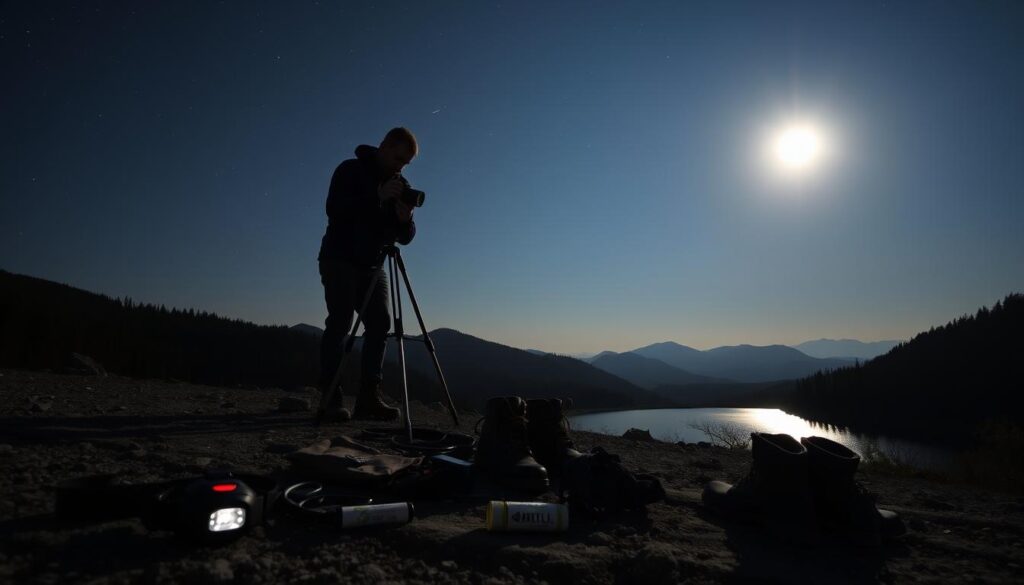
- Keep your gear dry and clean to avoid damage.
- Use a lens hood to shield your lens from stray light and impacts.
- Bring extra batteries and memory cards to avoid running out.
By following these tips, you can have a safe and fun night of photography. You’ll capture the moon’s beauty without risking your safety or damaging your equipment.
Photography Locations for Moon Phase Shoots
For stunning moon phase photos, finding the right spots is key. The United States has many landscapes perfect for your lunar shots. From vast deserts to towering mountains, each place offers a unique setting for your moon photos.
Best Scenic Spots in the U.S. for Moon Photos
The U.S. has many iconic spots for moon photography. Some top places include:
- The Grand Canyon, Arizona – Its vastness and dark skies are ideal.
- Yellowstone National Park, Wyoming – Offers landscapes from geysers to forests.
- Great Sand Dunes National Park, Colorado – Unique sand dunes create a surreal backdrop.
- Acadia National Park, Maine – The rugged coastline offers dramatic scenes.
- Death Valley National Park, California – Famous for its dark skies and surreal landscapes.
These spots are not just beautiful but also have little light pollution. This makes them perfect for capturing the moon’s beauty.
Finding Unique Backdrops for Your Shots
While famous spots are great, unique backdrops can make your photos special. Look for places with interesting foregrounds, such as:
- Abandoned buildings or old structures
- Rock formations or unique geological features
- Lakes or rivers for reflection shots
- Forests or fields for a contrasting foreground
Trying different locations and shots can lead to unique moon photos. The best lunar photos show how the moon interacts with its surroundings.
Capturing the Moon Through Different Seasons
As seasons change, the moon’s view and the landscape around it offer new chances for photographers. Knowing these seasonal changes is key to taking amazing moon photos.
Seasonal Effects on Moon Visibility
The moon’s visibility changes with Earth’s tilt and the atmosphere’s conditions. In summer, warm air can blur the moon’s image. But, autumn and winter skies are clearer, making the moon sharper.
Seasonal weather patterns also affect moon photography. Spring’s clear skies after rain are perfect for moon shots against green landscapes.
| Season | Typical Weather Conditions | Best Time for Moon Photography |
|---|---|---|
| Spring | Mild temperatures, occasional rain | After rain, when skies clear |
| Summer | Warm, humid, potential for thunderstorms | Early morning or late evening, avoiding harsh midday sun |
| Autumn | Cooler temperatures, generally clear skies | Anytime, with optimal conditions during the full moon |
| Winter | Cold, often clear skies | Peak viewing times, with the moon often appearing larger due to the Earth’s tilt |
Unique Opportunities in Different Weather Conditions
Weather conditions greatly impact moon photography. Fog can make images mystical, while clear skies offer a dramatic backdrop. Knowing these conditions helps capture unique photos.
Shooting the moon in various weather requires flexibility. For example, lunar eclipses, which can happen in any season, offer a rare chance to capture the moon in unique light.
Sharing Your Moon Phase Photography
Sharing your moon phase photos is a great way to connect with others. It lets you show off your work. With social media and online groups, you have many places to share your lunar photos.
Best Platforms for Showcasing Your Work
To share your moon phase photos well, try these platforms:
- Instagram: Use hashtags like #moonphasephotography and #lunarphotography to reach more people.
- Flickr: Join photography groups and share your night shots.
- 500px: Show your photos in a place where quality matters.
Engaging with Online Photography Communities
Being part of online communities is key. It helps you get feedback, learn new things, and keep up with moon photography trends.
- Find and join photography forums and groups.
- Take part in photo challenges and contests to improve.
- Share your knowledge and experiences to grow your reputation.
By sharing your moon phase photos and joining online groups, you do more than just show your work. You become part of a community that loves photography as much as you do.
Inspiring Moon Phase Photography Examples
If you’re looking for lunar photography inspiration, check out the work of professional moon photographers. Their skills and creativity can help you take amazing moon phase photos.
Notable Photographers to Follow
Many photographers are famous for their stunning moon phase photos.
- Michael Shainblum is known for his detailed landscapes that often feature the moon.
- David Malin has captured some of the most iconic astronomical images, including moon phases.
- Thierry Legault is a renowned astrophotographer who has taken incredible photos of the moon.
Following these photographers can give youinspiration and insights into the techniquesthey use to capture their images.
Tips from the Pros on Getting the Best Shot
Professional moon photographers often share their tips and techniques for capturing the perfect shot. Here are a few key takeaways:
- Plan your shoot around the moon phase calendar to ensure you’re capturing the moon at its most interesting.
- Use manual settings on your camera to control exposure and focus.
- Consider including landscape elements in your shot to add context and interest.
By following these tips, you can improve your moon phase photography and capture images that are truly inspiring.
| Photographer | Notable Work | Tips |
|---|---|---|
| Michael Shainblum | Landscape and moon photography | Plan your shoot around the moon phase calendar. |
| David Malin | Astronomical photography | Use manual settings to control exposure and focus. |
| Thierry Legault | Astrophotography | Include landscape elements to add context and interest. |
By drawing inspiration from these professionals and applying their tips, you can take your moon phase photography to the next level.
Conclusion: Mastering Moon Phase Photography
Capturing stunning moon phase photos is a mix of knowing lunar cycles, using the right gear, and applying effective techniques. By learning moon phase photography tips and lunar photography techniques, you’re on your way to amazing images.
Key Takeaways
You’ve learned how moon phases affect light and mood. You know the best gear for night shots and how to take stunning moon photos. You’ve also learned how to plan, edit, and stay safe while shooting outdoors.
Experiment and Explore
Now, it’s time to try new things. Experiment with different mastering moon photography techniques. Try capturing the moon in various seasons and weather. Find new places and backgrounds to make your photos unique. With practice and patience, you’ll keep improving and take incredible photos.