
You’ve probably heard about astrophotography, capturing the night sky’s beauty. Cooled camera technology has changed this field. It lets us take amazing pictures of deep-sky objects.
Improved image quality and reduced noise are key benefits. Cooling the camera lowers noise, making images sharper.
Cooled cameras come in types like CCD and CMOS. Each has its own features. Knowing these differences helps you pick the best camera for your needs.
What Are Cooled Astronomy Cameras?
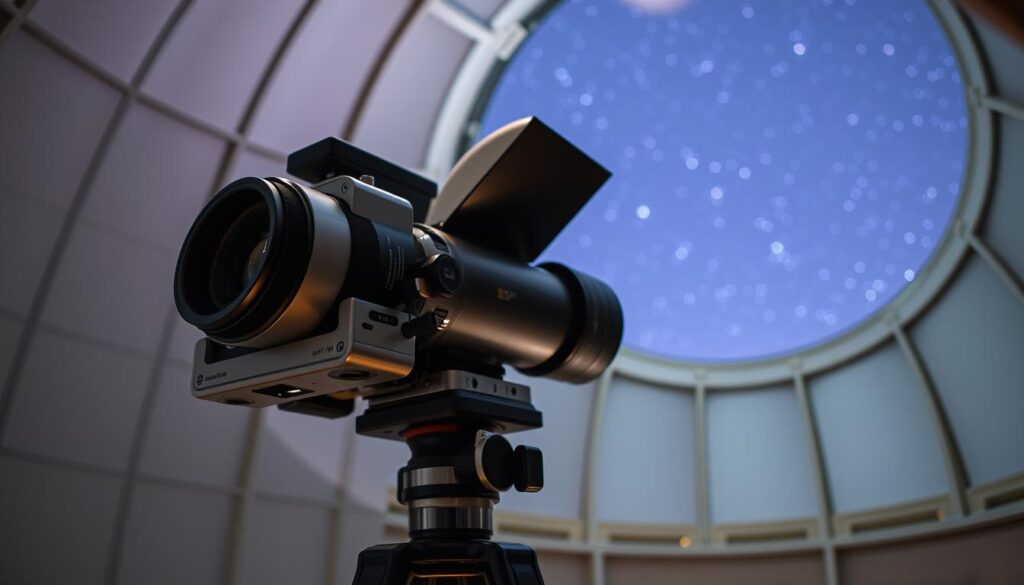
Cooled astronomy cameras are changing astrophotography. They use advanced cooling systems to capture high-quality images of the sky.
Understanding the Basics
Cooled astronomy cameras work by cooling their sensor. This makes images clearer. Astronomy camera cooling systems help reduce thermal noise, which harms image quality. They cool the sensor with thermoelectric or cryogenic methods.
These cameras are great for pictures of deep-sky objects like nebulae and galaxies. They capture more detail and less noise by cooling the sensor.
Benefits of Cooling Mechanisms
The main benefits of cooled cameras in astronomy are better image quality, less noise, and more sensitivity. Cooling the sensor lets you take longer exposures and see fainter objects.
| Cooling Method | Description | Benefits |
|---|---|---|
| Thermoelectric Cooling | Uses thermoelectric materials to cool the sensor. | Effective for reducing thermal noise. |
| Cryogenic Cooling | Cools the sensor to very low temperatures using cryogens. | Provides the lowest noise levels, ideal for deep-space imaging. |
Knowing about cooled astronomy cameras helps astronomers choose the right gear. Whether you’re experienced or new, these cameras offer many benefits for better astrophotography.
How Cooled Astronomy Cameras Work
Learning about cooled astronomy cameras is key for better astrophotography. These cameras take clear pictures of the sky by cutting down on noise. The cooling part is what makes them different from regular cameras.
The Cooling Process Explained
Cooled cameras cool down their sensor to cut thermal noise. Thermal noise comes from the camera’s heat. Cooling the sensor makes images clearer and more detailed.
A thermoelectric cooler is used to cool the sensor. It moves heat from the sensor to a heat sink.
How well a camera cools depends on several things. These include the room temperature, the camera’s cooling power, and the camera’s parts. A camera with strong cooling can take pictures of faint objects better. Room temperature also plays a role in cooling the sensor.
Key Components of Cooled Cameras
Cooled astronomy cameras have important parts for great images. The thermoelectric cooler is key for cooling the sensor. The heat sink and fan also help by removing heat and improving airflow.
The sensor is vital for capturing images. Cooled cameras use CCD or CMOS sensors. Each has its own benefits, depending on what you need.
Types of Cooled Astronomy Cameras
Cooled astronomy cameras come in different types, like CCD and CMOS cameras. Your choice depends on your astronomy needs, budget, and what you like.
CCD vs. CMOS Sensors
The heart of any astronomy camera is its sensor. There are two main types: Charge-Coupled Device (CCD) and Complementary Metal-Oxide-Semiconductor (CMOS). CCD sensors are great for deep-sky objects because they are very sensitive and have low noise. CMOS sensors are getting better, offering faster speeds and using less power.
When picking between CCD and CMOS, think about these things:
- Image quality and sensitivity
- Readout speed
- Power consumption
- Cost
| Feature | CCD | CMOS |
|---|---|---|
| Sensitivity | High | High, with advancements |
| Readout Speed | Slower | Faster |
| Power Consumption | Higher | Lower |
Different Cooling Methods
Cooled astronomy cameras use different ways to cool the sensor. The most common are thermoelectric cooling, cryogenic cooling, and liquid nitrogen cooling. Thermoelectric cooling is popular because it’s efficient and reliable. It moves heat away from the sensor to cool it.
Here’s a look at the cooling methods:
- Thermoelectric Cooling: Efficient, reliable, and widely used.
- Cryogenic Cooling: Gets very cold, perfect for deep-space shots.
- Liquid Nitrogen Cooling: Gets extremely cold but is hard to use often because you need liquid nitrogen.
When picking a cooled astronomy camera, knowing about the sensor and cooling method is key. Your choice will affect how good your astronomy shots and images are.
Why Choose a Cooled Astronomy Camera?
Cooled astronomy cameras offer many benefits. They improve image quality and work better in low light. By cooling the camera’s sensor, they cut down on thermal noise. This results in clearer and more detailed images.
Improved Image Quality
One key advantage of cooled cameras is their ability to take high-quality images with less noise. The cooling system lowers the sensor’s temperature. This reduces thermal noise, leading to clearer images.
| Feature | Cooled Camera | Uncooled Camera |
|---|---|---|
| Thermal Noise | Low | High |
| Image Quality | High | Low |
| Sensitivity in Low Light | High | Low |
Enhanced Sensitivity in Low Light
Cooled cameras are great for capturing faint objects in low light. They can detect faint signals, thanks to reduced thermal noise. For more on camera cooling, visit this page.
In short, cooled cameras are a big plus for astronomy. They improve image quality and work well in low light. Whether you’re new or experienced, a cooled camera can enhance your astrophotography.
Essential Features to Look For
When picking a cooled astronomy camera, look for key features to get top-notch images. The right camera can greatly improve your astrophotography.
Sensor Resolution and Dynamic Range are key. The sensor resolution shows how detailed your images can be. The dynamic range lets you capture both bright and dark areas in one shot. Higher resolution and dynamic range mean more detailed and rich photos.
Sensor Resolution
A higher sensor resolution means more detailed images. Think about what you want to capture. For example, to see the fine details of galaxies and nebulae, you need a high-resolution camera.
- Higher resolution sensors capture finer details.
- Resolution should match your telescope’s capabilities.
- Consider the pixel size and its impact on image quality.
Dynamic Range
The dynamic range is also crucial. It affects how well the camera captures different light levels. A wider dynamic range is great for objects with lots of contrast.
- A wider dynamic range captures more detail in both bright and dark areas.
- It’s crucial for imaging objects with high contrast.
- Some cameras offer adjustable settings to optimize dynamic range.
Cooling Capacity
The cooling capacity of your camera is key for clear images. Cooled cameras use tech to cool the sensor, reducing noise.
When looking at cooling capacity, consider these:
- The maximum temperature difference the camera can achieve between the sensor and the ambient temperature.
- The power consumption of the cooling system.
- The impact of cooling on the camera’s overall noise performance.
Connectivity Options
Connectivity options are also important. Modern cooled astronomy cameras have USB, Ethernet, or wireless connectivity. Make sure your camera fits with your gear and software.
| Connectivity Type | Advantages | Considerations |
|---|---|---|
| USB | Easy to connect, widely supported | May have limitations in terms of cable length |
| Ethernet | Allows for longer cable runs, stable connection | Requires a network setup |
| Wireless | Convenient, reduces clutter | May be subject to interference, security concerns |
By looking at these key features—sensor resolution, dynamic range, cooling capacity, and connectivity options—you can find a cooled astronomy camera that suits your needs. This will improve your astrophotography experience.
Popular Cooled Astronomy Camera Brands
Cooled astronomy cameras from brands like ZWO, QHYCCD, and Atik have changed astrophotography. They lead in innovation, offering top image quality, less noise, and better sensitivity.
ZWO ASI Series
The ZWO ASI series is a favorite among astrophotographers. It’s known for great cooling and high-quality sensors. These cameras are easy to use and work well with many telescopes.
Some key features of the ZWO ASI series are:
- Advanced cooling systems for less camera noise
- High-resolution sensors for clear images
- User-friendly interface and software
QHYCCD Models
QHYCCD cameras are famous for excellent image quality and advanced features. They have models for all needs and budgets, reaching more people.
QHYCCD models have:
- High sensitivity and low noise
- Advanced cooling technology
- Works with many astronomical software
Atik Cameras
Atik cameras stand out for high-performance sensors and robust build quality. They offer cooled cameras for both amateur and professional astrophotographers.
| Brand | Model | Sensor | Cooling |
|---|---|---|---|
| ZWO | ASI 294MC | CMOS | -20°C |
| QHYCCD | QHY268C | CMOS | -30°C |
| Atik | Atik 414EX | CCD | -30°C |
Choosing a cooled astronomy camera involves looking at sensor type, cooling, and compatibility. Brands like ZWO, QHYCCD, and Atik have options for various needs and preferences.
Best Practices for Using Cooled Astronomy Cameras
To get the most out of your cooled astronomy camera, follow best practices. These practices ensure your camera works at its best. Cooled astronomy cameras are advanced tools that need careful setup and maintenance for top-notch images.
Proper Setup and Calibration
Setting up and calibrating your camera is key for cooled camera image quality. Begin by following the manufacturer’s guide for assembly and connection. Make sure all cables are tight and the camera is securely on your telescope.
Calibration includes taking dark, bias, and flat frames. These frames help improve your images. Dark frames reduce thermal noise, bias frames fix readout noise, and flat frames balance light across the image.
Regular Maintenance Tips
Regular care is crucial for your camera’s performance and life. Keep the sensor and optics clean with a soft brush or compressed air. This removes dust.
Check the cooling system often to make sure it works well. The importance of cooling in astronomy cameras is huge. It affects image quality. Watch the camera’s temperature and adjust cooling as needed.
- Regularly update your camera’s firmware for new features and fixes.
- Keep your camera in a dry, cool spot when not using it to avoid damage.
- Use a quality power supply to avoid electrical noise and damage.
Troubleshooting Common Issues
Using cooled astronomy cameras can sometimes lead to problems. But, knowing how to fix these issues can greatly improve your experience. These cameras are complex, and knowing how to handle common problems is key to getting the best results.
Image Noise and Artifacts
Image noise and artifacts can ruin your astrophotography. Noise comes from thermal, readout, and shot noise. To reduce it, make sure your camera is cool and use the right image processing.
Artifacts can be caused by incorrect calibration, poor focusing, or suboptimal camera settings. Adjusting your camera settings regularly can help solve these problems.
- Ensure your camera’s cooling system is working right.
- Use dark and bias frames for image calibration.
- Adjust your camera settings for the best imaging conditions.
Cooling System Malfunctions
The cooling system is vital for a cooled astronomy camera. Cooling system malfunctions can increase noise and lower image quality. If your cooling system isn’t working, check the connection and temperature settings.
Regular maintenance is also important. Keep your camera’s firmware updated and clean the sensor and cooling parts to avoid dust and debris problems.
| Issue | Cause | Solution |
|---|---|---|
| Image Noise | Thermal Noise | Improve Cooling, Use Dark Frames |
| Artifacts | Incorrect Calibration | Adjust Calibration Settings |
| Cooling System Malfunction | Connection Issues, Firmware Issues | Check Connections, Update Firmware |
Cooled Cameras in Astrophotography
Cooled astronomy cameras have changed astrophotography a lot. They make it easier to get high-quality pictures of stars and planets. The cooling system in these cameras is key. It cuts down on noise and boosts sensitivity, helping to see the small details of space.
Capturing Deep-Sky Objects
It’s hard to take pictures of things like nebulae and galaxies because they are so faint. Cooled cameras help by:
- Lowering thermal noise, so you can take pictures for longer and get more detail.
- Making the camera more sensitive to light, so you can see faint objects better.
- Improving picture quality by reducing heat-related problems.
This is very important for those who want to show the beauty and detail of deep-sky objects.
Planetary Imaging Techniques
Planetary imaging is different from deep-sky imaging. Cooled cameras are also good for this, mainly because they can take pictures fast and control temperature well.
Some important techniques for planetary imaging include:
- Using high frame rates to see the details on planets.
- Doing image stacking to get a clearer picture and see more.
- Setting the camera right for the planet you’re photographing.
With these techniques and the help of cooled cameras, you can get amazing pictures of planets.
Future Developments in Cooled Astronomy Cameras
The world of cooled astronomy cameras is changing fast. New tech and a need for better astrophotography are driving this change. You’ll find exciting new features and abilities that make your astronomy adventures even better.
Emerging Trends
New innovations are making cooled cameras better. You’ll see better cooling, higher sensor resolution, and easier connections. These improvements mean you can take clearer pictures of the stars and planets, opening up new possibilities in astronomy.
Technological Advancements
Technology is key in astronomy, leading to better cooled cameras. As tech keeps getting better, you’ll see cameras that perform even more impressively. They’ll be more sensitive and easier to use, giving you a closer look at the universe.