
Astrophotography has grown a lot, offering many ways to take amazing pictures of the sky. One key method is lucky imaging. It helps photographers get incredible planetary detail.
Lucky imaging works by taking many short photos and picking the clearest ones. Then, these are mixed into one sharp image. This technique is great for planets like Jupiter and Saturn. It shows details that are hard to see normally.
To start, you need a telescope, a camera like the ZWO ASI678MM monochrome camera, and software to edit the photos. Learning astrophotography methods like lucky imaging can really improve your skills in taking pictures of planets.
Understanding Lucky Imaging and Its Benefits
Lucky imaging is a method that uses many short exposures to make one clear image. It’s popular among astronomers for its ability to show details that are hard to see because of the atmosphere.
This technique is great for looking at planets. It picks the sharpest images from many short ones. This helps reduce the impact of the atmosphere’s movement.
What is Lucky Imaging?
Lucky imaging is a way to take pictures of the sky. It involves taking lots of short photos and picking the best ones to make one final picture. This makes the image clearer and more detailed, which is very helpful for astronomers.
The idea behind lucky imaging is that when the air is still, pictures are clearer. By taking many short photos, you’re more likely to catch these clear moments. Then, you can make a top-quality picture from them.
Why Choose Lucky Imaging for Planetary Observations?
Lucky imaging is good for getting detailed pictures of planets. It’s perfect for planets like Jupiter and Saturn, which have lots of small details.
One big plus of lucky imaging is it helps get rid of distortion from the atmosphere. By choosing only the clearest images, you can make pictures that are much better than ones taken with just one long photo.
| Technique | Benefits | Best Use Cases |
|---|---|---|
| Lucky Imaging | High-resolution images, minimizes atmospheric distortion | Planetary observations, capturing detailed surface features |
| Single Long Exposure | Simple to implement, good for bright objects | Deep space objects, wide-field astronomy |
By using lucky imaging, astronomers can make their pictures of planets much clearer. They can see details that were hidden before.
Essential Equipment for Lucky Imaging
To start lucky imaging, you need a few key pieces of equipment. The right gear will help you take amazing planetary photos. It will also make your astrophotography journey more enjoyable.
Recommended Cameras and Sensors
A good camera is key for lucky imaging. You need one that can take lots of photos fast and is very sensitive. The ZWO ASI678MM monochrome camera is a top pick for its high sensitivity and low noise.
Look for cameras with CMOS sensors for the best planetary images. When picking a camera, think about the sensor size, pixel size, and how well it handles fast frame rates. A bigger sensor and smaller pixels mean more detail, but might need more precise focus and guiding.
| Camera Model | Sensor Size | Pixel Size | Frame Rate |
|---|---|---|---|
| ZWO ASI678MM | 6.4 mm diagonal | 2.0 μm | Up to 120 fps |
| ZWO ASI585MC | 8.3 mm diagonal | 2.9 μm | Up to 60 fps |
Filters and Accessories You Might Need
You might also need filters and other accessories to improve your planetary images. Filters can cut down light pollution, highlight certain features, or boost contrast. The Optolong L-Pro2″ Filter is great for reducing light pollution and enhancing details.
Other useful items include focal reducers for a wider view and Barlow lenses for more magnification. You might also want a focal extender for even more zoom or a coma corrector for better edge quality.
By picking the right equipment and accessories, you can greatly improve your lucky imaging shots. This will make your astrophotography journey even more rewarding.
Setting Up Your Telescope for Lucky Imaging
To get stunning planetary shots, setting up your telescope right is key. Lucky imaging needs short exposures, and a good telescope setup is crucial for this.
A stable mount and tracking system are vital for lucky imaging. They help you take clear planet photos by reducing movement and blur. With your telescope set up well, you can focus on getting high-quality images.
Telescope Types Best Suited for Lucky Imaging
Many telescopes work well for lucky imaging, like refractors, reflectors, and catadioptric telescopes. Each has its own benefits, and your choice depends on what you need and like.
- Refractors: Known for their high-quality optics and minimal distortion, refractors are a popular choice for planetary imaging.
- Reflectors: Offering larger apertures at a lower cost, reflectors can provide excellent detail in planetary images.
- Catadioptric Telescopes: These versatile telescopes combine the benefits of refractors and reflectors, offering a compact design and good optical quality.
Importance of Stable Mounts and Tracking
A stable mount is key to prevent vibrations and movements that blur your images. A reliable tracking system is also crucial. It lets you follow the planet’s movement, keeping your images sharp and clear.
When picking a mount, look at its stability, weight capacity, and tracking accuracy. A good mount lets you take multiple exposures without much movement. This is vital for lucky imaging.
Understanding the need for a stable mount and tracking system makes capturing clear planet photos easier and more precise. It improves your planetary detail photography experience.
Capturing Your First Image
To get better at taking pictures of planets, it’s key to know how to capture your first image. You need the right tools, software, and techniques to take high-quality photos.
Step-by-Step Guide to Capturing Images
Getting your first image involves a few steps. First, set up your telescope with the right camera and software. Make sure your telescope is aligned right and your camera is attached correctly.
Then, take many short photos of the planet. Use software to control your camera and take pictures fast. This helps you pick the clearest images later.
Here’s a simple guide:
- Set up your telescope and camera.
- Align your telescope with the planet you want to image.
- Use software to capture multiple short exposures.
- Save the images in a format ready for processing later.
Optimal Conditions for Lucky Imaging
The quality of your images depends a lot on the capture conditions. You need a clear sky, little atmospheric disturbance, and a steady telescope mount.
Good atmospheric conditions are key for lucky imaging. A calm atmosphere gives sharper images. But, a shaky atmosphere can blur them. A stable mount and tracking system help a lot.
| Condition | Ideal State | Impact on Imaging |
|---|---|---|
| Atmospheric Disturbance | Minimal | Reduces image distortion |
| Telescope Mount | Stable | Prevents vibrations and movement |
| Sky Clarity | Clear | Enhances image quality |
By following these tips and aiming for the best conditions, you can greatly improve your planetary photos. Lucky imaging techniques can also help, letting you capture detailed images of planets.
Processing Your Lucky Images
To get the most out of your lucky imaging sessions, you’ll need to process your images using specialized software. This step is crucial in enhancing the quality of your planetary images and bringing out the details you’ve captured.
Software Options for Image Stacking
There are several software options available for processing lucky images. One of the most popular choices is Autostakkert. It allows you to align and stack multiple images, adjusting brightness and contrast to create a high-quality image. Another useful tool is Adobe Photoshop, which enables you to adjust color balance, saturation, and sharpness.
Other software options include RegiStax and StarStax, both of which offer image stacking and processing capabilities. When choosing software, consider the specific features you need, such as batch processing, alignment options, and enhancement tools.
Basic Processing Techniques for Beginners
For those new to lucky imaging, basic processing techniques involve aligning and stacking images, followed by adjustments to brightness and contrast. Start by importing your images into your chosen software and aligning them using the software’s automatic alignment features.
Once aligned, stack the images to create a single, high-quality image. You can then adjust the brightness and contrast to enhance the details in your image. It’s also important to adjust the color balance and saturation to ensure that your image accurately represents the planet you’re imaging.
- Align your images using automatic alignment features.
- Stack the aligned images to create a high-quality image.
- Adjust brightness and contrast to enhance details.
- Adjust color balance and saturation for accurate representation.
By following these basic processing techniques and using the right software, you can significantly improve the quality of your lucky images and capture stunning planetary details.
Advanced Techniques for Enhanced Detail
To improve your planetary imaging, learn advanced techniques. Wavelet processing and color correction are key. They can make your images look better.
Utilizing Wavelet Processing
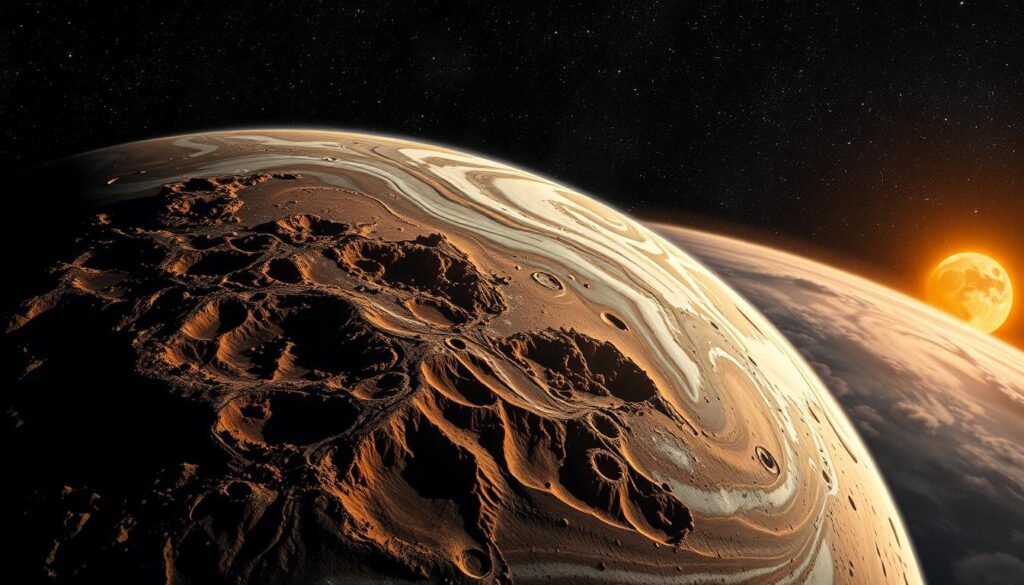
Wavelet processing breaks down an image into different parts. You can then tweak the brightness and contrast of each part. This makes your images more detailed and realistic.
Color Correction and Enhancement Strategies
Color correction is vital for realistic planet images. It ensures your images show the planet’s true colors. Color enhancement strategies help reveal the fine details in your images.
Some color correction and enhancement tips include:
- Adjust the white balance to match the planet’s lighting.
- Use color grading to improve the color palette.
- Make local adjustments to highlight small details.
Using wavelet processing and color correction can greatly enhance your planetary images. They will look more detailed and realistic.
Common Challenges and Solutions
Capturing clear planet photos can be tough. Lucky Imaging faces obstacles like atmospheric disturbances and equipment limits.
Atmospheric issues, like turbulence and seeing conditions, can ruin your images. To beat these, knowing the problems and fixing them is key.
Overcoming Atmospheric Disturbances
Disturbances in the air can blur and distort your photos. To get better images, try these:
- Use a focal reducer for better quality
- Try a Barlow lens for more detail
- Take pictures when the air is calm
Managing Equipment Limitations
Equipment problems, like small apertures or low-quality cameras, can hurt your image quality. To get clear photos, think about:
- Get a bigger telescope for more detail
- Choose a high-quality camera for your shots
- Use filters and accessories to improve your images
By tackling these common issues, you can improve your planetary imagery. This way, you can take amazing pictures of planets.
Best Practices for Lucky Imaging
To get amazing shots of planets, you need to follow some key steps. These include knowing your gear, using the right methods, and making your imaging process better.
Tips for Consistent Success
Being consistent is crucial in lucky imaging. To do this, use a stable mount and tracking system. This helps avoid vibrations and keeps your target in sight. Also, taking multiple short exposures boosts your chances of getting a clear picture.
Here are more tips:
- Make sure your equipment is set up and calibrated right.
- Choose the best software for image processing, like Autostakkert or Adobe Photoshop.
- Be patient and keep trying, as lucky imaging can take practice.
Understanding Your Equipment
Knowing your gear well is key to great images. This means understanding the aperture, focal length, and mount type of your telescope. These details greatly affect your imaging quality.
| Equipment Component | Importance | Considerations |
|---|---|---|
| Telescope Aperture | High | Bigger apertures can show more detail. |
| Focal Length | Medium | It affects how much you can see and how close you can get. |
| Mount Type | High | A strong, stable mount is key to reducing shakes. |
By getting good at these areas and following the best practices, you can really improve your planetary imaging. You’ll be able to capture amazing details.
Sharing Your Lucky Images
As you get better at taking pictures of the planets, sharing your work can inspire others. Lucky imaging is not just about taking great photos. It’s also about sharing your love for the night sky with a community that loves it too.
Best Platforms for Astrophotography Sharing
There are many places to share your lucky images. Social media platforms like Instagram and Facebook are great because they let you reach lots of people. You can also join online forums like Cloudy Nights and Stargazers Lounge to get feedback and learn from others.
Engaging with the Community
Getting involved with the astrophotography community can really help you improve. By talking online, going to workshops, and sharing your photos, you can learn a lot. You might even find new opportunities, like working with others or showing your photos in an exhibit.
To really connect with the community, try these tips:
- Be active on social media and online forums.
- Share your experiences, both successes and failures.
- Ask for feedback and be open to constructive criticism.
- Participate in challenges or contests to test your skills.
By sharing your lucky images and getting involved with the community, you can grow as an astrophotographer. Advanced lucky imaging techniques can be learned and mastered with practice and community support.
Learning from Others: Case Studies
Learning from those who have mastered lucky imaging can boost your skills. Real-world examples and expert advice can help you improve. This way, you can get better at capturing planetary details.
Successful Lucky Imaging Practices
Looking at successful lucky imaging practices can give you lucky imaging tips. Experienced astrophotographers stress patience and the right gear. Their stories can teach you by showing how they got great images.
Using strong image processing software is key. You can find a guide on successful planetary imaging here. It offers deep insights into the process.
Interviews with Experienced Astrophotographers
Talking to seasoned astrophotographers is a great way to learn. They share tips on beating common issues like atmospheric problems. They also give lucky imaging tips for clearer images.
Getting involved in the astrophotography community is beneficial. You’ll learn about new astrophotography methods and techniques. This keeps your skills sharp and helps you take amazing planetary images.
Future Trends in Planetary Imaging
Planetary imaging is changing fast, thanks to new tech. We’re seeing big improvements in how we capture planet images. These changes will make our images even clearer and more detailed.
Innovations to Watch in Lucky Imaging
New camera tech is a big deal in lucky imaging. Cameras are getting better at catching images, even when it’s hard to see. Also, computers are learning to make images better faster.
Key Innovations:
- Advanced camera sensors with higher resolution and sensitivity
- Machine learning algorithms for automated image processing
- Improved software for image stacking and enhancement
How Technology is Shaping Astrophotography
Technology is changing astrophotography, including planet shots. Better telescopes, mounts, and software help us get sharper images. For instance, new mounts let us take pictures for longer, making them clearer.
| Technological Advancement | Impact on Planetary Imaging |
|---|---|
| Advanced Camera Technology | Higher resolution and sensitivity, enabling more detailed images |
| Machine Learning Algorithms | Automated image processing, improving efficiency and quality |
| Improved Mount Technology | More stable and precise, allowing for sharper images and longer exposures |
As tech keeps getting better, we’ll see amazing new images of planets. Keep up with the latest to improve your photos and join the exciting world of astrophotography.
Conclusion: Mastering Lucky Imaging for Stunning Planetary Detail
You now know the basics of lucky imaging and how it can help you take clear planet photos. To get better at planetary imagery, keep practicing and improving your skills. With the right tools and software, you can create high-quality images that show the details of space.
Key Takeaways
To make the most of lucky imaging, use a stable mount and tracking system. Capture many short exposures and edit your images with software like Autostakkert or Adobe Photoshop. These steps will help you get sharper images and improve your planetary shots.
Continuing Your Journey
Keep exploring lucky imaging and trying new things. With practice, you’ll be able to take photos that are as good as those by professional astronomers. Keep working on your skills, and you’ll soon master lucky imaging and capture amazing planetary details.