
Capturing stunning night photography images requires careful planning and preparation. Scouting a remote location is a crucial step. It ensures you’re in the right place at the right time with the right equipment.
Researching potential locations, checking the weather and moon phases, and planning your shots are essential tasks. By doing so, you’ll be able to anticipate and adapt to the conditions. This results in better photographs.
Effective scouting enables you to identify the best vantage points, avoid obstacles, and make the most of your time. With careful planning, you can capture breathtaking images. These images showcase the beauty of the night sky.
Understanding the Basics of Night Photography
To take amazing night photos, you must learn the basics of night photography. It combines technical skills and creativity. Knowing the key principles is vital for top-notch images.
The Importance of Location
The location is key in night photography. A great spot can elevate your photo, setting the mood and atmosphere. Look for places with low light pollution, easy access, and good composition. Areas with little light pollution are best for seeing the night sky.
Key Equipment for Night Shots
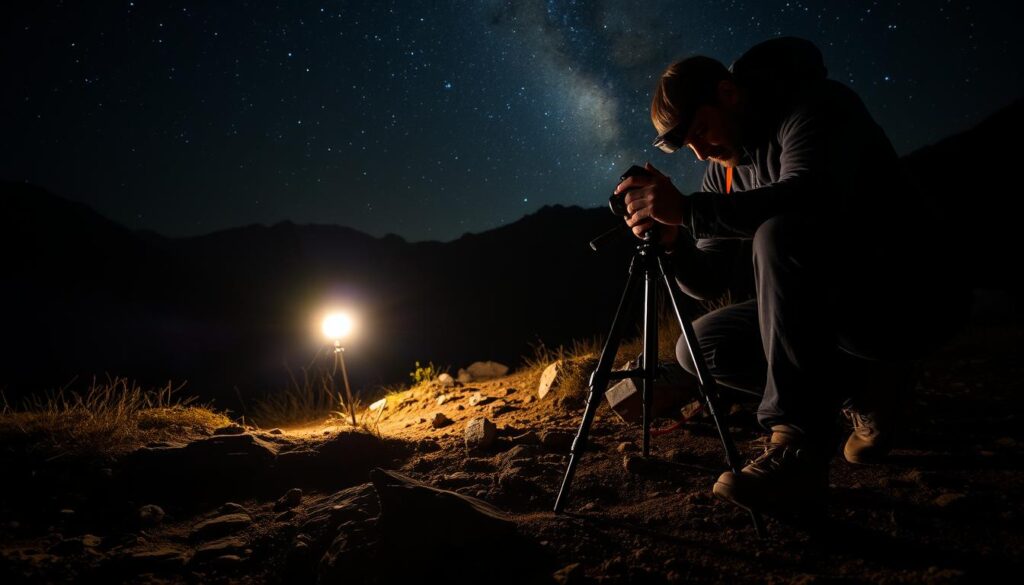
Right equipment is crucial for night photos. You’ll need a good low-light camera, a sturdy tripod, and a remote shutter release. A camera that handles low light well reduces noise. A tripod keeps your camera steady for long shots. A remote shutter release or self-timer stops camera shake.
Other useful tools include extra batteries, memory cards, and a red light flashlight. These help keep your night vision. Knowing how to use your gear is as important as having it.
Camera settings like aperture, shutter speed, and ISO are vital. Start with a low ISO, wide aperture, and slow shutter speed. Try different settings to find what works best for your photos.
Researching Potential Locations
Looking for the right spot is crucial for a night photography trip. You want places that are perfect for capturing stunning night shots.
Utilizing Online Resources
Online tools are great for finding night photography spots. Google Earth and PhotoPills are top picks. Google Earth lets you see the terrain and find great spots. PhotoPills helps with planning around the moon and sun.
Key Online Resources:
- Google Earth: For terrain exploration and identifying potential vantage points.
- PhotoPills: For planning around moon phases and astronomical events.
- Flickr and 500px: For inspiration and insights from other photographers.
Consulting Local Photography Groups
Online tools are good, but talking to locals is even better. They can share tips and recommend spots. Joining photography groups online can connect you with people who know the area well.
| Resource | Description | Benefits |
|---|---|---|
| Google Earth | Terrain exploration tool | Detailed terrain analysis, potential vantage points |
| PhotoPills | Astronomical data app | Moon phase planning, sunrise/sunset times |
| Local Photography Groups | Community-driven insights | Location recommendations, local tips, and advice |
Use online tools and talk to locals to plan your night photography trip. Good research leads to amazing photos.
Assessing Accessibility
Before you go out to take amazing night photos, it’s key to check if the location is easy to get to. You need to think about a few things that might make it hard to get there safely.
Driving Conditions
It’s important to look at the roads to your night photography spot. Think about the road type, the weather, and any dangers like animals or steep cliffs. Make sure your car can handle the terrain and have a plan for emergencies.
- Check the weather forecast before heading out.
- Use a 4WD vehicle if the terrain demands it.
- Bring necessary safety equipment like a first aid kit and a spare tire.
Parking Options
When you get to your spot, finding a safe place to park is crucial. Look for spots that are safe from the weather and dangers. Think about how close your parking is to where you’ll be shooting to avoid carrying your gear too far.
- Identify potential parking areas during your daytime scout.
- Ensure the parking area is stable and won’t pose a risk to your vehicle.
- Leave your vehicle in a condition that allows for a quick departure if needed.
By carefully checking the roads and planning your parking, you can have a safer and more successful night photography adventure in remote spots.
Evaluating Safety Factors
Scouting a remote location for night photography is crucial. You must be aware of your surroundings and potential hazards. This is key to a safe and successful shoot.
Understanding Wildlife Risks
Wildlife risks are a big concern in remote areas. You might face animals like bears, snakes, or others. To stay safe, research the local wildlife and carry bear spray or make noise.
Always watch for signs of wildlife, like tracks or scat. If you’re in a high-risk area, travel with a partner or group. Keep a safe distance from any animals you see.
Checking Local Laws and Regulations
It’s also important to check local laws and regulations for night photography. Some places have rules, like permits or drone restrictions.
Know the rules for access to private property or protected areas. Make sure you have the right permissions or permits before you go.
Understanding wildlife risks and local laws ensures a safe night photography shoot. Always put your safety first and be ready for any situation.
Timing Your Visit for Maximum Impact
Getting great night photos needs good planning. The right time can make your photos stand out. Think about the best seasons and how the moon affects your shots.
Best Seasons for Night Photography
The best season for night photos depends on where you are and what you want. Autumn and winter have clearer skies, perfect for stars. But, it’s cold, so dress warmly and watch your battery.
Summer is warmer but cloudier. It’s good for longer shoots. Always check the weather before you go.
| Season | Advantages | Disadvantages |
|---|---|---|
| Autumn/Winter | Clearer skies, better for star photography | Cold temperatures, potential for battery drain |
| Spring/Summer | Warmer conditions, longer outdoor shoots possible | More cloud cover, higher humidity |
How Moon Phases Affect Your Shots
The moon’s phase changes your photos a lot. A full moon lights up your scene, but hides the stars. A new moon gives dark skies for stars, but you might need more light.
Plan your visit with the season and moon in mind. With the right gear and luck, your night photos will be unforgettable.
Scouting During the Daytime
To get amazing night photos, scouting your spot during the day is key. It helps you get to know the area, find dangers, and find the best spots for night shots.
Identifying Composition Opportunities
During the day, you can see how good a spot is for photos. Look for cool things in the front, like rocks, trees, or buildings. They can make your night photos look better.
Think about these things when looking at spots:
- Leading lines that can guide the viewer’s eye through the image
- Symmetry or patterns that can create visually appealing compositions
- Foreground elements that can add depth and interest to your photos
Marking Key Points on a Map
After finding good spots, mark them on a map. This makes it easier to find your way at night. You can use a map or a mapping app on your phone.
Mark things like:
- Access points to the location
- Potential hazards, such as steep drop-offs or wildlife habitats
- Optimal vantage points for capturing the desired shot
Scouting during the day and marking spots on a map gets you ready for a great night photo shoot.
Using Technology to Aid Your Scout
Scouting for night photography spots can be easier with the right tech. These tools make planning your night shoot better. You’ll be ready for your adventure.
GPS and Mapping Apps
GPS and mapping apps are key for finding remote spots. Apps like Gaia GPS and Topo Maps+ show detailed maps. They help you find places and plan your path.
Key Features to Look for in GPS and Mapping Apps:
- Detailed topographic maps
- Offline functionality
- Route planning and tracking
- Location marking for points of interest
| App Name | Offline Capability | Topographic Maps |
|---|---|---|
| Gaia GPS | Yes | Yes |
| Topo Maps+ | Yes | Yes |
| Google Maps | Limited | No |
Night Vision Tools for Better Scouting
Night vision tools make scouting in the dark better. Goggles or monoculars let you see in the dark. They help spot dangers and plan your shots.
Benefits of Night Vision Tools:
- Enhanced safety by identifying hazards in the dark
- Better composition planning by visualizing the scene
- Increased confidence when scouting at night
Using these tech tools in your scouting can make your night photography better. You’ll be more prepared and confident when taking your photos.
Checking Light Pollution Levels
When looking for a spot for night photography, light pollution is key. It can block your view of the night sky. So, it’s important to find places that are as dark as possible.
Dark skies are not just pretty; they’re essential for great night photos. Places with little light pollution show more stars and a stunning night sky.
Utilizing Dark Sky Maps
Dark sky maps are a great tool for finding dark spots. They show areas with little artificial light, perfect for night photography.
You can find these maps online, like those from the National Park Service. They help you find the best spots for night sky photos.
How to Find Truly Dark Sites
Finding truly dark places takes research and scouting. Use dark sky maps to find potential spots. Then, visit them during the day to see if they’re right.
- Look for areas far from cities and industrial areas.
- Check local rules on light pollution to keep the area dark.
- Consider the area’s shape; hills and valleys can block artificial light.
By following these tips, you can find a dark spot for amazing night photos.
Planning Your Gear for the Location
Planning your gear in advance is key for a successful night photography shoot at a remote location. The right equipment can greatly improve your photo quality.
Essential Night Photography Gear
To capture stunning night shots, you’ll need a few essential pieces of gear. A decent low-light camera is crucial, as it lets you take photos in low light without too much noise. A sturdy tripod is also necessary to keep your camera stable during long exposures. Plus, a remote shutter release or camera timer can help prevent camera shake and ensure sharp images.
Other useful gear includes extra batteries and memory cards, as cold weather can quickly drain your camera’s battery. You may also consider bringing a red light flashlight to preserve your night vision and a camera rain cover to protect your gear from the elements.
Preparing for Weather Conditions
Weather conditions can greatly impact your night photography shoot. It’s essential to check the forecast before heading out and be prepared for changing conditions. Bring warm clothing and gloves to keep your hands and body warm, as you’ll likely be standing still for extended periods.
Consider bringing a backup camera and essential gear in case your primary equipment gets wet or damaged. A rain cover can help protect your camera from rain or snow, ensuring that you can continue shooting in adverse weather conditions.
Making the Most of Your Visit
When you’re out for night photography in a remote spot, being ready is key. Know the place, your gear, and safety tips. Good night shots mix tech skills with being flexible.
Effective Techniques for Night Shooting
For amazing night photos, use a tripod to keep your camera steady. Remote areas are dark, so let in as much light as you can. Learn about your gear and be ready for anything to improve your night shots.
Adapting to Unforeseen Circumstances
Scouting remote spots can be hit-or-miss, with weather and obstacles popping up. Safety first in night photography; keep an eye on your surroundings. Flexibility is key to a great photo session.