
When you go out to capture the night sky, you face a big challenge. You need to pack and transport your astrophotography gear safely. It’s key to know the basics of your equipment, like a camera, telescope, and mount.
Our guide on astrophotography travel tips helps you build a deep-sky astrophotography kit. It shows how to pick the right parts for your kit.
Getting ready for your next astrophotography trip? Think about the best gear for travel. This includes a sturdy tripod, camera lenses, and more. With the right gear and smart packing, you’ll get amazing shots of the night sky.
Understanding the Essentials of Astrophotography Gear
To capture the beauty of the night sky, you need to know about astrophotography gear. This knowledge helps you prepare for your next adventure. It ensures you have the right equipment for stunning images.
What Equipment You Need
Astrophotography needs specific gear for high-quality images. You’ll need a camera, a tripod, and the right lenses. A full-frame camera is highly recommended for better low-light performance and shallower depth of field.
Consider additional accessories too. A remote shutter release or camera timer helps avoid camera shake. A star tracker or equatorial mount tracks celestial objects as they move.
| Equipment | Description | Importance Level |
|---|---|---|
| Full-Frame Camera | Better low-light performance and shallower depth of field | High |
| Tripod | Stability for long exposure shots | High |
| Wide-Angle Lens | Captures broader sky areas | Medium |
| Remote Shutter Release or Timer | Reduces camera shake during exposure | Medium |
| Star Tracker or Equatorial Mount | Tracks celestial objects across the sky | Low-Medium |
Importance of a Good Tripod
A good tripod is key for astrophotography. It provides stability for long exposure shots. A sturdy tripod minimizes camera shake and ensures sharp images.
Look for a tripod with a good weight capacity, durable material, and adjustable height. A tripod made from carbon fiber is ideal because it’s strong and lightweight.
Camera Lenses for Astrophotography
The right camera lens greatly impacts your astrophotography images. A wide-angle lens is typically preferred for capturing more sky area.
When choosing a lens, consider its aperture, focal length, and distortion. A lens with a wide aperture (like f/2.8) captures more light. A lens with minimal distortion ensures clear and accurate images.
Choosing the Right Travel Bag
For astrophotographers on the move, the right travel bag is more than a container. It’s a key to keeping your gear safe and organized. Whether you’re flying, driving, or walking, your equipment must be protected from the elements and impacts.
Different Types of Travel Bags
There are several types of travel bags for astrophotography equipment. These include:
- Backpacks for hikers and travelers that are comfortable and have many compartments.
- Camera bags for easy access and padding for sensitive equipment.
- Hard cases for maximum protection of valuable gear.
Each type has its own benefits, depending on your needs and travel plans.
Features to Look For
When picking a travel bag, look for these features:
| Feature | Description | Benefit |
|---|---|---|
| Padding and Protection | Look for bags with dedicated, padded compartments. | Protects your equipment from shocks and impacts. |
| Weather Resistance | Choose bags made from water-resistant materials. | Keeps your gear dry in rainy or dusty conditions. |
| Accessibility | Opt for bags with multiple access points. | Allows you to quickly retrieve your gear. |
Organizing Your Gear
After picking the right bag, organize your astrophotography gear. Use dividers and pouches to separate items. Plan a layout for easy access to your most-used equipment.
Good organization saves time and prevents damage to your equipment during transit.
Preparing for Your Trip
Astrophotography travel needs careful planning to get the best shots. You must be in the right place at the right time. Follow these steps to make your trip a success.
Researching Astrophotography Locations
Start by researching locations with little light pollution and clear skies. Use Dark Sky or PhotoPills to find the best spots and predict celestial events. Also, check if the location is easy to get to and has the amenities you need.
Understanding Weather Conditions
Knowing the weather at your destination is key. Look at forecasts and past weather to guess what’s coming. Clear skies are vital for astrophotography. If the forecast is bad, have a backup plan.
Weather appscan give you detailed forecasts. This helps you plan when to take your photos.
Planning Your Shooting Schedule
Plan your photo sessions around celestial events like planetary alignments and meteor showers. Use astronomy apps to schedule your shots. Remember, a full moon can ruin your photos, but a new moon is better.
By researching locations, understanding the weather, and planning your schedule, you’ll get amazing astrophotography shots. This prep lets you focus on capturing the best images during your trip.
Packing Your Gear Efficiently
Packing your astrophotography gear right can make a big difference. It keeps your equipment safe and makes the most of your space. This way, you can take everything you need without any trouble.
Layering Your Equipment
Layering your gear is key to packing well. Begin with your heaviest items, like your tripod, at the bottom. Next, add your camera and lenses, wrapped in cloth for safety. Use small items like batteries and cables to fill any empty spots.
Using Protective Cases
Protective cases are vital for keeping your gear safe. Use hard-shell cases for your most valuable items. For extra safety, add padded dividers to keep things separate.
Cable and Accessory Management
Keeping your cables and accessories organized is important. Use cable organizers or small pouches to keep them tidy. Label your cables so you know what they are. For other items, a small accessory bag can help keep them organized.
- Use cable ties to keep cables organized.
- Pack essential accessories in easy-to-reach places.
- Consider a checklist for your astrophotography equipment to ensure nothing is left behind.
By following these tips, you can pack your astrophotography gear efficiently and safely. This prepares you for your next adventure.
Traveling by Air With Heavy Equipment
Traveling with astrophotography gear by air can be tricky. Knowing the air travel rules is crucial. It helps when you have big items like tripods, telescopes, and cameras.
TSA Regulations for Electronics
The TSA has rules for electronic devices, which includes astrophotography gear. Knowing these rules helps avoid problems at security checks. Some items might need to be taken out of your carry-on for X-ray screening.
Check the TSA’s website or call their customer service for the latest info. Also, pack your gear right to make the inspection easier.
Best Practices for Inspection
Here are some tips for security checks:
- Use a protective case that can be easily opened for inspection.
- Organize your gear in a way that makes it simple to remove items for screening.
- Be present during the inspection to provide assistance if needed.
Being ready speeds up the process and keeps your gear safe.
Carry-On vs. Checked Luggage
Choosing between carry-on and checked luggage is important. Checked luggage might be easier, but it’s riskier. Carry-on lets you watch your gear closely, but it has size and weight limits.
| Considerations | Carry-On | Checked Luggage |
|---|---|---|
| Risk of Damage | Lower | Higher |
| Size/Weight Restrictions | Strict | Less Strict |
| Accessibility | Easier to Access | More Difficult |
For more tips on traveling with astrophotography gear, visit astrobackyard.com. They have lots of advice.
Understanding TSA rules, following security tips, and choosing wisely between carry-on and checked luggage can make air travel easier. It reduces stress when traveling with heavy astrophotography equipment.
Driving to Your Destination
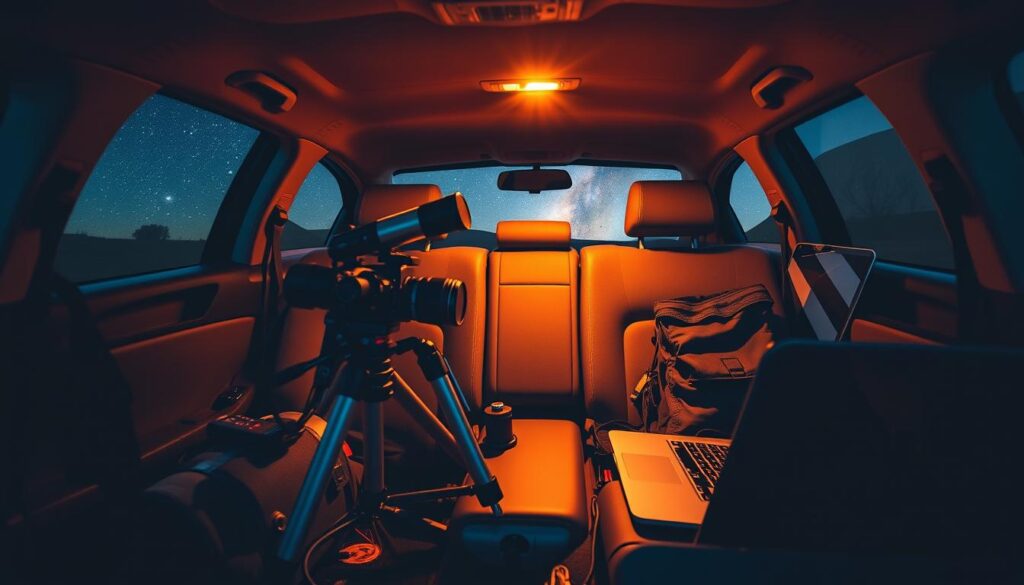
Planning your astrophotography trip involves driving with your gear. It’s key to think about your vehicle’s space and how to organize your equipment. This makes accessing your gear quick and easy.
Space Considerations in Your Vehicle
First, check your vehicle’s space and your equipment’s size. A car with lots of storage or a roof rack is best for big items like tripods. Use storage bins and dividers to keep everything organized and safe.
Organizing Gear for Quick Access
Quick access to your gear is crucial on the road. Make a checklist to ensure you have everything, like your camera and tripod. A modular storage system helps you grab what you need fast.
| Equipment | Storage Solution | Accessibility |
|---|---|---|
| Camera Body | Padded Case | Easy |
| Lenses | Protective Pouches | Moderate |
| Tripod | Tripod Bag | Easy |
Reliability of Vehicle Safety
Your vehicle’s safety is crucial when carrying valuable equipment. Regular vehicle checks are important. Also, think about getting roadside assistance for extra security.
- Check tire pressure and condition before your trip.
- Make sure your vehicle is well-maintained.
- Keep a roadside emergency kit handy.
By focusing on space, organization, and vehicle safety, your astrophotography trip will be a success. Remember to pack your astrophotography equipment checklist for travel. Use travel-friendly astrophotography accessories to make your journey easier.
Setting Up at Your Location
When you arrive at your destination, take a moment to look around and plan. This helps you find the best spots and any challenges you might face.
Arriving Early to Scout Locations
Scouting locations early is key in astrophotography. It lets you see the area, find any blocks, and pick the best spot for your gear. Top astrophotography gear for travelers works best when you choose the right spot.
Search for places with little light pollution and no big blocks. Also, check the terrain and any dangers that could mess up your setup.
Setting Up Your Tripod and Camera
After picking your spot, set up your tripod and camera. Make sure your tripod is strong and level. This is the base of your setup. Carefully attach your camera to the tripod, making sure it’s secure and balanced.
Take your time to adjust your tripod and camera settings. A well-set tripod and camera will help you get sharper images.
Taking Sample Shots for Test Settings
Before taking the main shot, take some test images. This lets you tweak your camera settings for the best image. Astrophotography camera gear for travel often needs adjustments based on the location and conditions.
Check your test shots and tweak your settings if needed. This back-and-forth will help you get the image you want.
Maintaining Your Gear on the Road
The quality of your astrophotography images depends a lot on how well you take care of your equipment while traveling. When you’re on the move, your gear faces many risks that can harm its performance. So, it’s very important to take steps to keep your equipment in top shape.
Cleaning Your Equipment
Cleaning your astrophotography gear regularly is key to keeping it in great condition. Dust, dirt, and moisture can damage lenses and other parts. Use a soft, dry cloth to clean your gear. Avoid harsh chemicals that could damage coatings or harm electronics.
- Use a blower to remove loose dust from lenses and sensors.
- For tough spots, use a microfiber cloth slightly dampened with distilled water.
- Clean your tripod and other metal parts to prevent corrosion.
Keeping Your Gear Safe from Elements
It’s crucial to protect your equipment from the environment. Use protective cases or bags to keep your gear safe from dust, moisture, and extreme temperatures. Consider using silica gel packets to control humidity inside your cases.
- Store your equipment in a dry, cool place when not in use.
- Avoid exposing your gear to direct sunlight for long periods.
- Use a weather-resistant cover for your tripod and camera during shoots.
Routine Checks Before Shooting
Before each shoot, do a series of checks to make sure your equipment is working right. Check for firmware updates, test your camera’s shutter, and make sure all cables and connections are secure.
| Check | Description | Frequency |
|---|---|---|
| Firmware Updates | Check for updates for your camera and lenses. | Before each trip |
| Shutter Test | Test your camera’s shutter for proper function. | Before each shoot |
| Cable Check | Inspect all cables for damage or wear. | Before each use |
By following these maintenance tips, you can keep your astrophotography equipment in good working order. This will let you capture high-quality images on your travels.
Powering Your Equipment While Traveling
Traveling with astrophotography gear means you need a good plan and the right tools. A reliable power source is key to keep your equipment working right.
Think about a few things when picking a power solution. What gear you have, how long you’ll be away, and what power options are available at your destination matter a lot.
Choosing the Right Batteries
Finding the right batteries for your astrophotography gear is crucial. Look for batteries that can handle your equipment’s needs and last long. Rechargeable batteries are good for saving money and the planet, but make sure they fit your gear.
- Consider the power needs of your equipment.
- Choose batteries with enough capacity.
- Go for rechargeable batteries if you can.
Solar Chargers and Power Banks
Solar chargers and power banks are great for keeping your gear charged on the move. Solar chargers use sunlight, a green way to power up. Power banks store energy for when the sun isn’t out.
Key benefits of solar chargers and power banks include:
- They use renewable energy.
- They’re easy to carry around.
- They let you charge devices anywhere.
Adapters and Converters for Different Locations
Traveling to new places means different power outlets and voltages. Adapters and converters are must-haves to charge your gear safely and right.
Do your homework on the power needs of your destinations. Pack the right adapters and converters. This way, you’ll stay powered up and avoid any problems with your equipment.
Post-Trip: Organizing Your Photos
The post-trip phase is just as important as the journey itself. It involves organizing and editing your astrophotography images. After capturing the night sky, you want to ensure your photos are well-managed and showcased.
Sorting and Backing Up Your Images
First, sort through your images and remove any duplicates or low-quality shots. Use software like Adobe Lightroom to organize your photos. Backing up your images is also vital; use an external hard drive or cloud storage like Google Drive or Dropbox.
- Create a folder structure to organize your images by date, location, or subject.
- Use metadata to add keywords and descriptions to your images.
- Make sure to backup your images in multiple locations to prevent data loss.
Editing Tips for Astrophotography
When editing your astrophotography images, aim for a balance. Start by adjusting the white balance and exposure to enhance the image. Use noise reduction tools to improve image quality.
- Adjust the white balance to match the lighting conditions of your shot.
- Use the exposure and contrast controls to bring out the details in the image.
- Apply noise reduction techniques to minimize grain and improve image quality.
Sharing Your Work on Social Media
After editing, it’s time to share your images. Social media platforms like Instagram and Facebook are ideal for showcasing your work. Use relevant hashtags to increase visibility and join astrophotography communities to connect with others.
- Use relevant hashtags to increase the visibility of your posts.
- Engage with other astrophotographers by commenting and sharing their work.
- Post high-quality images that showcase your best work.
Staying Inspired as You Travel
Traveling to new places for astrophotography shots is exciting. But, it’s key to keep your inspiration alive. Meeting other astrophotographers can spark new ideas and teach you the latest travel tips.
Connecting with Fellow Enthusiasts
Networking with astrophotographers can offer great insights. You’ll learn about the best gear for travel and new techniques. Sharing experiences and tips can help you capture amazing images.
Incorporating Local Culture
Adding local culture to your astrophotography can make your shots unique. By showing the night sky in the local setting, you tell a story. It’s a great way to capture the essence of your travels.
Exploring New Techniques
Traveling opens you up to new techniques and tech. Being open to learning and trying new things keeps you inspired. It’s a great way to grow your skills and stay motivated.