
Are you fascinated by the stars and eager to explore the night sky? Dark sky sites offer the perfect opportunity for stargazing and astronomy. They provide locations with minimal light pollution.
Imagine gazing up at a clear night sky, seeing the Milky Way, and observing celestial objects in stunning detail. Places like Sky Meadows State Park, Observatory Park, and Rock Creek Park are renowned for their exceptional stargazing conditions. To find similar dark sky locations near you, you can use light pollution maps and the International Dark-Sky Association’s directory of designated dark sky preserves. For more information on identifying dark sky areas, visit our guide on how to find dark sky locations.
Understanding Dark Sky Sites
The night sky is most beautiful in dark sky sites. These places have less artificial light. They offer a great chance to see the stars and other celestial bodies clearly.
What Are Dark Sky Sites?
Dark sky sites are places with very dark skies. They are perfect for stargazing and astronomy. These areas are usually far from cities and have little light pollution.
Key characteristics of dark sky sites include:
- Minimal artificial lighting
- Low light pollution levels
- Clear atmospheric conditions
Importance of Dark Sky Areas
Dark sky areas are vital for astronomy and the environment. They help protect wildlife and their homes. They also support sustainable tourism and teach about the value of dark skies.
For example, Sky Meadows State Park in Virginia is an International Dark Sky Park. It shows its dedication to keeping dark skies and reducing light pollution. This helps both the environment and stargazers.
Benefits of Stargazing in Dark Skies
Stargazing in dark skies has many benefits:
- A more authentic and spectacular view of the night sky
- Enhanced opportunities for astronomical observations
- A deeper connection with nature and the universe
By visiting dark sky sites, you can have a more rewarding stargazing experience. It’s great for both experienced astronomers and those who just love the night sky.
Tools for Locating Dark Sky Sites
To find the perfect dark sky site, you can use many modern tools and resources. Whether you love stargazing or are just starting, these tools will make your experience better.
Mobile Apps for Stargazing
Mobile apps have changed how we enjoy the night sky. Apps like SkySafari, NightSky, and Stellarium give you detailed star maps and info on the sky. They help you spot constellations, planets, and more in real-time.
Key Features to Look for in Stargazing Apps:
- Real-time star maps
- Object identification
- Augmented reality features
- Weather forecasts
Online Resources and Websites
Many websites and online resources help you find dark sky sites. They offer info on light pollution, best viewing times, and local stargazing events.
| Resource | Description | Features |
|---|---|---|
| Dark Site Finder | A platform for finding dark sky locations worldwide. | Interactive maps, user reviews |
| Light Pollution Map | A tool for assessing light pollution levels. | Real-time data, historical data |
| Astronomy.com | A comprehensive resource for astronomy news and tips. | News, star maps, event calendars |
Community Forums and Social Media
Joining online communities and following astronomy groups on social media can be very helpful. These platforms let you connect with experienced stargazers and learn from their adventures.
Benefits of Community Involvement:
- Access to insider knowledge on the best stargazing spots
- Opportunities to participate in group viewing events
- Staying updated on local astronomy news and initiatives
Using Star Maps and Apps
Navigating the night sky is now easier with star maps and apps. These tools are key for stargazers. They offer a deeper and more informative experience.
Recommended Star Mapping Apps
Many star mapping apps are out there, each with special features. Here are some top picks:
- Sky Map: Shows a virtual sky based on your location and device’s orientation.
- Star Walk 2: It’s an interactive map that tells you about constellations, planets, and stars.
- Stellarium Mobile: This app simulates the night sky in real-time, perfect for detailed observations.
These apps help identify stars and planets. They also give insights into space events.
How to Read Star Maps Effectively
To read star maps well, you need to know the basics of celestial navigation. Here are some tips:
- Find the constellations and use them as guides.
- Learn the magnitude scale to tell bright from faint stars.
- Get to know the app’s or map’s legend to understand symbols.
Mastering these skills will make your stargazing better. You’ll understand the night sky more deeply.
Integrating Apps with Physical Maps
Using apps with physical maps gives a fuller view of the night sky. Here’s how they compare:
| Feature | Star Mapping Apps | Physical Maps |
|---|---|---|
| Interactivity | Highly interactive, with real-time data | Limited interactivity, static information |
| Detail Level | Provides detailed info on stars and planets | Shows a broader view but with less detail |
| Accessibility | Accessible anywhere with a smartphone | Requires physical presence and a printed or displayed map |
Using both tools lets you enjoy tech benefits. It also keeps the charm of physical maps.
Local Astronomy Clubs and Organizations
If you love astronomy, joining local clubs is a great idea. These groups offer access to experts and a community of people who love stargazing as much as you do.
Finding Clubs Near You
To find local astronomy clubs, start by searching online or looking at local community boards. Many clubs are part of national groups, making them easy to find with a quick search.
- Search for clubs on astronomy-related websites and forums.
- Check local community centers, libraries, and science museums for astronomy club information.
- Use social media platforms to find local astronomy groups and their events.
Benefits of Joining a Local Club
Being part of a local astronomy club has many perks. You get to join exclusive viewing nights, listen to guest lectures, and take part in workshops. Members also get to go to stargazing events that are not open to everyone.
Some key benefits include:
- Learning from experienced astronomers.
- Access to telescopes and other stargazing equipment.
- Opportunities to participate in citizen science projects.
Event Participation and Stargazing Nights
Local astronomy clubs often host stargazing nights and other events. These are great chances to learn about astronomy and enjoy the night sky with others.
| Event Type | Description | Frequency |
|---|---|---|
| Stargazing Nights | Viewing nights where members and guests can observe the night sky. | Monthly |
| Guest Lectures | Presentations by expert astronomers on various topics. | Quarterly |
| Workshops | Hands-on sessions on telescope maintenance, astrophotography, etc. | Bi-annually |
By joining a local astronomy club, you can make your stargazing better. You’ll also meet others who love astronomy as much as you do.
Utilizing Nature Reserves and Parks
Many national and state parks are now known for their dark skies. They are perfect for stargazing. These parks offer stunning views of the night sky and a chance to connect with nature.
National and State Parks with Dark Skies
Some top parks for dark skies include Sky Meadows State Park in Virginia. It’s an International Dark Sky Park. These parks fight to keep the darkness, reducing light pollution and helping wildlife.
Benefits of Stargazing in National Parks include:
- Minimal light pollution for clearer views of the stars
- Educational programs on astronomy and conservation
- Opportunities to participate in guided stargazing events
Local Nature Reserves to Explore
Local nature reserves also offer great stargazing spots. They often have fewer visitors, giving a more private experience under the stars.
When searching for local reserves, consider these tips:
- Check if the reserve is designated as a dark sky preserve
- Look for areas with minimal artificial lighting
- Join local astronomy clubs or groups that organize stargazing events
Guidelines for Stargazing in Parks
When stargazing in parks, follow the rules to protect the environment and enjoy your visit.
Some key guidelines include:
- Arrive before nightfall to set up your equipment
- Use red light flashlights to preserve night vision
- Keep noise levels down to respect other visitors and wildlife
Checking Light Pollution Maps
When searching for dark sky sites, light pollution maps are key. These maps show areas with little artificial light, perfect for stargazing. Light pollution maps help both astronomers and casual stargazers find the best spots to see the night sky.
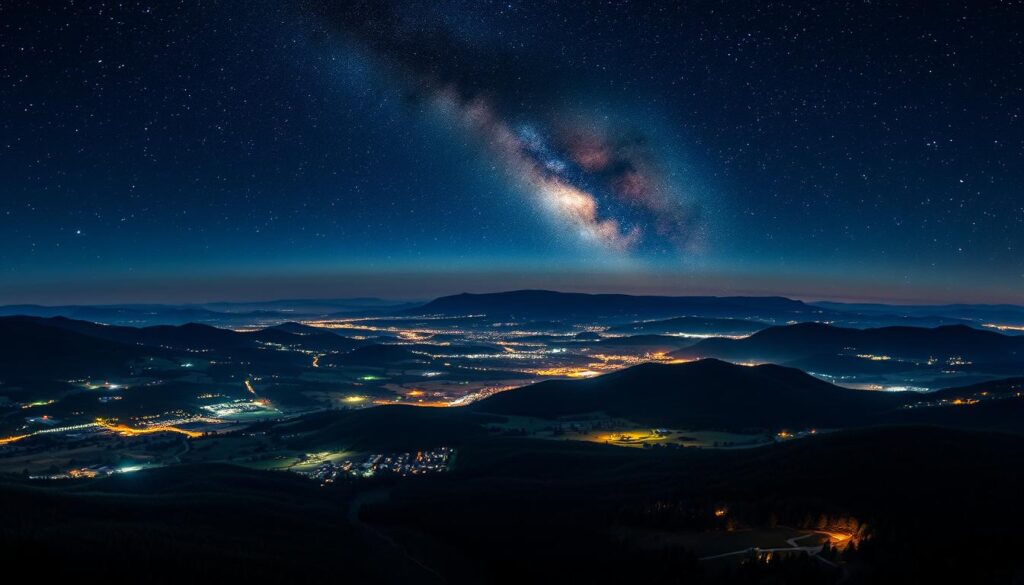
Understanding Light Pollution Levels
Light pollution is measured on a scale from “dark” to “brightly lit.” Knowing these levels is key for picking a good stargazing spot. Dark areas offer the best views, while brightly lit areas are usually cities with lots of artificial light.
Using Light Pollution Map Tools
Many online resources and apps offer light pollution maps. These tools let you zoom in, check light levels, and plan stargazing trips. Websites and apps give real-time light pollution data.
- Websites like Dark Site Finder and NASA’s Blue Marble Navigator offer detailed maps.
- Mobile apps such as Dark Sky Finder and Stellarium Mobile provide on-the-go access to light pollution data.
How to Interpret Your Local Area
To use a light pollution map, start by checking the light pollution level. Look for “dark” areas or low values. These spots are great for stargazing. Also, think about how close these areas are to you and plan your trip.
Some maps show nearby astronomy resources, like observatories or stargazing events. By using light pollution maps well, you can improve your stargazing and find new dark sky maps in your area.
Planning Your Stargazing Trip
Planning a stargazing trip is all about making the most of your time under the stars. It doesn’t matter if you’re an expert or just starting out. A well-planned trip can make your experience unforgettable.
Best Times for Stargazing
The best times for stargazing vary based on the season and weather. The darkest skies are usually during the new moon. Also, clear, cloudless nights are ideal.
- Look for periods of stable weather for optimal viewing conditions.
- Consider stargazing during the peak meteor shower seasons for spectacular displays.
- Avoid times of high moon activity or when the moon is full, as it can interfere with viewing faint stars.
Equipment You Might Need
While you can stargaze with your eyes, the right tools can make it better. Here are some essentials:
- Binoculars or a Telescope: For a closer look at celestial objects.
- Star Chart or App: To help identify constellations and stars.
- Comfortable Viewing Chair or Mat: For a more enjoyable viewing experience.
- Red Light Flashlight: To preserve your night vision.
Tips for a Successful Stargazing Experience
To enjoy your stargazing trip, follow these tips:
- Dress warmly and bring blankets to stay comfortable during your viewing session.
- Arrive early to your stargazing location to allow your eyes to adjust to the dark.
- Bring refreshments to keep you comfortable during your stargazing session.
- Be patient and give your eyes time to adjust to the darkness for better viewing.
With careful planning, your stargazing trip can be both fulfilling and memorable.
Safety and Etiquette in Dark Sky Areas
Exploring dark sky areas for stargazing requires safety and respect for local rules. Being prepared and respectful ensures a good time for everyone. It’s about being safe and caring for the environment.
Safety Precautions
To enjoy stargazing safely, prepare well. Here are some must-haves:
- Comfortable Clothing and Footwear: Wear the right clothes for the weather and terrain.
- Flashlights or Headlamps: Use red lights to keep your night vision sharp.
- First Aid Kit: Carry a basic kit with bandages, wipes, and your meds.
- Water and Snacks: Drink water and eat snacks to stay energized.
- Maps and Guides: Know the area and any dangers.
Respecting the Environment and Wildlife
Dark sky areas are untouched natural wonders. It’s key to protect them for future generations.
| Guideline | Description |
|---|---|
| Stay on Designated Trails | Lessen your impact on nature. |
| Keep Noise Levels Down | Don’t scare off wildlife or disturb others. |
| Do Not Litter | Take all trash with you when you leave. |
Etiquette for Photography and Group Viewing
Photography and group viewing need etiquette to keep everyone happy.
- Be Mindful of Others: Don’t block views or use too much light.
- Share Your Space: Be kind and flexible with others.
- Follow Local Rules: Some places have rules on what you can bring or how many can gather.
Following these guidelines helps keep dark sky areas beautiful for everyone. It makes your stargazing trip unforgettable.
Staying Updated on Dark Sky Initiatives
It’s now easier than ever to join dark sky efforts. Start by looking into what astronomy groups do to help stargazing and protect dark skies. The International Dark Sky Association is a key player, working worldwide to save dark skies.
Astronomy Organizations Leading the Way
Many groups, like the International Dark Sky Association, have programs to teach people about dark skies. For example, Voyageurs National Park is a Dark Sky Park. It offers amazing stargazing and supports dark sky protection.
Getting Involved in Your Local Community
Joining local astronomy clubs or attending stargazing events is a great step. These groups often host events and share knowledge about dark skies and astronomy.
Ongoing Education and Resources
There are many resources to keep you updated on dark sky efforts. These include educational materials and workshops. By using these, you can learn more about protecting dark skies and join the stargazing community.