
Capturing the beauty of reflection nebulae needs the right tools and skills. These are clouds of dust that reflect nearby starlight. They create a stunning sight in the night sky.
You’ll need a telescope and camera to start. The camera and telescope you choose greatly affect your photos. For example, a one-shot-color camera or a DSLR with a UV/IR cut filter works well. For tips on taking amazing photos, check out astrobackyard.com. It offers great advice on Nebula Photography Techniques.
Knowing how to photograph reflection nebulae is key. With the right techniques and gear, you can take top-notch photos. These photos will show off the beauty of these cosmic wonders.
Understanding Reflection Nebulae
Exploring reflection nebulae is key for astrophotography enthusiasts. These nebulae are not just stunning; they also have unique compositions and traits.
What Are Reflection Nebulae?
Reflection nebulae are dust clouds that reflect nearby starlight. They often surround young, hot stars. Their look changes based on dust density and starlight intensity.
These nebulae have soft, muted colors, unlike emission nebulae. The dust scatters blue light more, making them appear blue.
Key Characteristics to Identify
To spot reflection nebulae, look for these traits:
- Color: They usually show a blue color from light scattering.
- Texture: Texture can range from smooth to complex, based on dust density.
- Association with Stars: They’re often near bright, young stars.
| Characteristic | Description | Importance in Identification |
|---|---|---|
| Color | Blue hue due to light scattering | High |
| Texture | Varies from smooth to complex patterns | Medium |
| Association with Stars | Found near young, hot stars | High |
Differences Between Reflection and Emission Nebulae
Understanding the difference between reflection and emission nebulae is vital. Reflection nebulae reflect starlight, while emission nebulae glow due to gas excitement by ultraviolet radiation.
Emission nebulae have bright red or pink colors, thanks to hydrogen-alpha emission lines. In contrast, reflection nebulae are more blue and fainter.
To capture reflection nebulae’s beauty, you need to know their characteristics and use the right Capturing Nebulae with a DSLR Camera techniques. Knowing the difference helps tailor your astrophotography to each nebula type.
Essential Equipment for Capturing Reflection Nebulae
To capture stunning reflection nebulae, you need the right equipment. We’ll look at the key items for high-quality images of these celestial wonders.
Telescopes: What to Choose
Choosing a telescope is important. Reflector telescopes are great for gathering light, perfect for faint nebulae. Refractor telescopes offer sharp images with little distortion. Pick one that balances light gathering, portability, and ease of use.
| Telescope Type | Light Gathering Capability | Portability |
|---|---|---|
| Reflector | High | Moderate |
| Refractor | Moderate | High |
| Catadioptric | High | High |
Cameras: Best Options for Astrophotography
You’ll need a camera for long exposures and low-light sensitivity. DSLR cameras offer manual controls and lens changes. Mirrorless cameras are compact with advanced features. Look for good noise performance and astrophotography-specific features.
Filters: Essential Accessories
Filters are key for better astrophotography images. Nebula filters boost contrast, making nebulae stand out. Light pollution filters reduce background light pollution. The right filters can greatly enhance your reflection nebulae photos.
Setting Up Your Equipment
Getting the right setup is key for capturing reflection nebula photos. You need to make sure your telescope, camera, and accessories are set up correctly.
Finding the Right Location
Choosing the right spot for astrophotography is important. You want a place with little light pollution to see the nebulae’s faint light. Think about these things when picking a location:
- Dark skies: Find areas with little artificial light.
- Clear skies: Check the weather to make sure it’s clear.
- Accessibility: Pick a spot that’s easy to get to.
Dark sky reserves and national parks are great for astrophotography. They have little light pollution and clear skies.
Aligning and Calibrating Your Telescope
Aligning and calibrating your telescope is crucial for great photos. Here’s how to do it:
- Align your telescope with the polar axis for accurate tracking.
- Calibrate your telescope’s focus with a bright star.
- Use a star chart or planetarium software to find the nebula you want to shoot.
Camera Settings for Optimal Results
To get amazing reflection nebula photos, you need the right camera settings. Keep these tips in mind:
- Use a low ISO (800-1600) to reduce noise.
- Set a long exposure (10-30 seconds) to catch faint details.
- Choose a wide aperture (f/2.8-f/4) to get more light.
Try different camera settings to find the best for your gear and the nebula you’re shooting.
Planning Your Observation
To capture the beauty of reflection nebulae, you need to plan carefully. This means knowing the best times to view them, using technology, and tracking their locations.
Best Times for Viewing Reflection Nebulae
The visibility of reflection nebulae changes with the season, your location, and the nebula. The best times are when the nebula is high in the sky, usually at night when it’s darkest. For example, the Pleiades (M45) is best seen in winter in the Northern Hemisphere.
Utilizing Astronomy Apps
Astronomy apps can greatly help your planning. Apps like SkySafari or Stellarium Mobile show when and where to see reflection nebulae. They give real-time data and alert you to the best viewing times. By using these apps, you can plan your observation sessions more effectively, ensuring great images.
Keeping Track of Nebulae Locations
It’s important to know where reflection nebulae are for successful astrophotography. Use star charts or software to map their locations. Keeping a list of your targets helps you stay organized. Here’s an example of tracking nebulae locations:
| Nebula Name | RA | DEC | Best Viewing Month |
|---|---|---|---|
| Pleiades (M45) | 03h 47m | +24° 07′ | December |
| Iris Nebula (NGC 7023) | 21h 00m | +68° 10′ | October |
For more detailed info on observing deep-sky objects like reflection nebulae, visit Astronomy.com. It has lots of resources for all astronomers.
Techniques for Astrophotography
Capturing reflection nebulae is an art that requires understanding and using different astrophotography techniques. To get high-quality photos, you must learn how to make your images clearer and more detailed.
Long Exposure Basics
Long exposure is key in astrophotography. It lets you capture more light from far-off objects. This way, you can see details in reflection nebulae that are hard to spot.
Key considerations for long exposure:
- Use a sturdy tripod to avoid camera shake.
- Choose a low ISO to cut down on noise.
- Try different exposure times to find the best one.
Stacking Images for Clarity
Image stacking combines multiple shots of the same thing to improve image quality. This method helps reduce noise and bring out more details.
Benefits of image stacking include:
- It improves the signal-to-noise ratio.
- It makes details in both bright and dark areas clearer.
- It cuts down on random noise.
Adjusting for Light Pollution
Light pollution is a big problem in astrophotography, more so in cities. It’s important to adjust your technique to fight its effects.
Techniques to combat light pollution:
| Technique | Description | Benefit |
|---|---|---|
| Narrowband Filters | Filters that let specific wavelengths of light through. | They reduce light pollution by blocking unwanted wavelengths. |
| Post-processing | Editing image parameters during editing. | It improves image quality by lessening light pollution’s impact. |
| Location Scouting | Finding a spot with little light pollution. | It helps get better images by capturing data in a darker place. |
Capturing Images: A Step-by-Step Guide
To capture stunning images of reflection nebulae, follow a systematic approach. This includes understanding the right techniques, using the right equipment, and being patient.
Focusing on the Nebulae
Focusing on the nebulae is key to high-quality images. Start by using your camera’s live view to adjust the focus. Make sure the stars are sharp and clear to get a sharp focus on the nebulae. You can also use tools like the focus mask or Bahtinov mask for precise focusing.
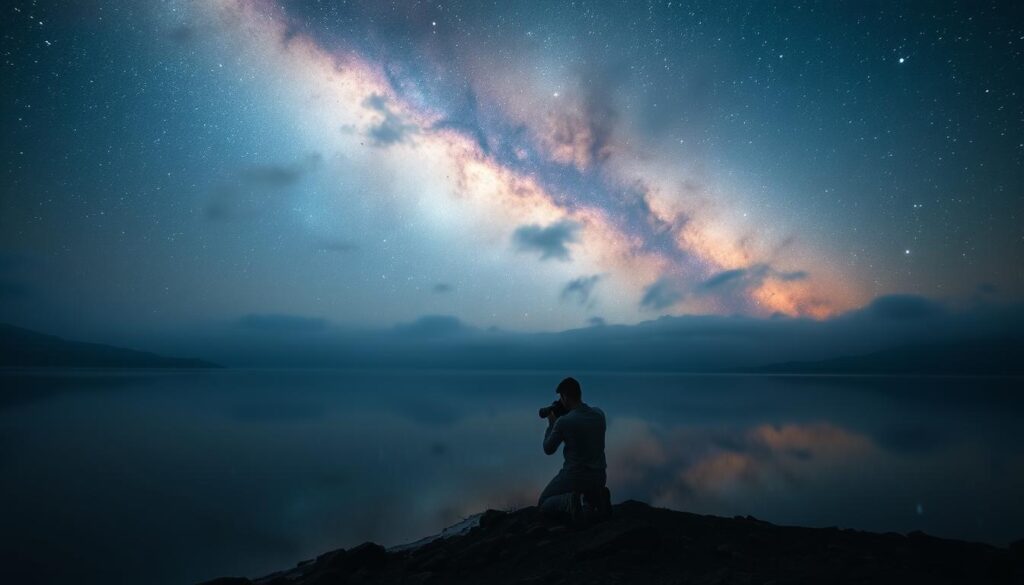
Taking Multiple Shots
Taking multiple shots is crucial for the best reflection nebula images. Take a series of exposures to capture different details. This technique is called bracketing, allowing you to combine images for a single, high-quality photo.
Take at least 5-10 shots at different exposures. This ensures you capture a range of details.
Reviewing and Selecting Images
After taking multiple shots, reviewing and selecting the best images is key. Look for images that are sharp, well-exposed, and capture the nebulae’s details. Use image processing software to review your images and pick the best ones.
Once you’ve selected the best images, you can start post-processing. This will enhance the quality and details of the reflection nebulae.
Post-Processing Your Images
Enhancing your reflection nebulae images through post-processing can make a big difference. It’s a key step that turns your captured images into stunning astrophotography masterpieces.
Software for Editing
To start post-processing, you’ll need the right software. Popular choices among astrophotographers include Adobe Photoshop and StarStax. These tools offer many features for editing and enhancing your images.
- Adobe Photoshop: Offers advanced tools for editing, including layers and filters.
- StarStax: Specialized for stacking images, which is essential for reducing noise and enhancing details.
Color Correction Techniques
Color correction is vital for ensuring your images accurately represent the reflection nebulae. Techniques include adjusting white balance and saturation levels.
| Technique | Description | Effect |
|---|---|---|
| White Balance Adjustment | Corrects the color cast in your images | More natural colors |
| Saturation Adjustment | Enhances or reduces color intensity | Vibrant or subtle colors |
Sharpening and Enhancing Details
Sharpening your images brings out the details in the reflection nebulae. Techniques include using unsharp masking and adjusting clarity.
By applying these post-processing techniques, you can significantly enhance your reflection nebulae images. This makes them more captivating and reveals the intricate details of these celestial wonders.
Tips for Beginners in Astrophotography
Starting astrophotography can feel overwhelming, but with the right tips, you can get better fast. Learning the basics and avoiding common mistakes will make your journey more enjoyable.
Common Mistakes to Avoid
Beginners often make mistakes that slow their progress. One big error is not using the Best Camera Settings for Nebula Photography. Make sure you know your camera’s settings and adjust them for the best results.
- Incorrect exposure times can lead to poor image quality.
- Failing to use a tripod can result in shaky images.
- Not accounting for light pollution can affect your image’s clarity.
Learning from Expert Astrophotographers
Learning from experts is a great way to improve your Nebula Photography Techniques. Study their work, understand their methods, and use their tips in your own photos. Look at how they compose their shots and use Nebula Photo Composition Tips to help you.
Joining Community Forums and Groups
Joining astrophotography communities is very helpful. These places let you share your photos, get feedback, and learn from others. Being part of the community gives you valuable insights and keeps you up-to-date with new techniques.
By avoiding common mistakes, learning from experts, and joining the community, you’ll be on your way to taking amazing nebula photos.
Advanced Techniques for Enthusiasts
To get better at astrophotography, you need to learn advanced techniques. These methods help you capture stunning images of reflection nebulae. They make your photos look amazing and detailed.
Using Filters to Enhance Colors
Filters are key for better colors in your photos. Nebula filters cut down on light pollution. They also highlight certain wavelengths, showing off the nebula’s details.
For example, a narrowband filter focuses on specific elements in the nebula. This makes the colors pop.
- Narrowband filters for isolating specific wavelengths
- Color enhancement filters for improving overall image quality
- Light pollution filters for reducing unwanted light
Incorporating Multiple Techniques
Using many techniques is essential for great photos. Image stacking combines shots to reduce noise and boost details. Focus stacking keeps more of your image sharp.
- Image stacking for reducing noise
- Focus stacking for maintaining sharp focus
- Post-processing techniques for color correction and enhancement
Experimenting with Different Equipment
Trying new gear is important for improving your skills. Experiment with different telescopes and cameras to find the best for reflection nebulae. Accessories like remote shutter releases and autoguiders also help.
- Trying different telescopes for optimal image quality
- Using various cameras for capturing diverse perspectives
- Incorporating accessories for enhanced precision
Sharing Your Astrophotography Work
After capturing stunning reflection nebulae, it’s time to share your photos with the world. Sharing your astrophotography can be rewarding. It lets you connect with others who love the night sky and get feedback on your work.
Best Platforms for Showcasing Your Images
There are many places to show off your astrophotography. Sites like Instagram and Facebook are great. They have many groups for sharing and talking about space photos. You can also use sites like Flickr and 500px, made just for photographers.
Building an Online Portfolio
Creating an online portfolio is a smart move. It lets you show off your best photos and see how you’ve grown. You can use WordPress or Wix to make a website, or sites like SmugMug for photographers. Include a variety of your photos and write captions with details about each one.
Networking with Other Photographers
Networking with other photographers is very helpful. It lets you learn from others and maybe even work together. Join online forums and groups on social media for astrophotography. Also, go to workshops or conferences to meet people in person.
By sharing your astrophotography, you not only show off your skills. You also join a community that loves the night sky. Whether you’re posting on social media, building a portfolio, or meeting other photographers, your work can inspire and help grow the hobby.
Continuing Your Journey in Astrophotography
As you keep exploring astrophotography, setting new goals is key. Each time you capture a reflection nebula, you’ll want to try more. You’ll also want to get better at your techniques.
Setting New Goals for Your Photography
Setting new goals keeps you motivated and inspired. Try to capture different types of nebulae. Also, experiment with Nebula Photography Techniques to make your photos better.
Think about improving your Best Camera Settings for Nebula Photography. Or, learn Nebula Photo Composition Tips to make your images more appealing.
Exploring More Nebulae and Celestial Objects
The universe is full of amazing things to photograph. As you get better, explore other nebulae like emission or dark nebulae. Try new photography techniques too.
- Try capturing images of other celestial objects like galaxies, star clusters, or planetary nebulae.
- Experiment with different Nebula Photography Techniques to enhance your photos.
- Use Nebula Photo Composition Tips to create more visually appealing images.
Staying Updated with Astrophotography Trends
It’s important to keep up with new trends and tech in astrophotography. Follow astronomy blogs, attend workshops, and join online forums. This way, you’ll know about new techniques and tools.
Joining astrophotography communities is also a good idea. Share your photos, learn from others, and stay motivated. By always learning and pushing yourself, you’ll keep getting better at capturing stunning images.
Conclusion: Your Path to Stunning Reflection Nebulae
Capturing reflection nebulae is a rewarding journey. It needs patience, practice, and the right guidance. By learning about reflection nebulae, you can improve your astrophotography skills.
Key Takeaways for Reflection Nebula Photography
You now know the essential equipment for capturing these nebulae. This includes telescopes and cameras. You also learned how to set them up for the best results.
You’ve gained insights into planning your observation. Using astronomy apps and techniques for stunning images are also covered.
Continuing Your Astrophotography Journey
To get better at capturing reflection nebulae, keep practicing. Try different techniques and use Reflection Nebula Photography Tips to improve. Stay updated with the latest Nebula Photography Gear Recommendations.
Final Tips for Capturing Reflection Nebulae
Remember, capturing stunning reflection nebulae takes patience and persistence. Use the knowledge you’ve gained on How to Capture Reflection Nebulae. Don’t be afraid to try new techniques and equipment to enhance your skills.