
Stargazing is a captivating activity that lets you explore the night sky. It helps you discover the wonders of the universe. As you start astrophotography, having the right equipment is key for a great experience.
To capture the beauty of the stars, you need astrophotography equipment that works well in low light. As a beginner, it’s essential to start with the basics. Then, upgrade your gear as you get more experience.
With the right beginner astrophotography gear, you can take your passion to the next level. You’ll capture stunning images of the night sky. In this guide, we’ll look at the must-have equipment to start your astrophotography journey.
Understanding Astrophotography Basics
To capture the beauty of the night sky, you need to know the basics of astrophotography. It’s not just about pointing a camera at the stars. You must understand your equipment and the celestial objects you’re capturing.
What Is Astrophotography?
Astrophotography is a type of photography that captures images of stars, planets, and galaxies. It requires knowledge of astronomy and technical skills to use your camera and equipment well.
There are two main types of astrophotography. Wide-field astrophotography captures broad views of the night sky. Deep-sky astrophotography focuses on detailed images of distant objects.
Key Techniques to Know
To excel in astrophotography, you need to learn several key techniques. Here are some important ones:
- Understanding your camera: Knowing how to use your camera’s manual settings is crucial for capturing high-quality astrophotography images.
- Using the right equipment: Investing in must-have gear for astrophotography, such as a sturdy tripod and the best cameras for astrophotography, can significantly improve your results.
- Composition and framing: Paying attention to the composition of your shot, including the positioning of celestial objects and the inclusion of foreground elements, can enhance the visual appeal of your images.
- Managing light pollution: Understanding how to mitigate the effects of light pollution is essential for capturing clear images of the night sky.
By mastering these techniques and understanding the basics of astrophotography, you’ll be well on your way to capturing stunning images of the night sky.
Choosing the Right Camera
Choosing the right camera is key to capturing the night sky’s beauty. The camera is a vital tool in astrophotography. It lets you capture the wonders of the universe. Knowing the differences between cameras helps you make a smart choice.
DSLR vs. Mirrorless: Which Is Best for You?
The debate between DSLR and mirrorless cameras is ongoing. DSLR cameras are loved for their optical viewfinder and battery life. Mirrorless cameras, on the other hand, are lighter and more compact, with better autofocus.
Both types work well for astrophotography. But mirrorless cameras are becoming more popular. They offer real-time preview and focus peaking, which helps in low light. Think about what you need and prefer when choosing.
Important Camera Features for Astrophotography
When picking a camera for astrophotography, look for certain features. These include:
- Manual focus and exposure controls for adjusting settings.
- High ISO performance for capturing images in low light.
- Raw image capture for more flexibility in post-processing.
- Intervalometer or external intervalometer for timed shots.
Also, check if the camera works well with telescope for astrophotography and other astrophotography accessories. These can improve your photography experience.
Understanding these features and how they meet your astrophotography needs helps you choose the right camera.
Essential Lenses for Night Sky Photography
The right lens is key for capturing the night sky. It’s important for both landscapes and deep-sky objects.
Wide-Angle Lenses for Landscape Shots
Wide-angle lenses are perfect for showing the vast night sky in a landscape. They let you include foregrounds, making your shots more interesting. Look for a lens with a fast aperture (like f/2.8) to capture more light.
For more on the best lenses, check out this guide on lenses for nightscapes.
Key features to look for include handling distortion and sharpness. A lens with little distortion keeps your image true to life, even with wide scenes.
Telephoto Lenses for Deep-Sky Imaging
Telephoto lenses are great for deep-sky shots. They let you zoom in on the moon, planets, and galaxies. These lenses have a narrower view but make distant objects appear closer and clearer.
When picking a telephoto lens, think about the focal length and how it works with your camera. A longer focal length is good for far-off objects but needs precise tracking to avoid blur.
Choosing the right lens is vital. Wide-angle lenses are best for the Milky Way in landscapes, while telephoto lenses are better for detailed celestial shots. Also, consider using astrophotography filters to improve your images by cutting down light pollution or highlighting certain colors.
Whether you’re using a wide-angle or telephoto lens, a strong astrophotography tripod is crucial. It helps prevent camera shake and keeps your images sharp, even with long exposures.
Tripods: Stability Matters
A stable tripod is key for astrophotography, keeping your camera steady during long shots. Even a little movement can ruin your photos. So, a good tripod is essential for clear, sharp images.
Features to Look for in a Good Tripod
When picking a tripod for astrophotography, focus on a few important things. Stability is the top priority; look for sturdy materials that hold your camera and lens. Smooth pan-and-tilt movements help track stars and planets. Also, a robust leg lock system keeps it steady once set up.
- Sturdy construction materials
- Smooth and precise control for panning and tilting
- Effective leg lock system to maintain stability
- Adequate weight capacity to support your camera equipment
Recommended Tripods for Astrophotography
Here are some top tripods for astrophotography:
- Manfrotto BeFree Live: Known for its stability and compact design.
- Gitzo Systematic Series: Offers robust construction and smooth movements.
- Really Right Stuff TVC-34: Provides a great balance between stability and portability.
Choosing the right tripod greatly improves your astrophotography. Remember, clear night sky images depend on your equipment’s stability and reliability.
Mounts and Tracking Systems
The right mount is key for sharp astrophotography images. It’s important to know about mounts and tracking for capturing the stars.
Equatorial vs. Alt-Az Mounts
There are two main mounts: equatorial and alt-azimuth (Alt-Az). Equatorial mounts track objects as the Earth rotates. They’re perfect for long shots because they align with the Earth’s axis.
Alt-Az mounts move in altitude and azimuth. They’re easier for beginners. But, they need extra help to track the Earth’s rotation for long shots.
| Mount Type | Tracking Ability | Suitability for Long Exposure |
|---|---|---|
| Equatorial | Excellent, compensates for Earth’s rotation | Highly suitable |
| Alt-Az | Good, with additional compensation needed | Suitable with proper adjustments |
How Tracking Systems Enhance Your Shots
A good tracking system is vital for clear images. It stops star trails by matching the Earth’s rotation. This is key for capturing deep-sky objects.
Today’s systems have GPS and auto-alignment. This makes setting up and tracking easier. Look for a mount with accurate tracking and easy use.
Getting a quality mount and tracking system is a big step. These tools will help you capture the night sky’s beauty with more precision and clarity.
Essential Accessories to Bring Along
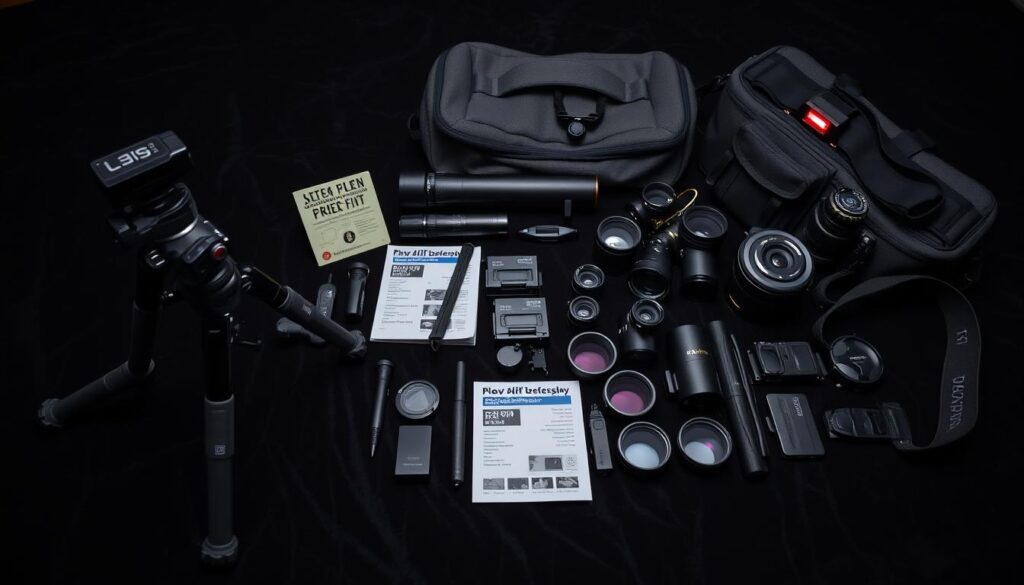
When you start astrophotography, the right accessories can really help. You’ll need more than just a camera and tripod. Some accessories can greatly improve your photos.
Remote Shutter Releases
A remote shutter release is key for astrophotography. It lets you take photos without touching the camera. This reduces camera shake and blurry images, which is crucial for long shots.
Key benefits of remote shutter releases include:
- Reduced camera shake
- Ability to take photos from a distance
- Improved image sharpness, even in long shots
Lens Filters for Better Images
Lens filters are vital for better astrophotography images. They help reduce light pollution, improve contrast, and protect your lens. Filters like light pollution filters and polarizing filters have specific uses.
| Filter Type | Purpose | Benefit |
|---|---|---|
| Light Pollution Filter | Reduces light pollution’s impact | Makes deep-sky objects more visible |
| Polarizing Filter | Controls reflections and glare | Boosts color and contrast |
| Neutral Density Filter | Reduces light entering the lens | Allows for longer exposures or wider apertures |
Adding these accessories to your kit can greatly improve your photos. It also makes your astrophotography experience better.
Lighting Considerations
Good astrophotography isn’t just about the right gear, like a top-notch telescope for astrophotography. It’s also about knowing the lighting. The quality of your photos can be greatly affected by the light around you.
To get the best shots, you need to know about the lighting. This means understanding ambient light and how to deal with light pollution.
Importance of Ambient Light Awareness
Ambient light is the natural or artificial light around you. In astrophotography, too much of it can ruin your photos. Knowing about ambient light helps you pick the best places and times to shoot.
- Check the moon phase: A full moon can add unwanted light to your photos.
- Choose locations with minimal artificial lighting: Avoid cities and towns with high levels of light pollution.
- Time your shots: Shooting during the darkest hours can help reduce ambient light.
Techniques for Managing Light Pollution
Light pollution is a big problem for astrophotographers, but there are ways to fight it. You can use astrophotography accessories like light pollution filters. You can also use software to fix your photos after taking them.
- Use astrophotography accessories like light pollution filters to help reduce the impact of artificial lighting.
- Post-processing techniques: Software like Adobe Lightroom and Photoshop can help you adjust your images to compensate for light pollution.
- Choose the right camera settings: Adjusting your camera’s ISO and exposure settings can help minimize the effects of light pollution.
By paying attention to lighting and using the right methods, you can make your astrophotography better. Whether you have a simple camera or advanced astrophotography accessories, managing light is crucial for amazing night sky photos.
Software and Post-Processing Tools
In astrophotography, post-processing software is key for improving your images. The right tools can enhance details, adjust colors, and remove noise.
There are many software options, each with its own features. Here are some popular ones:
Popular Astrophotography Software Options
- Adobe Photoshop: A powerful editing tool with many features, including noise reduction and color adjustment.
- StarStax: A free software for stacking images, reducing noise and enhancing details.
- PixInsight: A professional-grade software with advanced tools for image processing and analysis.
- StarTools: A user-friendly software with tools for image enhancement and correction.
Basic Post-Processing Techniques
After picking your software, learn some basic post-processing techniques. Here are a few tips to get you started:
- Adjusting Exposure: Learn to adjust exposure levels to reveal more details in your images.
- Noise Reduction: Use tools to reduce grain and improve the quality of your photos.
- Color Correction: Adjust color balance to ensure your images accurately show the night sky.
Mastering these techniques and using the right software can greatly improve your astrophotography images.
Choosing the Right Location
Finding the perfect spot for astrophotography is key to capturing stunning night sky images. The location you pick can greatly affect your photo quality. It’s important to think about light pollution, weather, and how easy it is to get there.
Dark Sky Locations in the U.S.
The United States has many dark sky spots great for astrophotography. Some top places include:
- Big Bend National Park, Texas
- Death Valley National Park, California
- Great Basin National Park, Nevada
- Cherry Springs State Park, Pennsylvania
These places have incredibly dark skies. They let you see the Milky Way and other celestial objects clearly.
How to Use Light Pollution Maps
Light pollution maps are great for finding dark spots. They show areas with little artificial light, which is key for good astrophotography.
To use these maps well, follow these steps:
- Find a reliable light pollution map, like the Dark Site Finder or NASA’s Blue Marble Navigator.
- Put in your location or where you’re going.
- Look at the map to find low light pollution areas.
- Plan your trip, considering weather and moon phase too.
| Location | Light Pollution Level | Best Time for Astrophotography |
|---|---|---|
| Big Bend National Park | Low | Spring and Fall |
| Death Valley National Park | Low | Winter |
| Cherry Springs State Park | Very Low | Summer and Fall |
By using light pollution maps and picking the right spot, you can improve your astrophotography. You’ll get stunning images of the night sky.
Planning Your Shooting Sessions
Astrophotography is more than just having the right gear. It’s about careful planning. You need to think about the best times to shoot, the weather, and the moon’s phases.
Best Times for Astrophotography
The best times for astrophotography vary based on what you want to capture. For the Milky Way, shoot during the new moon when it’s darkest. Summer months are the best for Milky Way shots in the Northern Hemisphere.
- Plan around celestial events like meteor showers and planetary alignments.
- Use apps or software to track the position of celestial bodies.
- Consider the time of year and how it affects the visibility of certain constellations.
Checking Weather and Moon Phases
Clear skies are key for astrophotography. So, checking the weather forecast is important. Looking at the weather forecast can help you avoid cloudy nights. Also, knowing the moon phase is crucial, as a full moon can light up the sky too much.
- Use weather apps to monitor cloud cover and precipitation forecasts.
- Check moon phase calendars to plan around full moons.
- Consider using light pollution maps to find darker locations.
Planning your shoots around these factors can greatly improve your astrophotography. Whether you’re new or experienced, having the right beginner astrophotography gear and astrophotography accessories is just the beginning. It’s the planning and preparation that will make your photos truly shine.
Learning from the Community
To improve your astrophotography, join the community. You’ll find lots of knowledge, new ideas, and inspiration. Talking with others who love astrophotography can really help.
Online Forums for Astrophotographers
Online forums are great for learning from pros. You can ask questions, show your photos, and get feedback. It’s a place where everyone is excited about astrophotography. Some top sites include:
- Reddit’s r/Astrophotography
- Astrophotography forums on Cloudy Nights
- Specialized groups on Facebook
These forums are for everyone, not just beginners. Even experienced photographers can learn new things about astrophotography equipment and techniques.
Workshops and Local Clubs to Join
Online resources are great, but workshops and clubs are also very helpful. You get to try things out, meet people, and learn from experts. It’s a chance to grow your skills and have fun.
| Workshop/Club Type | Benefits | Typical Locations |
|---|---|---|
| Astrophotography Workshops | Hands-on training, expert instruction | National Parks, Dark Sky Reserves |
| Local Astrophotography Clubs | Networking, group outings, shared knowledge | Urban and rural areas, often near observatories |
Joining these groups can make you a better photographer. You’ll learn about the best essential astrophotography tools and meet others who share your passion.
Maintaining Your Gear
To capture stunning night sky images, your astrophotography equipment must be in top condition. Regular maintenance is essential. It helps extend your gear’s lifespan and ensures it works its best.
Cleaning and Caring for Your Equipment
When cleaning your equipment, like your best cameras for astrophotography, use a soft cloth. Choose gentle cleaning products to avoid damage. Regularly check your gear for dust, moisture, or other contaminants that could harm your images.
Safe Storage Practices
Proper storage is key to protecting your astrophotography equipment when not in use. Store it in a dry, cool place, away from direct sunlight. Use protective cases or bags to prevent damage during transport. Consider investing in a storage container designed for camera equipment.
By following these maintenance tips, you can enjoy many successful astrophotography sessions. Your well-cared-for equipment will thank you.