
Are you ready to capture the breathtaking beauty of the night sky? The world’s best places for astrophotography offer incredible views with minimal light pollution. Places like the Atacama Desert in Chile and Natural Bridges National Monument in Utah are famous for their clear skies and darkness.
From the driest desert on Earth to remote islands, these international night sky photography spots are perfect for stunning celestial shots. Whether you’re a pro or just starting out, knowing where to find the darkest skies is key to capturing the cosmos in all its glory.
Why Astrophotography Matters for Enthusiasts
As an enthusiast, you might wonder why astrophotography is so important. The answer is simple: it preserves the natural beauty of our universe. It’s not just about taking pictures of the night sky. It’s about capturing the celestial events that help us understand the cosmos.
Dark skies are key in this journey. Light pollution makes it hard to see stars and planets. So, finding places with little artificial light is crucial.
The Importance of Dark Skies
Dark skies are vital for great astrophotography. Places with little light pollution are best for viewing and photographing the sky. Top spots include remote national parks and dark-sky reserves worldwide.
| Location | Dark Sky Quality | Popular For |
|---|---|---|
| Atacama Desert, Chile | Exceptional | Stargazing, Astrophotography |
| Northern Lights, Iceland | Excellent | Aurora Photography |
| Grand Canyon, USA | Very Good | Landscape Astrophotography |
Capturing Celestial Events
Astrophotography lets us capture big celestial events like meteor showers and solar eclipses. These moments are breathtaking and rare opportunities for photographers.
Planning and preparation are crucial. Knowing the forecast and having the right gear can make all the difference in getting that perfect shot.
A Unique Blend of Art and Science
Astrophotography is both art and science. It needs knowledge of astronomy and photography, along with patience. The technical skills, like long exposure settings, are as important as the creative vision.
By mixing technical skills with creativity, astrophotographers create stunning images. These images not only show the beauty of the night sky but also inspire others to explore the universe.
Top Astrophotography Spots in the United States
The U.S. is a dreamland for astrophotographers. It has dark skies in national parks and famous landmarks. The country’s varied landscapes give many chances to see the night sky in all its beauty.
National Parks with Minimal Light Pollution
The U.S. has many national parks known for their dark skies. Places like Death Valley, Lassen Volcanic, and Great Basin are perfect for stargazing. They are far from cities and have little light pollution.
Death Valley is famous for its dark skies, great for the Milky Way. Lassen Volcanic National Park is less crowded, offering a peaceful setting for photos.
Iconic Locations: Grand Canyon and Yosemite
The Grand Canyon and Yosemite National Park are stunning by day and night. The Grand Canyon’s vastness is a perfect backdrop for stars. Yosemite’s cliffs and lakes make a beautiful scene for photos.
These spots are top choices for seeing the Milky Way. They are must-visit places for serious astrophotographers.
Best Times to Visit
The best time to go depends on what you want to see. The Milky Way is best in summer. The aurora borealis is seen in the north in fall and early spring.
- Summer: Ideal for capturing the Milky Way.
- Fall and Early Spring: Best for viewing the aurora borealis in the northern states.
- Winter: Offers clear skies and is ideal for star photography.
Planning your visit for these events will make your astrophotography better.
International Gems for Astrophotographers
There are amazing places around the world for astrophotography. If you love capturing the night sky, check out these top spots. For more on dark-sky retreats in North America, click here.
The Atacama Desert, Chile
The Atacama Desert is famous for its clear skies and little light pollution. It’s a dream spot for astrophotographers. The dry, cloudless air is perfect for capturing the Milky Way and other stars.
You’ll have unparalleled stargazing experiences in this unique place.
The Salar de Uyuni, Bolivia
The Salar de Uyuni is special for astrophotography, thanks to its unique landscape. During the rainy season, the salt flats mirror the night sky. This creates a surreal scene, ideal for capturing stunning star images.
The Northern Lights in Iceland
Iceland is the best place to see the Northern Lights. Many astrophotography fans go there for this. The best time to see them is from September to mid-April, when it’s dark enough.
With the right gear and luck, you can capture the dramatic dance of the auroras in the sky.
Equipment Essentials for Astrophotography
Astrophotography fans know the right gear is key. It makes a big difference in capturing the night sky. The right equipment is vital for high-quality images that show the beauty of the stars.
Camera Gear You Need
A DSLR or mirrorless camera is essential for astrophotography. These cameras let you control focus and exposure. This is important for adjusting to the scene.
When picking a camera, look for one that does well in low light. Also, it should be able to shoot in RAW format.
- A DSLR or mirrorless camera body
- Manual focus lens (wide-angle lenses are preferred)
- Remote shutter release or intervalometer
Recommended Lenses
The lens you choose is very important. Wide-angle lenses (10-24mm) are best for big scenes like the Milky Way. They let you capture more of the sky, making your photos more dramatic.
- Wide-angle lenses (10-24mm) for broad celestial scenes
- Fast lenses (f/2.8 or faster) for better low-light performance
Best Accessories for Clear Shots
Good camera and lens are just the start. Several accessories can make your astrophotography better. A sturdy tripod is key to stop camera shake during long shots. A remote shutter release or intervalometer also helps by reducing camera vibration.
| Accessory | Description | Benefit |
|---|---|---|
| Tripod | Sturdy base for the camera | Prevents camera shake |
| Remote Shutter Release | Device to trigger the camera shutter | Reduces camera vibration |
| Intervalometer | Device to control the timing of shots | Allows for automated shooting sequences |
Techniques for Capturing Stunning Night Skies
Astrophotography is more than just the right gear. It’s about knowing how to capture the night sky’s beauty. Learning these techniques can make your photos much better.
Mastering Long Exposure Settings
Long exposure settings are key in astrophotography. They let you capture star trails across the sky. To do this, set your camera to manual mode and adjust the exposure time.
A good starting point is an exposure time of 20-30 seconds. But, you might need to change it based on your conditions.
Focusing Techniques for Low Light Conditions
Focusing in the dark can be tough. But, there are ways to get sharp images. Use live view to focus on a bright star. Zooming in helps you get precise focus.
Another trick is to use the focus peaking feature. It highlights areas in focus if your camera has it.
Composition Tips for Stellar Shots
Good composition is key for amazing astrophotography shots. Use the rule of thirds to balance your image. Adding interesting foregrounds adds depth.
Plan your shots when the Milky Way is most visible. Try different angles and perspectives for unique shots.
Mastering long exposure, focusing, and composition can greatly improve your astrophotography. You’ll capture stunning night skies.
Combining Travel and Photography
Traveling for astrophotography opens up new views of the universe. It lets you see the stars from unique spots. When planning, look for the best times for celestial events and the clearest skies at your destination.
Planning Your Astrophotography Trip
Good planning is key for a great astrophotography trip. Use light pollution maps and apps to find dark spots. This helps you get amazing night sky shots.
Key considerations for planning include:
- Checking lunar calendars to avoid full moon phases
- Using apps like Dark Sky Finder or Stellarium to identify dark sky locations
- Researching local weather patterns to predict clearer skies
Best Travel Gear for Photographers
Choosing the right gear is crucial for capturing top-notch astrophotography images. Your equipment should be easy to carry, tough, and flexible for different conditions.
| Gear | Description | Importance |
|---|---|---|
| Portable Camera Setup | A compact DSLR or mirrorless camera with a wide-angle lens | High |
| Tripod | A sturdy, lightweight tripod for stabilizing your camera | High |
| Remote Shutter Release | A device to minimize camera shake during exposure | Medium |
| Power Banks and Extra Batteries | For keeping your gear powered throughout the trip | High |
How to Handle Weather Changes
Weather can change your astrophotography plans. Being ready for surprises can make your trip better.
Tips for handling weather changes include:
- Monitoring local weather forecasts regularly
- Having a backup plan for alternative locations
- Protecting your gear from sudden rain or dust storms
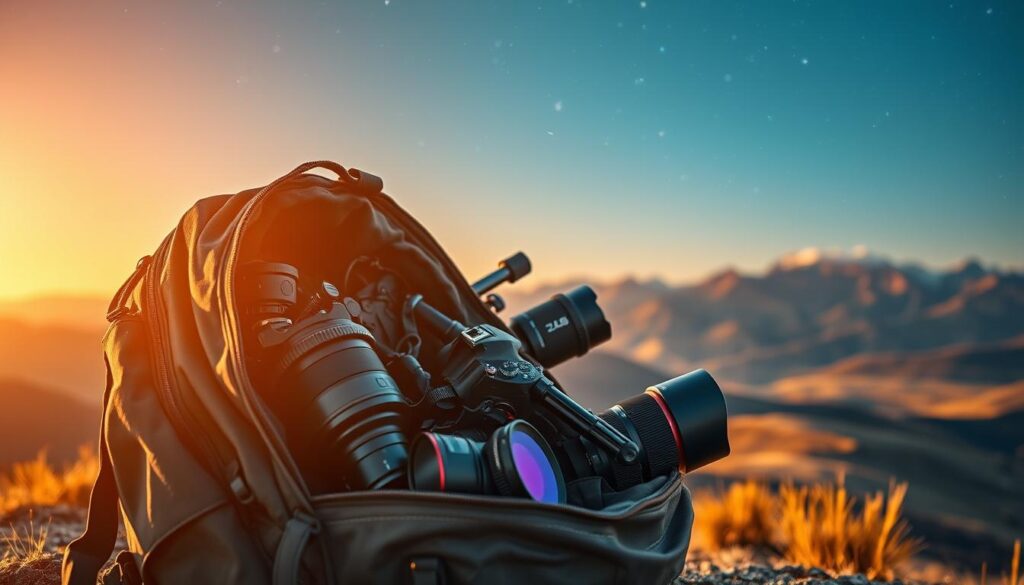
Safety Tips When Shooting at Night
When you go out to capture the night sky, your safety is key. Astrophotography often takes you to places far from home. Being ready and knowing your area can really help.
Navigating Remote Locations
Walking in dark, far-off places needs care. Use red light flashlights to keep your eyes adjusted. Try to visit the spot during the day if you can. This helps you know the area and any dangers.
Tips for Safe Navigation:
- Use a GPS device or a mapping app on your phone to stay on track.
- Keep a safe distance from steep slopes or water bodies.
- Stay close to your vehicle or campsite, if you’re alone.
Staying Aware of Wildlife
When you’re in areas with animals, watch your surroundings. Make noise while walking to warn animals. Keep a safe distance and don’t feed them to stay safe.
| Wildlife Safety Tips | Description |
|---|---|
| Making Noise | Alert animals to your presence to avoid startling them. |
| Keeping Distance | Maintain a safe distance from wildlife to avoid confrontations. |
| Not Feeding | Avoid feeding wildlife as it can lead to negative consequences for both you and the animals. |
Importance of Informing Someone
Tell someone about your plans before you go. Share where you’re going and when you’ll be back. This helps ensure help comes if you need it.
Remember, safety is a shared responsibility. By being prepared and considerate, you can enjoy astrophotography while minimizing risks.
The Role of Communities in Astrophotography
Getting involved in local and online communities can really boost your astrophotography skills. These groups let you share your photos, learn from others, and keep up with new techniques. It’s a great way to grow as a photographer.
Local Meetups and Workshops
Going to local meetups and workshops is a smart move. You get to meet other photography fans and learn from pros. These events are perfect for improving your skills and getting new ideas. Look for them online or join local photography clubs.
- Learn from experienced astrophotographers
- Share your own experiences and tips
- Discover new locations for astrophotography
Online Forums to Share Your Work
Online forums and social media groups are key resources for astrophotography. You can post your photos, get feedback, and learn from others. Facebook groups, Reddit forums, and photography websites are popular spots.
These online spaces are more than just for sharing photos. They’re also where you can find out about upcoming events and the latest in astrophotography.
Joining Photography Clubs
Being part of a photography club, online or local, connects you with others who love astrophotography. Clubs often plan events, workshops, and trips. These can help you get better and meet new people.
Benefits of joining a photography club include:
- Access to exclusive events and workshops
- Opportunities to learn from experienced photographers
- A supportive community to share your work and receive feedback
Enhancing Your Skills with Post-Processing
With the right post-processing techniques, you can turn your astrophotography images into stunning works of art. This step is crucial for refining and enhancing your photos. It makes them more visually appealing.
Software Recommendations
To enhance your astrophotography images, you need the right software. Adobe Lightroom and Photoshop are popular choices. They offer many tools for editing and manipulating your photos.
Stellarium can help you plan your shots. Mobile apps like PhotoPills provide valuable information on celestial events and camera settings.
| Software | Purpose | Key Features |
|---|---|---|
| Adobe Lightroom | Basic Edits | Exposure adjustment, color grading, noise reduction |
| Adobe Photoshop | Advanced Edits | Layering, masking, advanced noise reduction |
| Stellarium | Planning Shots | Celestial event simulation, sky mapping |
Basic Edits to Improve Your Shots
Basic edits can significantly improve your astrophotography images. Start by adjusting the exposure, contrast, and color balance. This enhances the overall appearance of your photo.
You can also use noise reduction tools. These tools help minimize grain and improve clarity.
- Adjust exposure and contrast
- Balance colors to enhance natural tones
- Apply noise reduction techniques
Advanced Techniques for Stunning Effects
For more advanced editing, techniques like layering and masking can help you achieve stunning effects. You can combine multiple shots to create a single image with enhanced detail and depth.
Advanced noise reduction techniques can also help. They produce cleaner, more professional-looking images.
By mastering post-processing techniques, you can take your astrophotography to the next level. You can create images that truly capture the beauty of the night sky.
Showcasing Your Astrophotography Work
You’ve captured the night sky in all its glory; now it’s time to share it with the world. Showcasing your astrophotography work is key to gaining recognition. It also inspires others with your passion.
Digital Platforms
Platforms like Instagram and 500px are great for sharing your photos. They help you reach a wide audience. You can also join online forums and groups dedicated to astrophotography. This lets you connect with others and learn from their experiences.
Building a Portfolio
Creating a portfolio, online or physical, organizes your best work. It shows your skills to others. This is useful if you’re looking to collaborate with other photographers or clients.
Networking Opportunities
Networking with other photographers is vital. You can do this through workshops, meetups, or online forums. It opens doors for collaboration, learning, and growth in your astrophotography journey. By showcasing your work and engaging with the community, you can elevate your passion.