
When it comes to capturing the night sky, you have two main options: dedicated astronomy cameras and DSLRs. Each has its own pros and cons. Knowing these differences is key to making a smart choice.
So, which camera is right for your astrophotography goals? The decision between a dedicated camera and a DSLR depends on several things. These include your skill level, the kind of photography you want to do, and your budget.
This guide will help you understand the main differences between dedicated astronomy cameras and DSLRs. It will guide you in picking the best camera for your needs.
Understanding the Basics of Photography Equipment
Starting your astrophotography journey means knowing the difference between dedicated astronomy cameras and DSLRs. The right camera greatly affects your astrophotography quality.
What is a Dedicated Astronomy Camera?
A dedicated astronomy camera is made for capturing images of the sky. It’s different from regular cameras because it’s better at handling low light. These cameras work well with telescopes or other sky-watching tools.
Key features of dedicated astronomy cameras include:
- High sensitivity to low light levels
- Cooling systems to reduce noise
- Compatibility with various telescopes and mounts
What is a DSLR?
A Digital Single-Lens Reflex (DSLR) camera is great for many types of photography, including the sky. DSLRs are loved for their lens-changing ability and manual controls.
DSLRs offer several advantages for astrophotography, including:
- Wide range of lens options
- Familiarity and ease of use for photographers
- Capability to capture both still images and video
Key Differences Between the Two
Choosing between a dedicated astronomy camera and a DSLR depends on several factors. The table below highlights some key differences:
| Feature | Dedicated Astronomy Camera | DSLR |
|---|---|---|
| Primary Use | Astrophotography | General photography and astrophotography |
| Sensor Sensitivity | High sensitivity to low light | Variable sensitivity depending on the model |
| Cooling System | Often includes cooling systems | Rarely includes cooling systems |
| Lens Options | Limited to adapters and specific lenses | Wide range of interchangeable lenses |
Knowing these differences helps you choose the best camera for your astrophotography needs.
Why Choose Dedicated Astronomy Cameras?
For serious astrophotography fans, dedicated astronomy cameras are a must. They offer tools that boost your photo quality. These cameras are made to catch the faint light from far-off stars, giving you details you can’t get with regular cameras.
Specialized Features for Astrophotography
Dedicated astronomy cameras have special features for space photos. They have advanced sensor technology, precise temperature control, and customizable settings. These let you fine-tune your camera for different space shots.
Key features to look for include:
- High-sensitivity sensors for catching faint light
- Cooling systems to cut down noise and boost image quality
- Software that works with advanced image processing
Sensor Sensitivity and Performance
The camera’s sensor is crucial, and astronomy cameras have top-notch ones. They often use back-illuminated CMOS sensors or CCD sensors. These are known for their sensitivity and low noise, perfect for space photos.
| Camera Model | Sensor Type | Sensitivity |
|---|---|---|
| Model A | Back-illuminated CMOS | High |
| Model B | CCD | Very High |
| Model C | CMOS | Medium |
Cooling Systems and Noise Reduction
Dedicated astronomy cameras have cooling systems that help a lot. These systems cool the sensor, cutting down thermal noise. This makes your photos cleaner and clearer. Some cameras can cool the sensor by up to 40°C, improving your long-exposure shots a lot.
When picking a dedicated astronomy camera, think about its cooling system. It’s key for capturing the Moon, planets, or deep-sky objects. A cooled camera can greatly improve your photos’ quality.
Advantages of Using DSLRs for Astrophotography
DSLRs are a great choice for astrophotography because they are versatile and have many accessories. They can take high-quality photos of many subjects, not just stars.
Versatility Beyond Astronomy
DSLRs are known for their flexibility in photography. They can handle many genres, from landscapes to wildlife. This versatility makes them an excellent choice for those who enjoy different types of photography.
You can easily switch between night sky photos and daytime shots. No need for different cameras for each.
Lens Options and Availability
DSLRs have a wide range of lenses. You can find lenses for wide-angle shots of the Milky Way or for close-up moon photos. This variety makes DSLRs great for different astrophotography techniques.
For more on DSLRs versus dedicated astronomy cameras, check out this detailed comparison.
Familiarity and Usability
Knowing how to use DSLRs is a big plus. If you’ve used them before, you’ll find astrophotography easier. You can use what you know to capture the night sky.
DSLRs also have easy-to-use controls. This makes adjusting settings quick, which is important for capturing fast celestial events.
In conclusion, DSLRs are a great choice for astrophotography. They offer versatility, a wide range of lenses, and are easy to use. Whether you’re new or experienced, DSLRs are a solid platform for exploring the universe.
Image Quality: A Closer Look
Many wonder if dedicated astronomy cameras or DSLRs are better for astrophotography. The camera’s ability to show detail, handle noise, and capture a wide range is key.
Comparing Sensor Size and Resolution
Sensor size and resolution are important for image quality. A bigger sensor can grab more light, which is great for dark skies.
But, more megapixels don’t always mean better images. Too many can lead to more noise.
| Camera Type | Sensor Size | Resolution | Low-Light Performance |
|---|---|---|---|
| Dedicated Astronomy Cameras | Varied, often larger | High, up to 60 MP | Excellent |
| DSLRs | Varied, often smaller than dedicated cameras | Up to 45 MP or more | Good, but can be noisy |
Dynamic Range in Different Conditions
The dynamic range shows how well a camera handles bright and dark areas. In astrophotography, this is tough because of the big difference in light between stars and sky.
Dedicated astronomy cameras usually do better here. They have specialized sensors for high contrast scenes.
Noise Management in Long Exposures
Noise management is vital for long exposures in astrophotography. Dedicated astronomy cameras use cooling systems to cut down thermal noise, making images clearer.
- Dedicated astronomy cameras: Often feature advanced cooling systems for reduced noise.
- DSLRs: Can suffer from increased noise, specially at higher ISOs and longer exposures.
In conclusion, both dedicated astronomy cameras and DSLRs have their good points and bad points for astrophotography. Knowing these differences helps you choose the right one for your needs.
Cost Considerations and Budgeting
Understanding the costs of astrophotography equipment is key. Choosing between dedicated astronomy cameras and DSLRs affects your budget. It’s not just the initial cost but also ongoing expenses and future upgrades.
Dedicated astronomy cameras are made for capturing celestial images. Their prices vary based on sensor size, cooling, and resolution.
Price Range of Dedicated Astronomy Cameras
The cost of these cameras ranges from a few hundred to several thousand dollars. This depends on the camera’s features and quality.
- Entry-level cameras: $200-$800
- Mid-range cameras: $800-$2,500
- High-end cameras: $2,500-$6,000 or more
Cost of Entry-Level vs. Professional DSLRs
DSLRs offer a wide range of options, from basic to professional. The price difference is significant.
Entry-level DSLRs start around $500-$800. Professional DSLRs, with better features and quality, cost $2,000-$4,000 or more.
Accessories and Additional Expenses
There are extra costs beyond the camera, like telescopes, mounts, filters, and software. These can add hundreds to thousands of dollars, depending on your needs.
Key accessories and their estimated costs:
- Telescopes: $200-$5,000
- Mounts: $100-$3,000
- Filters: $50-$500
- Software: $100-$1,000
By thinking about these costs and budgeting, you can choose the right equipment for your astrophotography goals and budget.
Ease of Use: Learning Curve
When you start with astrophotography, how easy your camera is to use matters a lot. It affects how quickly you learn, whether you have a special astronomy camera or a DSLR.
User Interface and Control Mechanisms
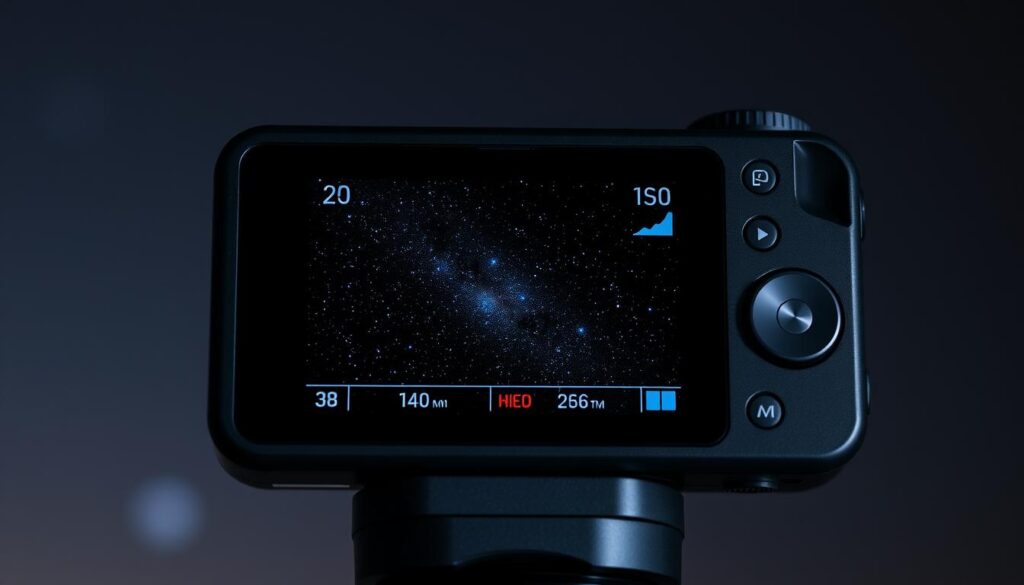
Dedicated astronomy cameras have specialized software for precise control. This can be both helpful and hard for beginners. DSLRs, on the other hand, have a more familiar setup for photographers, making quick adjustments easier.
The interface of astronomy cameras is made for astrophotography-specific features like live stacking and cooling control. DSLRs need more tweaks to get the right astrophotography shots.
Software and App Compatibility
Dedicated astronomy cameras need specific software for capturing and processing images. DSLRs, though, can work with many third-party apps and software. This makes DSLRs more flexible.
- Dedicated astronomy cameras: Often need special software for advanced features.
- DSLRs: Can use a variety of third-party apps for remote control and image processing.
Availability of Tutorials and Support
Having access to tutorials and support is key for learning and solving problems. Dedicated astronomy cameras have dedicated communities and forums for sharing knowledge. DSLRs, being more common, have a wider range of resources like tutorials, workshops, and online forums.
For both types of cameras, online resources and manufacturer support are essential. They help users understand and use their camera’s full potential.
Compatibility with Telescopes and Equipment
To get the most out of your astrophotography setup, knowing how your camera and telescope work together is key. The right match can greatly improve your astrophotography quality. But, a bad match can lead to poor results or make your gear useless.
Mounting Options for Astronomy Cameras
Astronomy cameras are made to fit well with telescopes. They often have standard mounting options. T-threads and C-mounts are common, ensuring a tight and accurate fit.
These cameras also come with adapters for different telescopes. This includes refractor, reflector, and catadioptric types. Being able to switch between them is a big plus, whether you have multiple telescopes or plan to get more.
Adapters and Accessories for DSLRs
DSLRs need adapters to work with telescopes. T-ring adapters are used for prime focus photography. It’s important to check if your DSLR model fits with these adapters before buying.
DSLRs can also be used with many lenses and accessories. This lets you take photos of both the sky and the ground. It’s why many photographers choose DSLRs for their flexibility.
Optimal Pairings for Each Type
Choosing between an astronomy camera and a DSLR depends on your needs. Astronomy cameras are best for serious astrophotography because of their specialized features. They perform better for capturing the stars.
DSLRs, on the other hand, are great for those who want to shoot both the sky and everyday scenes. Knowing the best pairings helps you make a choice that fits your photography style and needs.
Portability and Field Use
When you go out for astrophotography, how easy it is to carry your gear matters a lot. It doesn’t matter if you’re new or experienced. Being able to easily move and set up your camera is key to getting great shots.
Weight and Size Considerations
The size and weight of your camera can really impact how easy it is to carry it to far-off places. Dedicated astronomy cameras are made to be small and light, making them perfect for long trips. DSLRs, though good for many things, can be bigger because of their design and the lenses they need.
Battery Life and Power Options
Battery life is super important for astrophotographers, since you might be out for a long time. DSLRs usually last longer on a single charge than dedicated astronomy cameras. But, some astronomy cameras have special power-saving features to make batteries last longer.
- Dedicated astronomy cameras often need to be plugged in.
- DSLRs usually last longer on a single charge.
- Using external batteries or power banks can make things easier.
Setup Time for Different Scenarios
How fast you can set up your camera is important, as you don’t want to miss any moments. Dedicated astronomy cameras are often quicker to set up because they’re made for that purpose. DSLRs, while great for many things, might take longer to get ready for astrophotography, mainly because of the need to adjust lenses and adapters.
To make setting up faster, here are some tips:
- Get to know your gear before you go.
- Make a checklist to make sure you have everything.
- Practice setting up in different situations.
Imaging Techniques and Settings
To get the most out of your astrophotography equipment, mastering the right imaging techniques and camera settings is essential. Whether you’re using a dedicated astronomy camera or a DSLR, understanding these elements can significantly enhance the quality of your astrophotography.
Techniques for Dedicated Astronomy Cameras
Dedicated astronomy cameras offer several advanced features that can improve your astrophotography. One common technique is using image stacking, where multiple images are combined to reduce noise and enhance detail. This method is effective for capturing deep-sky objects like nebulae and galaxies.
Adjusting the gain and exposure settings is another technique. Lower gain settings can help reduce noise, while longer exposure times can capture more detail in faint objects. It’s crucial to balance these settings to avoid overexposure and to manage noise effectively.
| Technique | Description | Benefit |
|---|---|---|
| Image Stacking | Combining multiple images | Reduces noise, enhances detail |
| Gain and Exposure Adjustment | Adjusting camera settings | Improves image quality, manages noise |
Settings for DSLRs
DSLRs offer versatility and manual controls that are beneficial for astrophotography. A recommended setting is to use manual focus and set the lens to infinity. Also, using the camera’s bulb mode allows for long exposures, which are necessary for capturing faint celestial objects.
Adjusting the ISO settings is also important. Lower ISOs (e.g., ISO 800 or lower) are generally preferred to minimize noise. Higher ISOs can be used for brighter objects. Balancing ISO with exposure time is key to capturing high-quality images.
Challenges and Solutions
Both dedicated astronomy cameras and DSLRs come with their own set of challenges. For dedicated cameras, managing noise at high gain settings is a common issue. Solutions include using cooling systems to reduce thermal noise and employing dark frame subtraction to remove noise from the images.
For DSLRs, one of the challenges is dealing with the limited manual controls and potential for camera shake during long exposures. Using a remote shutter release or the camera’s self-timer can help mitigate camera shake, ensuring sharper images.
- Cooling systems for noise reduction
- Dark frame subtraction for improved image quality
- Remote shutter release to prevent camera shake
By understanding and applying these techniques and settings, you can significantly improve your astrophotography, regardless of whether you’re using a dedicated astronomy camera or a DSLR.
Community and Resources
As you start exploring astrophotography, you’ll find a lively community and lots of resources. These will help you get better at your craft.
The community is key for learning. It offers support, shares knowledge, and shows off new techniques. You can find this collective wisdom on various online platforms.
Popular Online Forums and Groups
Online forums and social media groups for astrophotography are full of useful info. Here, you can:
- Ask questions and get feedback on your work
- Learn from others’ experiences
- Keep up with the latest gear and software
Some top places include Reddit’s r/Astrophotography and Cloudy Nights. These are where you can connect with others who love astrophotography.
Recommended Websites and Tutorials
Many websites have detailed tutorials, reviews, and guides on astrophotography. Some great sites are:
- Astronomy Now: Offers news, reviews, and tutorials
- Cloudy Nights: Has forums, reviews, and articles on astrophotography
- Adobe’s Photography Tutorials: Teaches about editing software like Lightroom and Photoshop
These resources will help you understand astronomy camera reviews better. They’ll also guide you in choosing between a DSLR or specialized camera for astrophotography.
Key Influencers and Educators
Following key influencers and educators in astrophotography is very helpful. They share their knowledge through:
- YouTube tutorials and astrophotography challenges
- Workshops and online courses
- Social media, where they share tips and insights
By using these astrophotography camera recommendations and community resources, you’ll improve fast. You’ll soon be taking amazing pictures of the sky.
Making the Right Choice for You
To choose the right astronomy camera, you need to think about your goals and what you can afford. It’s not just about picking the most advanced or expensive camera. It’s about finding the tool that fits your needs and improves your astronomy experience.
Assessing Your Photography Goals
First, understand what you want to capture. Are you starting with the moon and planets, or do you want to shoot deep-sky objects like nebulae? Your goals will help you decide. For deep-sky photography, a camera with a cooled sensor is better for clear images over long times.
Dedicated astronomy cameras are perfect for astrophotography because they have cooled sensors. This reduces noise and is great for long shots. But, if you want to use your camera for everyday photos too, a DSLR might be better.
Considering Your Budget and Resources
Cost is a big factor. Astronomy cameras can cost from a few hundred to thousands of dollars. DSLRs also vary in price, from affordable to very expensive. Think about the camera’s price and any extra costs for accessories like telescopes and mounts.
Long-term Investment and Future Needs
Also, think about your future plans. Will you need to upgrade your equipment? Choose a camera that will work with your future gear. This can save you money and hassle later on.
By considering your photography goals, budget, and future needs, you can make a smart choice. Whether you pick a dedicated astronomy camera or a DSLR, choose what fits your needs and dreams.
Conclusion: Finding What Works Best for You
Choosing between Dedicated Astronomy Cameras and DSLRs can be tough. Knowing the differences helps you pick what’s right for you.
Key Considerations
Look at sensor sensitivity, cooling systems, and telescope compatibility when comparing cameras. DSLRs are versatile but might need adapters.
Experimenting with Options
Your choice depends on your goals, budget, and what you have. Try out different gear and methods. Use online resources and guides to improve your skills.
By understanding the pros and cons, you can take amazing photos of the night sky. The right tools will help you reach your photography dreams, whether you’re new or experienced.