
Traveling and taking great photos can be tough. That’s why compact travel telescopes are perfect. They’re small, easy to carry, and great for capturing amazing shots on the move.
Looking for a telescope that’s easy to take with you? It should also have top-notch optical quality. When picking a travel photography telescope, think about how portable it is, its optical quality, and what accessories come with it. For example, the Sky-Watcher Heritage100P Tabletop Dobsonian and the Acuter Voyager MAK80 are great for travel. To find out more, check out this guide on the best travel telescopes.
Choosing the right compact telescope can make your travel photography better. You’ll be able to take incredible photos wherever you go.
Why Choose Compact Telescopes for Travel Photography?
Compact telescopes have changed travel photography with their light weight and flexibility. They are great for capturing landscapes, wildlife, or even stars. Let’s look at why they’re perfect for travel photography.
Benefits of Compact Telescopes
Compact telescopes are great for travel photographers. They are lightweight and easy to carry, perfect for long trips or hikes. Their small size also means they won’t get in the way, letting you capture moments easily.
Some key benefits include:
- Enhanced portability
- Ease of use in various environments
- Ability to capture high-quality images from a distance
Versatility for Different Scenarios
Compact telescopes are very versatile. They work well for wildlife photography, landscape and cityscape photography, and even astrophotography. Their flexibility makes them a must-have for travel photographers.
| Scenario | Compact Telescope Advantage |
|---|---|
| Wildlife Photography | Allows for close-up shots without disturbing animals |
| Landscape/Cityscape Photography | Enhances detail and perspective |
| Astrophotography | Captures celestial objects with clarity |
Weight and Portability Considerations
When picking a compact telescope for travel, weight and portability matter a lot. Look for ones that are light and small. Some also come with tripod compatibility, which helps with stability and reduces tiredness during long shoots.
By thinking about these points, you can find a compact telescope that fits your travel photography needs. This way, you can take amazing photos without the hassle of heavy gear.
Key Features to Look for in Travel Telescopes
When picking a compact telescope for travel photos, look for certain key features. These features improve your photos and make traveling easier.
Aperture Size and Its Importance
The size of a telescope’s aperture is very important for how well it gathers light. A bigger aperture lets in more light, making images brighter and clearer. For travel telescopes, finding a balance between size and portability is key.
Apertures range from 50mm to 90mm for small models. A 60mm or 70mm aperture is often the best for travel photos. It offers a good mix of light gathering and being easy to carry.
Lens Quality and Coatings
The quality of lenses and their coatings greatly affects your telescope’s image quality. High-quality lenses with the right coatings can cut down on glare, improve contrast, and make colors more accurate.
Telescopes with multi-coated lenses work best. They reduce light loss and improve image sharpness. The material of the lenses, like glass or high-quality plastic, also impacts the telescope’s durability and performance.
Focusing Mechanism
The focusing mechanism is a crucial feature for your travel telescope’s usability and image quality. A smooth and precise focusing mechanism lets you quickly get sharp images.
There are various focusing mechanisms, like rack-and-pinion and helical focusers. Your choice depends on what you prefer and your photography needs.
Top Compact Telescopes for Travel Photography
Looking to improve your travel photos? A top-rated compact telescope is a great choice. These telescopes are perfect for travel, combining quality, portability, and convenience.
Popular Models Overview
Many compact telescopes are favorites among travel photographers. They offer great performance and features. Here are some top picks:
- The Celestron Travel Telescope, known for its lightweight and compact design.
- The Nikon Travelite Telescope, praised for its high-quality optics and durability.
- The Cloudbreak Optics Travel Telescope, appreciated for its versatility and image clarity.
These telescopes are known for capturing high-quality images on the go.
Unique Features of Each Model
Each compact telescope has special features for travel photographers. For example:
| Model | Aperture Size | Magnification | Weight |
|---|---|---|---|
| Celestron Travel Telescope | 60mm | 15-45x | 1.5 lbs |
| Nikon Travelite Telescope | 70mm | 20-60x | 2.2 lbs |
| Cloudbreak Optics Travel Telescope | 80mm | 25-75x | 2.5 lbs |
This table shows the main specs of each model. It helps you choose based on your photography needs.
Price Ranges and Budget Options
Compact telescopes for travel photography come in many prices. You can find them for under $100 or over $500, depending on the features.
Think about your budget and what you need. High-end models have better image quality and extra features like waterproofing.
Knowing your needs and budget helps you pick the right compact telescope for your travel photos.
Understanding Magnification and Zoom
To take amazing travel photos, knowing about magnification and zoom in telescopes is key. Magnification affects your image quality a lot. Picking the right magnification can really change your photos.
Defining Magnification in Telescopes
Magnification lets you see things closer and clearer. It’s shown as a number, like 10x or 20x. This number tells you how much bigger the image is than what you see with your eyes. The higher the number, the clearer the image will be.
But higher magnification doesn’t always mean better pictures. The telescope’s stability, the weather, and the lens quality also matter. For travel photos, finding the right balance between magnification and image stability is important.
Fixed vs. Variable Magnification
Telescopes can have fixed or variable magnification. Fixed magnification telescopes have one power, which might limit you. Variable magnification telescopes let you change the power, giving you more flexibility.
- Fixed magnification usually means clearer images because of simpler design.
- Variable magnification lets you adjust to different scenes and light.
Choosing the Right Magnification for Photography
The right magnification for photography depends on what you’re shooting. For wide scenes like landscapes, lower magnification (10x to 15x) works well. For distant subjects like wildlife or stars, you’ll need higher magnification (20x or more).
| Magnification Range | Use Case |
|---|---|
| 10x-15x | Landscapes, wide scenes |
| 15x-20x | General wildlife, distant scenes |
| 20x+ | Distant wildlife, celestial bodies |
The best magnification for your travel photos depends on your needs and what you usually shoot. Knowing what your telescope can do will help you get the most out of your photography trips.
Accessories to Enhance Your Travel Photography
To make your travel photos better, think about getting some key accessories for your compact telescope. These tools can really boost your photo quality and make traveling more fun.
Tripods and Stability Solutions
A strong tripod is key for clear photos, even when you’re zooming in a lot. Choose one that’s light but still sturdy. Also, look for one that can adjust height and tilt for more options.
- Material: Aluminum or carbon fiber for a good balance between durability and weight.
- Weight Capacity: Make sure it can hold your telescope and any extra gear.
- Portability: Pick one that’s small and light for easy carrying.
Lens Adapters for Cameras
Lens adapters are crucial for linking your camera to your telescope. They help you take top-notch photos. When picking a lens adapter, check if it works with your camera and telescope.
- Compatibility: Make sure it fits your camera and telescope.
- Build Quality: Choose adapters that are well-made to avoid damage.
Protective Cases and Carry Solutions
Protective cases and carry solutions are vital for keeping your gear safe while traveling. Look for cases that are soft, water-proof, and have spots for your accessories.
- Padded Compartments: To keep your telescope and accessories safe from bumps.
- Water Resistance: To keep out rain and moisture.
- Carry Options: Choose a backpack or shoulder strap for easy carrying.
Getting the right accessories can really improve your travel photography with a compact telescope. You’ll be able to take amazing photos with less effort and better quality.
Comparison: Telescopes vs. Traditional Cameras
Travel photographers often face a choice between telescopes and traditional cameras. Each has its own strengths and weaknesses. The right choice can greatly affect the quality and type of photos you take.
Advantages of Using Telescopes
Telescopes are great for capturing distant subjects with high detail. Best compact telescopes are easy to carry and versatile. They let you take detailed photos of landscapes, wildlife, and even stars that cameras can’t.
- High magnification capabilities for capturing distant subjects
- Portability and compact design for easy travel
- Ability to capture detailed images of both terrestrial and celestial objects
When to Use Cameras Instead
Traditional cameras have their own benefits. They’re easier to use for wide shots and in low light. Plus, they let you change lenses and add accessories.
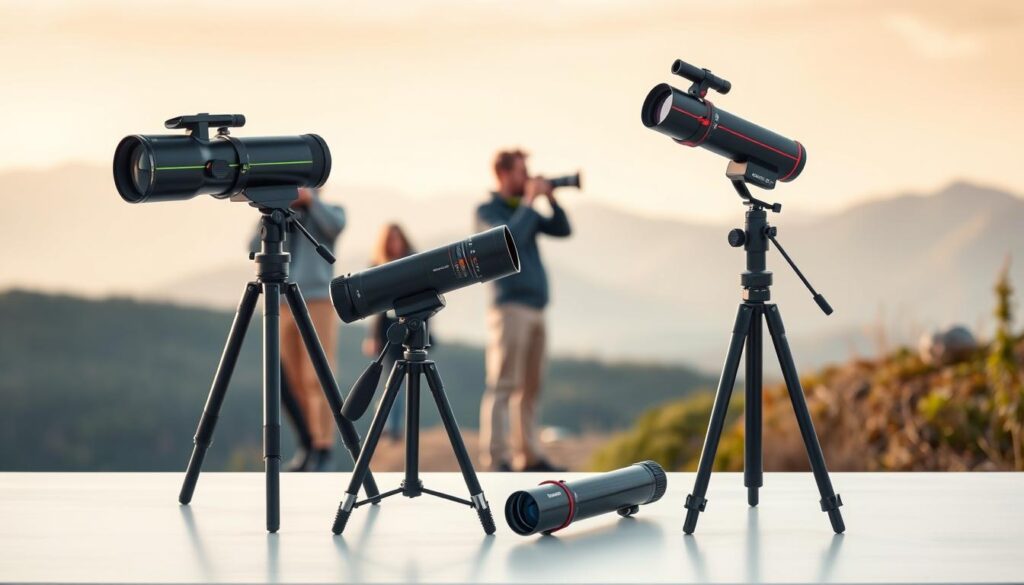
For many travel photos, a camera is better. This is true for broad scenes or when light is poor for telescopes.
Hybrid Approaches for Best Results
Using both telescopes and cameras is a smart strategy. It lets you cover more ground with your photos. For example, use a telescope for travel photos of far-off scenes, and a camera for wider shots.
This way, you’re ready for any photo situation. You can always get the best shot.
Tips for Photographing with a Telescope
Photography with a telescope is more than just pointing it at your subject. It’s about understanding how to use your equipment well. Whether you have a compact travel telescope or a lightweight telescope for travel, the right techniques are key.
Composition Techniques for Telescopic Photography
Composition is crucial for stunning photos, and telescopic photography is no different. Use the rule of thirds, leading lines, and symmetry to make your images appealing. Try different angles and perspectives to add depth.
When taking pictures of celestial objects, think about the moon, stars, or planets’ positions. A compact travel telescope lets you get close to your subject while keeping your composition stable.
Managing Light and Exposure Settings
Light is vital in photography, and telescopic photography is very sensitive to it. Adjusting your exposure settings is key to getting the best image. For bright objects, reduce exposure to avoid overexposure. For dimmer objects, you might need longer exposure times.
Knowing how to manage light and exposure is essential for clear images with your lightweight telescope for travel. Practice adjusting your camera settings to find the right balance for your shot.
| Exposure Setting | Bright Objects | Dim Objects |
|---|---|---|
| ISO | 100-200 | 800-1600 |
| Shutter Speed | 1/1000th sec | 1-30 sec |
Tips for Focus and Clarity
Sharp focus is vital for quality telescopic photography. Use your telescope’s focusing mechanism to get a crisp image. Adjust the focus as you change targets or when lighting changes.
To ensure clarity, make sure your small travel telescope is stable and securely mounted. A tripod or stabilizing device can help reduce vibrations and camera shake, leading to sharper images.
Maintenance and Care for Your Travel Telescope
Proper care and maintenance of your travel telescope can extend its life. Regular upkeep ensures your telescope works well. This means you get great images for your travel photos.
Cleaning Your Lenses
Cleaning your telescope’s lenses is a careful task. Start by gently brushing off any dust or debris. Then, use a microfiber cloth to wipe the lenses softly. For tough spots, apply a lens cleaning solution to the cloth, not the lens itself.
Tips for Effective Lens Cleaning:
- Always handle lenses with care to avoid scratches.
- Use a lens cleaning solution that is appropriate for your telescope’s lens coatings.
- Avoid touching the lenses with your bare fingers.
Storing Your Telescope Safely
Store your travel telescope in a protective case when not in use. Make sure it’s dry to avoid moisture buildup.
Storage Tips:
- Keep the telescope away from direct sunlight and extreme temperatures.
- Use silica gel packets to absorb any moisture in the storage case.
- Regularly inspect the storage case for any signs of wear or damage.
Regular Check-ups and Adjustments
Check your telescope’s alignment and focus regularly. Make adjustments as needed for best performance. It’s also wise to have your telescope serviced by a professional every now and then.
| Maintenance Task | Frequency | Importance Level |
|---|---|---|
| Lens Cleaning | After each use | High |
| Storage Check | Before and after storage | High |
| Professional Servicing | Annually | Medium |
By following these maintenance and care tips, you can make your travel telescope last longer. It will keep delivering top-notch images for your travel photography.
Where to Purchase Compact Telescopes
Looking for the perfect compact telescope for travel photography? You have many places to buy from.
Online Retailers for Convenience
Online stores make buying compact telescopes easy. You can read reviews and compare prices.
Popular Online Retailers:
- Amazon
- B&H Photo
- Adorama
These sites have lots of telescopes from different brands. It’s easy to find the best one for you.
| Retailer | Price Range | Shipping |
|---|---|---|
| Amazon | $100-$1000 | Free shipping on orders over $25 |
| B&H Photo | $200-$2000 | Free shipping on orders over $49 |
| Adorama | $150-$1500 | Free shipping on orders over $49 |
Local Camera Shops and Their Benefits
Local camera shops let you try telescopes before buying. It’s a hands-on way to choose.
Benefits of Local Camera Shops:
- Personalized service
- Hands-on experience with products
- Expert advice from staff
They might also offer classes. This helps you use your telescope better.
Recommendations for Second-hand Purchases
Buying used can save money. But, you need to be careful.
Tips for Second-hand Purchases:
- Research the seller thoroughly
- Check the condition of the telescope carefully
- Compare prices to ensure you’re getting a good deal
Look on eBay and Craigslist for used telescopes. But, be careful when buying from individuals.
Learning Resources for Travel Telescope Photography
To capture stunning images with your compact telescope, it’s key to know where to find top learning materials. The world of travel telescope photography is vast and always changing. New techniques and technologies pop up all the time.
Online Tutorials and Guides
Online tutorials and guides are a great place to start for improving your travel telescope photography skills. Websites like YouTube, Udemy, and photography blogs have lots of info. They cover everything from basic telescope use to advanced photography tricks. These resources let you learn at your own pace, so you can pause and rewind as needed.
Photography Workshops and Classes
For a hands-on learning experience, think about joining photography workshops or classes. These events let you learn from seasoned photographers and get feedback on your work. Many workshops focus on telescope photography, teaching about image processing and setting up your telescope. By attending these workshops, you can get practical experience and boost your skills in a supportive setting.
Community Forums and Support
Getting involved in online community forums is another smart way to improve your travel telescope photography skills. Sites like Reddit, photography forums, and social media groups for telescope photography are great places to connect. These communities offer valuable support and insights, helping you solve problems and keep up with the latest trends and techniques.
By using these learning resources, you can keep honing your skills and stay ahead in travel telescope photography. Whether you’re just starting out or have lots of experience, there’s always more to learn in this exciting field.
Future Trends in Telescopes for Photography
The world of travel photography is on the verge of a big change. This change comes from new telescope technology. The best compact telescopes will keep being key for amazing photos on the move.
Advancements in Optical Technology
New lens materials and coatings are making images clearer. This makes telescopes better for all kinds of photography. Travel photographers will find these improvements very useful.
Predictions for Upcoming Models
New models will have better zoom, handle low light better, and last longer. When picking a telescope for travel, look for ones that are easy to carry and use.
Smart Telescopes on the Horizon
Smart telescopes are coming, changing how we take and share photos. They will have cameras, Wi-Fi, and smart software. As tech gets better, so will the features in the best compact telescopes. This will make your travel photos even better.