
The United States has many stargazing destinations perfect for astrophotography. You can find national parks, observatories, and sanctuaries with little light pollution. These places are great for taking pictures of the night sky.
These dark sky photography spots show the beauty of the universe. Whether you’re experienced or just starting, you can take amazing photos of the stars here. The rugged national parks and special observatories offer unique views.
Find the top places for astrophotography and enjoy stargazing in some of the darkest skies in the country.
Why Dark Sky Locations Matter for Astrophotography
The search for the perfect astrophotography shot often leads to dark sky locations. These places have minimal light pollution and offer spectacular views. They are perfect for capturing the stars and the Milky Way.
The Importance of Light Pollution Reduction
Reducing light pollution is key for astrophotography. It lets you see the night sky more clearly. Dark sky locations have the right conditions for capturing stars and other celestial objects. With less light pollution, your images can be more detailed and vibrant.
Enhancing Your Photography Experience
Dark sky locations make your astrophotography better and your experience more enjoyable. These places are often serene, letting you connect with nature. Whether you’re experienced or new, prime spots for capturing the night sky can take your photos to the next level.
Safe and Accessible Locations
When looking for best places for shooting the stars, safety and accessibility matter. Many dark sky locations are in remote areas. It’s important to plan your visit well. Choose places with amenities and services nearby for a comfortable experience.
Top National Parks for Astrophotography
Astrophotography fans love America’s national parks for their dark skies and stunning views. These parks are perfect for capturing the Milky Way and stars.
Yosemite National Park
Yosemite National Park is famous for its cliffs, waterfalls, and vast wilderness. It’s great for astrophotography. The dark skies show off the Milky Way beautifully, best in summer. Capture the night sky over Half Dome or El Capitan for amazing photos.
Grand Canyon National Park
The Grand Canyon is a top natural wonder with dark skies perfect for astrophotography. The Colorado River, which carved the canyon, adds to your photos. Timing is everything; go during the new moon for the best shots.
Big Bend National Park
Big Bend National Park in Texas is known for its dark skies and lack of light pollution. It’s great for clear star and Milky Way photos. The park’s varied landscapes, from desert to mountains, offer many options for your photos.
Lassen Volcanic National Park
Lassen Volcanic National Park is a hidden gem for astrophotographers. It has volcanic landscapes and dark skies. The park’s hydrothermal sites and volcanic peaks make interesting foregrounds. Experiment with different compositions to show off the contrast between the volcanic landscapes and the starry sky.
These national parks are not just great for astrophotography. They also let you connect with nature and enjoy the night sky’s beauty. Whether you’re experienced or new, the dark skies and landscapes will inspire you.
Notable Dark Sky Reserves and Communities
Dark sky reserves and communities across the U.S. are perfect for stargazing and astrophotography. They have little light pollution, making the night sky easy to capture.
Cherry Springs State Park, Pennsylvania
Cherry Springs State Park in Pennsylvania is famous for its dark skies. It offers amazing views of the Milky Way, loved by astrophotographers. The park’s remote spot and lack of artificial light make it ideal for night sky photos.
Big Bend Ranch State Park, Texas
Big Bend Ranch State Park in Texas is great for dark sky photography. Its vast spaces and distance from cities keep the skies dark. The park’s landscapes add to the beauty, making it perfect for astrophotography.
Grand Tetons National Park, Wyoming
Grand Tetons National Park in Wyoming is stunning for night sky photos. The mountains and lakes create a dramatic scene. The Teton Range’s reflection in Jackson Lake is a must-see.
| Location | Best Time to Visit | Notable Features |
|---|---|---|
| Cherry Springs State Park | Summer and Fall | Exceptionally dark skies, Milky Way visibility |
| Big Bend Ranch State Park | Winter and Spring | Vast open spaces, unique landscapes |
| Grand Tetons National Park | Spring and Fall | Dramatic mountain landscapes, serene lakes |
These dark sky reserves and communities are not just great for picturesque locations for night sky photography. They also offer a peaceful place for stargazing. Whether you’re experienced or new, these spots will inspire and amaze you.
Tips for Choosing the Right Location
To capture the night sky in all its glory, choosing the right location is key. The United States has many stargazing destinations great for astrophotography. But, not all spots are the same.
Consider Your Photography Goals
Before picking a spot, know what you want to capture. Are you aiming for the Milky Way or meteor showers? Your goals might lead you to different places.
Evaluate Accessibility and Amenities
The ease of getting to a spot and what’s available there matters a lot. Look for places with easy access to food, lodging, and transport. Some spots might be darker but harder to get to.
| Location | Accessibility | Amenities |
|---|---|---|
| National Parks | Moderate to Difficult | Limited to Moderate |
| Dark Sky Reserves | Difficult | Limited |
| Local Observatories | Easy to Moderate | Moderate to Extensive |
Timing Your Visit for Optimal Conditions
Timing is crucial in astrophotography. Think about the moon phase, weather conditions, and astronomical events. For example, a new moon is best for the Milky Way, as it reduces light pollution.
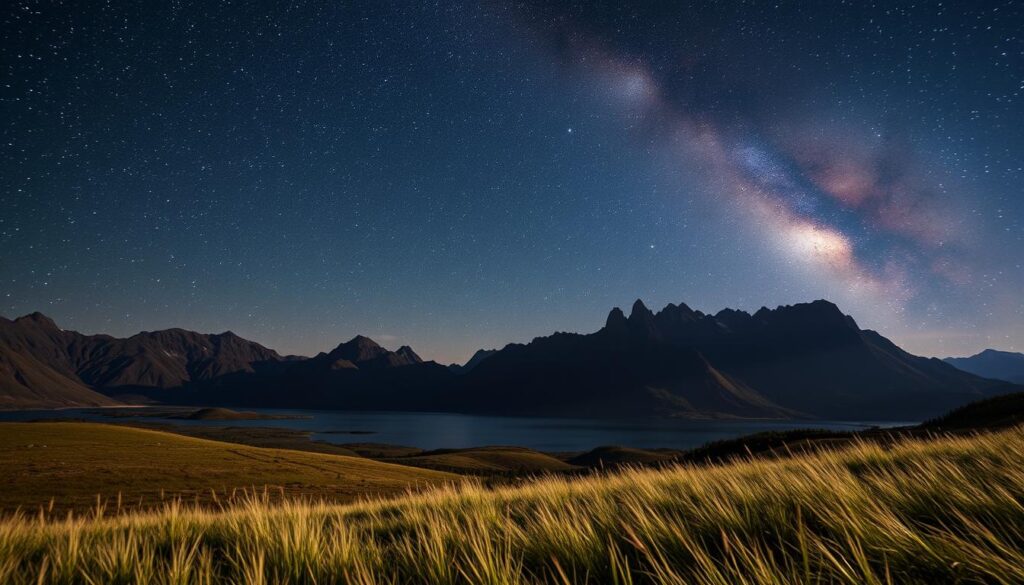
By thinking about your goals, checking out a location’s accessibility and amenities, and planning for the best time, you can improve your astrophotography experience. You’ll get amazing shots of the night sky.
Best Time of Year for Astrophotography
The best time for astrophotography depends on several factors. These include the season, moon phase, and celestial events. Knowing these factors is key to capturing amazing images of the night sky.
Seasonal Considerations
Different seasons offer unique opportunities for astrophotography. In the spring, the Milky Way is visible in the pre-dawn hours. Autumn offers clear skies and comfortable temperatures for long exposure shots.
Summer is ideal for capturing the Milky Way in the evening. But, it can be challenging due to the warm weather and potential thunderstorms. Winter, on the other hand, provides crisp air and darker skies, making it perfect for capturing the stars.
Seasonal Highlights:
- Spring: Pre-dawn Milky Way views
- Summer: Evening Milky Way, but beware of thunderstorms
- Autumn: Clear skies and comfortable temperatures
- Winter: Crisp air and dark skies for starry nights
Moon Phases and Their Impact
The moon’s phase significantly affects astrophotography. A new moon phase is ideal for capturing the stars and the Milky Way. This is because the sky is at its darkest.
Conversely, a full moon can make it challenging to capture the stars. This is because the bright light it reflects washes out the stars.
| Moon Phase | Ideal for Astrophotography | Reason |
|---|---|---|
| New Moon | Yes | Darkest sky, ideal for capturing stars and Milky Way |
| Full Moon | No | Bright light washes out the stars |
| Quarter Moon | Partially | Some light, but can still capture stars |
Meteor Showers and Celestial Events
Meteor showers and other celestial events offer spectacular opportunities for astrophotography. Events like the Perseid meteor shower in August or the Geminid meteor shower in December are must-capture moments for any astrophotographer.
Notable Celestial Events:
- Perseid Meteor Shower (August)
- Geminid Meteor Shower (December)
- Planetary alignments and lunar eclipses
Essential Gear for Astrophotography
Capturing the night sky’s beauty needs the right gear. Knowing what you need is key. Whether you’re new or experienced, the right tools can improve your photos.
Cameras and Lenses Suitable for Night Sky
Your camera and lens are crucial for astrophotography. You need a camera that works well in low light and a lens for a wide view. DSLR and mirrorless cameras are great because they offer manual controls and high quality.
For lenses, a wide-angle lens with a low f-stop value (like f/2.8) is best. It lets more light in, making your images brighter. Look for lenses with focal lengths between 10-24mm for a wider view.
Tripods and Stabilization Equipment
A sturdy tripod is key for astrophotography. It lets you take long shots without camera shake. Choose a tripod that’s strong and can hold your camera and lens. Some have built-in stabilization or work with external stabilizers for better stability.
Additional Accessories You Might Need
There are more accessories to enhance your astrophotography. A remote shutter release or an intervalometer can reduce camera shake. You might also want a star tracker or an astronomy camera for advanced shots.
- A remote shutter release or timer
- Extra batteries and memory cards
- A red light flashlight to preserve night vision
- A star chart or planetarium app
Preparing for Your Astrophotography Trip
Getting ready for your astrophotography trip is key to a great experience. Capturing the night sky is more than just having the right gear. It’s about being well-prepared and planning ahead.
Planning Your Itinerary
When planning your trip, look for the optimal locations for night sky photography. Find places known for their dark skies and little light pollution.
You should:
- Check the weather forecast before heading out.
- Choose locations with minimal obstructions.
- Plan your trip around celestial events like meteor showers.
Navigating Weather Conditions
Weather is very important in astrophotography. Clear skies are needed for top-quality images.
To handle weather well:
- Monitor weather forecasts closely.
- Be ready for sudden changes.
- Use apps or websites for cloud cover forecasts.
Safety Tips While Stargazing
Safety is always first when stargazing. Be aware of your surroundings and take the right steps.
Some safety tips include:
- Stargaze with a friend whenever you can.
- Carry a first-aid kit and a way to communicate.
- Watch out for terrain dangers like wildlife or steep areas.
Local Astronomy Clubs and Resources
Local astronomy clubs are great for those who love the night sky. They offer knowledge, workshops, and events for astrophotographers. Joining these clubs can help you learn and grow in your hobby.
Finding Community Support
Local astronomy clubs are perfect for meeting people who love astrophotography. They have meetings, viewing nights, and lectures. You can find clubs online or at local parks.
Groups like the International Dark-Sky Association (IDA) and NASA’s Night Sky Network are also great. They support dark-sky conservation and offer events. Check out NASA’s Night Sky Network for events near you.
Workshops and Events for Aspiring Astrophotographers
Many clubs offer workshops and events for astrophotography. These can be for beginners or advanced photographers. They’re a great way to learn, get feedback, and meet others.
| Event Type | Description | Benefit |
|---|---|---|
| Beginner Workshops | Introductory sessions on basic astrophotography techniques. | Learn foundational skills. |
| Advanced Techniques | Sessions focusing on advanced methods and equipment. | Improve your existing skills. |
| Viewing Nights | Group viewing nights where members can practice and share their skills. | Gain practical experience. |
Online Forums and Educational Resources
Online forums and resources are also key for astrophotographers. Sites like Cloudy Nights and Reddit’s r/Astrophotography are great for sharing and learning. Online courses and YouTube tutorials can teach you a lot.
By using local clubs and online resources, you can improve your astrophotography. You’ll gain knowledge and support from the community.
Techniques for Capturing the Night Sky
Whether you’re new to astrophotography or have been doing it for years, knowing how to capture the night sky is key. The right methods can help you take amazing photos that show off the stars’ beauty.
Night Sky Composition Basics
Composition is key in astrophotography. To make a great image, think about what you want in the frame. Foreground interest is important, adding depth and context. You can use things like mountains, trees, or water to make your image look good.
Remember the rule of thirds when setting up your shot. Split the frame into thirds both ways, and place interesting things along those lines. This makes your image balanced and appealing.
Long Exposure Settings
Long exposure settings are crucial for capturing the night sky. A longer exposure lets more light in, making your image brighter and more detailed. But, don’t let it get too bright, or you’ll lose details in the highlights.
- Start with a shutter speed of around 20-30 seconds and adjust as needed.
- Use a low ISO (such as 800-1600) to minimize noise and ensure a clean image.
- A wide-aperture lens (like f/2.8) can help gather more light and create a shallower depth of field.
Post-Processing Your Astrophotography
Post-processing is a vital step in astrophotography. It lets you improve the image, fix mistakes, and highlight the stars’ details. RAW image processing is a must, as it gives you more freedom when editing.
When editing your astrophotography, use software like Adobe Lightroom or Photoshop. These tools have many features to enhance your image, like noise reduction, color grading, and contrast adjustment.
Noteworthy Astrophotography Contests and Events
Astrophotography fans can get noticed and inspired by joining contests and events. These spots let you show off your photos and learn from others. They also keep you up-to-date with new trends in astrophotography.
National Contests to Consider
The United States has many top astrophotography contests. They draw people from all over. Some famous ones are:
- The National Geographic Photo Contest
- The Astrophotography Contest by the Royal Observatory Greenwich
- The Smithsonian’s Astrophotography Contest
These contests have different categories. You can enter photos of landscapes, stars, or auroras.
Local Events and Festivals
Local events and festivals are also great for astrophotography fans. They offer a chance to meet others who love the same hobby. Some popular ones include:
| Event | Location | Description |
|---|---|---|
| Telescope Building Workshop | Cherry Springs State Park, PA | A hands-on workshop where participants build their own telescopes. |
| Astrophotography Night | Big Bend National Park, TX | A guided night sky photography session under the dark skies of Big Bend. |
| Stellar Festival | Death Valley National Park, CA | A celebration of astronomy with talks, viewing nights, and astrophotography sessions. |
How to Prepare Your Work for Submission
To get your astrophotography ready for contests, focus on details. Here are some tips:
- Understand the Contest Rules: Each contest has its own rules about image size, format, and content.
- Edit Your Photos: Use editing software to enhance your images, but don’t overdo it.
- Caption Your Images: Add relevant info about your photo, like where it was taken and what you used to take it.
- Practice and Patience: Keep working on your skills and be patient with your progress.
By joining these contests and events, you not only show off your work. You also join a community that loves astrophotography as much as you do.
Conclusion: Make the Most of Your Astronomical Adventures
Exploring astrophotography in the United States is a dream come true. It’s home to some of the best dark sky photography spots. This makes it perfect for stargazing and capturing the night sky.
Key Takeaways
You’ve discovered the best spots for astrophotography in the country. Places like Yosemite National Park and Grand Canyon National Park are must-visits. Big Bend National Park is also a top choice for stargazing.
Exploring Dark Skies
Think about what you want to capture in the sky. Check if the place is easy to get to and has what you need. Plan your visit for the best weather.
Look for local astronomy clubs and events to learn more. Workshops and classes can help you get better at your craft.
Now you’re all set to capture the night sky’s beauty. Pack your bags and head to these amazing spots. Get ready to explore the wonders of the universe.