
Capturing stunning images of the night sky is more than just having a good camera. It requires the right equipment and a deep understanding of technical aspects. The sensor size of your camera is a key factor.
The sensor size greatly impacts the resolution and detail of your astrophotography images. Choosing the right sensor size can greatly enhance your photography experience. It lets you capture the night sky in all its glory.
Choosing the best sensor size for astrophotography can be overwhelming. This article will help you through the process. It ensures you make an informed decision that fits your telescope and photography goals.
Understanding Sensor Size in Astrophotography
The size of your camera’s sensor is key in astrophotography. It greatly affects the quality of your night sky photos.
What is Sensor Size?
The sensor size is the camera’s image sensor area. It turns light into electrical signals. A bigger sensor means a wider view and more detailed photos.
Sensor size is measured diagonally. It’s shown in inches or millimeters. For example, full-frame sensors are like 35mm film. APS-C and Micro Four Thirds sensors are smaller.
Importance of Sensor Size in Photography
In photography, sensor size is very important. It helps capture light and detail. A bigger sensor works better in dark places, like at night.
Here’s why sensor size matters:
- It changes the field of view, letting you see more.
- It impacts resolution and detail, with bigger sensors showing more.
- It also affects low-light performance, with bigger sensors handling noise better.
Types of Sensor Sizes
There are many sensor sizes, each with its own benefits and drawbacks. The main types are:
- Full-frame sensors: These are as big as 35mm film. They give great image quality and work well in the dark.
- APS-C sensors: Smaller than full-frame, APS-C sensors are a good mix of quality and size.
- Micro Four Thirds sensors: These are the smallest. They’re known for being compact and versatile.
Knowing about these types helps you pick the right camera for astrophotography.
The Impact of Sensor Size on Image Quality
In astrophotography, the size of your camera’s sensor is key. It affects your images’ resolution, detail, and noise levels. These factors greatly influence your photos’ quality.
When looking at astrophotography sensor size comparison, remember the impact on your images. Larger sensors capture more detail and light. They have bigger pixels or more pixels overall.
Resolution and Detail in Astrophotography
A bigger sensor means higher resolution images. It has more pixels or larger ones, capturing more light and detail. For example, full-frame sensors usually outdo APS-C or Micro Four Thirds in detail.
But, resolution and detail also depend on your telescope and camera’s optics. So, when picking a sensor size, think about your whole imaging setup for the best quality.
Noise Levels: How Sensor Size Matters
Sensor size affects your photos’ noise levels. Larger sensors generally produce less noise because they capture more light. This means less signal amplification and less noise.
Smaller sensors might show more noise, mainly in dark conditions. But, new tech has improved noise levels even in smaller sensors. When choosing astrophotography sensor size tips, balance size with pixel size and camera tech to cut down noise.
To get the best photos, also think about cooling systems for your camera. They help reduce noise by cooling the sensor. Knowing how sensor size affects noise and resolution helps you improve your astrophotography.
Common Sensor Sizes Used in Astrophotography
In astrophotography, the size of the sensor is crucial. It affects the quality and look of your photos. The right sensor size can make a big difference in your images.
Full-frame Sensors
Full-frame sensors are top choices for astrophotography. They capture detailed images and work well in low light. High resolution and excellent low-light performance are their main strengths.
APS-C Sensors
APS-C sensors are a good middle ground. They balance resolution and noise levels. They’re also more affordable than full-frame sensors. Versatility and cost-effectiveness make them popular.
Micro Four Thirds Sensors
Micro Four Thirds sensors are small and light. They’re great for portable telescopes and travel. They offer portability and ease of use without sacrificing too much image quality.
| Sensor Size | Resolution | Low Light Performance | Portability |
|---|---|---|---|
| Full-frame | High | Excellent | Low |
| APS-C | Good | Good | Medium |
| Micro Four Thirds | Medium | Fair | High |
Choosing a sensor size for astrophotography depends on your needs. Consider the objects you want to capture, your equipment, and your preferences for image quality and portability.
Matching Sensor Size to Your Telescope
When you’re into astrophotography, it’s key to match your camera’s sensor size with your telescope. This ensures your images are sharp and detailed. The right match is important for quality.
Considerations for Telescope Compatibility
Think about your telescope’s focal length and how it affects your camera’s sensor. A bigger sensor can capture more sky, but it might need a wider field of view. You might also need special optics to avoid vignetting.
Key considerations include:
- The telescope’s focal length and its impact on the image scale
- The sensor size and its effect on the field of view
- The potential need for specific optics or adapters to optimize the setup
Adapters and Their Role
Adapters are vital for making your camera and telescope work together. They adjust the flange distance, letting you use different cameras or telescopes. Some adapters can even fix optical problems.
The right adapter can:
- Enable the use of a camera with a telescope it wasn’t originally designed for
- Optimize the optical setup for better image quality
- Provide additional features such as tilt adjustment for precise alignment
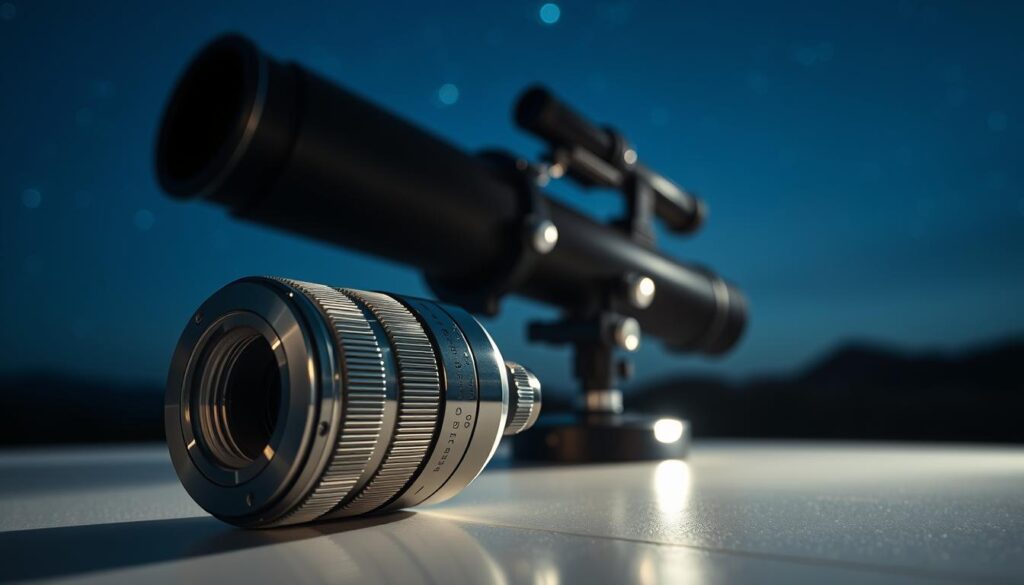
Choosing the right sensor size and using the right adapters can greatly improve your astrophotography. You’ll get clearer and more detailed images of the night sky.
Evaluating Light Sensitivity and Dynamic Range
The size of your camera’s sensor is key for capturing great astrophotography images. It affects light sensitivity and dynamic range. Knowing how sensor size impacts these areas helps you choose the right camera.
Sensor Size and ISO Performance
ISO performance is vital in astrophotography. It lets you take photos in low light. Bigger sensors capture more light and reduce noise, making images cleaner at high ISOs.
For tips on the best ISO for astrophotography, check out this article. It offers detailed advice on setting ISO for astrophotography.
Dynamic Range in Relation to Sensor Size
Dynamic range is about capturing a wide range of light and dark. In astrophotography, it’s crucial for showing details in nebulae and galaxies. Bigger sensors can capture more detail in shadows and highlights.
When picking cameras for astrophotography, look at light sensitivity and dynamic range. The right sensor size ensures top-notch night sky images. For astrophotography sensor size comparison and astrophotography sensor size tips, weigh the pros and cons of different sizes.
In summary, understanding sensor size, ISO, and dynamic range is key for astrophotography success. The right camera and settings lead to amazing night sky photos.
The Trade-offs: Smaller vs. Larger Sensors
Choosing the right camera sensor size for astrophotography means knowing the pros and cons of each size. You need to think about the benefits and drawbacks of smaller versus larger sensors. This helps you pick the best one for your astrophotography goals.
Advantages of Smaller Sensors
Smaller sensors, like those in Micro Four Thirds cameras, have some great points. They are smaller and lighter, perfect for carrying around. This is great for astrophotographers who travel a lot or have little space.
- Cost-effective: Smaller sensors are often cheaper, saving you money upfront.
- Portability: Their small size and light weight make them easy to carry and set up.
- Less demanding on telescopes: They need less magnification, which is easier on the telescope’s optics.
For example, if you’re using a telescope with a full-frame camera, switching to a smaller sensor might make things simpler and cheaper.
Benefits of Larger Sensors
Larger sensors, like full-frame ones, have their own benefits. They usually have higher resolution and better low-light performance. This is key for getting clear images of far-off stars and planets.
- Higher resolution: Larger sensors have more megapixels, leading to sharper images.
- Better low-light performance: Their bigger pixels can grab more light, making your photos look better in the dark.
- Improved dynamic range: They can handle a wider range of light and dark, from bright stars to deep shadows.
In summary, picking between a smaller and a larger sensor depends on what you need for your astrophotography. Knowing the trade-offs helps you choose the best one for your photography.
Accessories to Consider with Sensor Size
Choosing the right sensor size is just the start. You also need to pick the right accessories. In astrophotography, the right gear can make a big difference in your photos. The sensor size you pick affects what accessories you can use.
Filters and Their Impact
Filters are key in astrophotography. They can make your photos look better by improving contrast and color. Light pollution filters, for example, help reduce city light effects, making deep-sky objects clearer.
Big sensors need big filters to avoid image distortion. But smaller sensors can use smaller filters, saving money. Knowing the right filter size for your sensor is important for the best photos.
Optics and Lenses for Different Sensors
The type of optics and lenses you choose depends on your sensor size. Different sensors need different lenses to avoid image distortion. Full-frame sensors need bigger lenses, while smaller sensors like Micro Four Thirds can use smaller ones.
When picking lenses, make sure they fit your camera and telescope. Some telescopes work best with specific sensor sizes. Adapters can help make different systems work together.
Choosing the right accessories for your sensor size can greatly improve your astrophotography. Whether it’s using filters or picking the right lenses, these tools are essential for capturing the night sky’s beauty.
Budget Considerations When Choosing a Sensor Size
Choosing the right sensor size for astrophotography is not just about tech specs. It also depends on your budget. Knowing the price differences between sensor sizes is key.
Cost Implications of Different Sensor Sizes
Prices vary with sensor size. Full-frame sensors are pricier than APS-C or Micro Four Thirds. The cost depends on resolution, noise, and manufacturing tech.
| Sensor Size | Typical Price Range | Notable Features |
|---|---|---|
| Full-frame | $2,000 – $4,000 | High resolution, excellent low-light performance |
| APS-C | $800 – $2,000 | Good balance between price and performance |
| Micro Four Thirds | $500 – $1,500 | Compact, good for beginners, versatile |
Balancing Quality and Affordability
Find a balance between quality and cost by thinking about your needs. Beginners might prefer smaller sensors for their price and image quality. Advanced users might spend more on larger sensors for better performance.
Key Considerations:
- Your level of experience in astrophotography
- The type of celestial objects you most often photograph
- The compatibility of the sensor with your existing equipment
By considering these points, you can choose a sensor that fits your needs and budget.
Future Trends in Sensor Technology
The world of astrophotography is on the verge of a big change. This change comes from new advancements in sensor technology. Cameras are getting better at capturing high-quality images, thanks to these improvements.
Advances in Sensor Design
New designs in sensors aim to make them more sensitive and less noisy. Backside-illuminated sensors are a big hit because they let in more light and produce clearer images. This is great for astrophotography, where seeing faint stars is a big challenge.
Quantum dots are also making a big difference. They help sensors capture colors more accurately, leading to better astrophotography images. As quantum dots get better, our images will too.
Upcoming Sensor Innovations for Astrophotography
Several new sensor technologies are set to change astrophotography. One exciting one is the use of artificial intelligence (AI) in sensors. AI can make images better by adjusting settings automatically. This will help everyone, from pros to beginners, take amazing pictures of the sky.
- Increased sensitivity through new materials and designs
- Improved noise reduction techniques
- Enhanced color accuracy with quantum dot technology
- Integration of AI for smarter image processing
These new technologies will open up more possibilities for astrophotographers. Whether you’re new or experienced, keeping up with these changes will help you get the best shots of the night sky.
Conclusion: Making the Right Choice for Your Needs
Choosing the right sensor size for astrophotography is key. It affects how good your images look and how well your camera works. Think about sensor size, telescope fit, and your budget to make a smart choice.
Key Considerations
When looking at sensor sizes, remember the trade-offs. Bigger sensors mean better image quality but might need more accessories and adapters.
Final Tips
To get the best out of your astrophotography, follow these tips. Match your sensor size to your telescope. Check the light sensitivity and dynamic range. And balance quality with what you can afford.
This way, you’ll be on your way to taking amazing astrophotography pictures.
For a good comparison of sensor sizes, look at their pros and cons. Also, keep an eye on new sensor tech to stay updated.